The Most Comprehensive Guide to the Life, Spirituality, and Miracles of St. Charbel Makhlouf
Few Saints Have Inspired the Modern World Like St. Charbel Makhlouf
Few saints in the Catholic Church inspire as much devotion today as St. Charbel Makhlouf. More than a century after his death, countless believers around the world continue to testify that they have received extraordinary graces through his powerful intercession. Reports from every continent describe remarkable physical healings, profound conversions, renewed faith, restored families, and life-changing encounters with God during times of suffering.
Devotion to St. Charbel has grown far beyond the borders of Lebanon and the Maronite Catholic Church. Today, churches, shrines, chapels, and prayer groups dedicated to this beloved monk can be found throughout Europe, the Americas, Africa, Asia, and Oceania. His witness of holiness has crossed cultures and languages, making him one of the most beloved Eastern Catholic saints in the world.
Who was this humble hermit who chose a hidden life among the mountains of Lebanon? How can a monk who embraced silence and solitude continue to touch millions of hearts across generations? Why are there so many documented accounts of favors and miracles attributed to his prayers? And what explains the worldwide fascination with his incorrupt body, which has drawn pilgrims, physicians, and researchers for decades?
This comprehensive guide brings together historical facts, Catholic teaching, and spiritual reflections to provide a reliable and well-rounded introduction to the life and legacy of St. Charbel Makhlouf. Every section has been prepared in harmony with the teachings of the Catholic Church, helping readers discover both the historical figure and the profound spiritual message he left behind.
Throughout this series, you will explore his childhood, family life, the rich tradition of the Maronite Church, his monastic vocation, the miracles associated with his intercession, his novena and prayers, his sacred relics, the mystery of his incorrupt body, and the spiritual legacy that continues to transform lives around the world.
“Remember your leaders, who spoke the word of God to you. Consider the outcome of their way of life and imitate their faith.” (Hebrews 13:7)
Table of Contents
Introduction
- Who Was St. Charbel Makhlouf?
- Lebanon in the Nineteenth Century
- The Maronite Catholic Church
- The Family of St. Charbel
- The Childhood of Youssef Makhlouf
- The Call to Religious Life
- Entering the Monastery
- Monastic Formation
- Life at the Monastery of St. Maron in Annaya
- The Spirituality of St. Charbel
- The Life of a Hermit
- A Day in the Life of St. Charbel
- The Holy Mass: The Heart of St. Charbel’s Life
- The Heroic Virtues of St. Charbel
- The Holy Death of St. Charbel
- The Mysterious Lights Above St. Charbel’s Tomb
- The Incorrupt Body of Saint Charbel
- The Scientific Mystery of St. Charbel’s Body
- The Oil of St. Charbel
- Relics and Recognized Miracles of St. Charbel
- Beatification and Canonization of St. Charbel
- How to Ask Saint Charbel for a Grace
- The Novena of St. Charbel
- The Most Well-Known Prayers to St. Charbel
- The Spiritual Legacy of St. Charbel for the Modern World
- The Worldwide Devotion to St. Charbel
- Pilgrimage to the Monastery of Annaya
- Interesting Facts About St. Charbel
- What the Church Teaches About the Intercession of the Saints
- Frequently Asked Questions (FAQ) About St. Charbel
- Conclusion
1. Who Was St. Charbel Makhlouf?
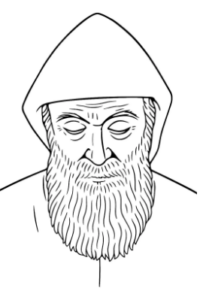
St. Charbel Makhlouf was born on May 8, 1828, in the small mountain village of Bekaa Kafra, located about 1,600 meters (5,250 feet) above sea level in northern Lebanon. He was baptized with the name Youssef Antoun Makhlouf.
From an early age, Youssef showed an extraordinary attraction to prayer, silence, and the presence of God. While other children spent their days playing, he often sought quiet places where he could pray before simple religious images or contemplate the beauty of God’s creation.
When he entered the Lebanese Maronite Order, he received the religious name Charbel, honoring St. Charbel of Edessa, an early Christian martyr known for his unwavering faith.
As a priest and monk, St. Charbel deliberately avoided public recognition. He never sought positions of authority, personal praise, or earthly success. His deepest desire was simply to live according to God’s will and to glorify Him through a life of holiness.
His spirituality rested on four essential pillars:
- A profound devotion to the Holy Eucharist
- Interior silence and continual prayer
- Voluntary penance and self-denial
- Complete obedience to God and his religious vocation
These virtues shaped every aspect of his life and continue to inspire Catholics throughout the world.
The Church’s Recognition of His Holiness
Following St. Charbel’s death, countless testimonies of healings, conversions, and extraordinary favors began to emerge through his intercession. After a thorough investigation by the Catholic Church, his sanctity was officially recognized.
He was:
- Beatified in 1965 by Pope St. Paul VI.
- Canonized in 1977, becoming officially recognized as a saint of the Catholic Church.
Today, his tomb at the Monastery of Annaya welcomes pilgrims from every continent and from many different Christian traditions, all seeking spiritual comfort, healing, and a deeper encounter with God.
📖 Continue Your Journey
If you would like to explore the complete story of St. Charbel Makhlouf—from his birth and family life to his monastic vocation, holy death, and enduring spiritual legacy—continue with the next chapter of this guide.
➡️ 9 Ways Saint Charbel Can Strengthen Your Faith in Difficult Times
2. Lebanon in the Nineteenth Century
To fully appreciate the holiness of St. Charbel Makhlouf, it is important to understand the world in which he lived.
Nineteenth-century Lebanon was a land of rugged mountains, small farming villages, and deep religious devotion. Most families relied on agriculture for their livelihood, enduring harsh winters, difficult terrain, and long periods of isolation from larger communities.
In this setting, faith was not simply a personal belief—it shaped everyday life. The celebration of the Divine Liturgy, religious feasts, family prayer, and devotion to God formed the heart of the local culture and strengthened communities through both joy and hardship.
The mountains of Lebanon also played a crucial role in preserving Eastern Christianity. For centuries, these remote regions provided refuge for Christian communities facing persecution, allowing ancient traditions, liturgical practices, and monastic life to flourish despite political and social challenges.
It was within this atmosphere of simplicity, hard work, and unwavering trust in God’s providence that Youssef Makhlouf, the future St. Charbel, was raised.
The Spirituality of the Lebanese Mountains
The quiet solitude of Lebanon’s mountains naturally fostered a life centered on prayer, silence, and contemplation.
It is no surprise that generations of monks and hermits chose this region to establish monasteries and hermitages, dedicating themselves to seeking God away from the distractions of the world.
Their way of life reflected Christ’s own teaching:
“But when you pray, go into your room, close the door and pray to your Father, who is unseen.” (Matthew 6:6)
This rich spiritual heritage profoundly influenced St. Charbel, shaping the hidden and contemplative vocation that would one day inspire millions of believers around the world.
📖 Also read
3. The Maronite Catholic Church
St. Charbel Makhlouf belonged to the Maronite Catholic Church, one of the Eastern Catholic Churches that remains in full communion with the Pope and the Holy See while preserving its own ancient liturgical and spiritual heritage.
The Maronite tradition traces its origins to St. Maron, a fourth-century monk renowned for his life of prayer, asceticism, and unwavering fidelity to the Gospel. His example inspired a flourishing monastic movement that has shaped the identity of the Maronite Church for centuries.
Although the Maronite Church has its own liturgy, spirituality, and customs, it professes the same Catholic faith, celebrates the same sacraments, and recognizes the authority of the Successor of St. Peter, the Pope.
Some of its defining characteristics include:
- A profound devotion to the Holy Eucharist
- A deep love for the Blessed Virgin Mary
- A strong monastic tradition
- An emphasis on fasting, penance, and self-discipline
- A rich Syriac liturgical heritage rooted in the early Christian Church
Within this spiritual tradition, St. Charbel learned to unite a life of deep contemplation with faithful service to God.
How the Maronite Tradition Shaped St. Charbel
Every stage of St. Charbel’s religious formation reflected the spirituality of the Maronite Church.
His daily life revolved around the Liturgy of the Hours, the celebration of the Holy Eucharist, and long periods of silent adoration before God.
The Eucharist occupied the very center of his vocation. Those who lived with him often recalled the extraordinary reverence and profound recollection he displayed while celebrating Mass, describing his prayer as deeply focused on the mystery of Christ’s presence.
For this reason, many historians and spiritual writers regard St. Charbel as one of the greatest modern representatives of the Eastern monastic tradition, a witness whose hidden life continues to illuminate the universal Church.
📖 Keep reading
➡️ When Your Heart Feels Broken: How Saint Charbel’s Faith Can Bring Hope, Healing, and Peace
➡️ Saint Charbel Prayer for Healing and Impossible Cases: A Powerful Intercession in Times of Suffering
4. The Family of St. Charbel
Youssef Makhlouf was born into a humble family of farmers whose lives were shaped by hard work, simplicity, and a deep trust in God’s providence.
Although they possessed few material comforts, his parents gave their children a far greater inheritance—a living and authentic Catholic faith. Their home became the first place where Youssef learned the value of prayer, humility, and complete dependence on the Lord.
His mother, Brigida Chidiac, was especially known for her devotion and perseverance in prayer. After the death of her husband, she continued raising her children with unwavering faith, teaching them to rely on God even in times of grief, uncertainty, and hardship.
Youssef also found powerful spiritual examples within his extended family. Two of his uncles embraced the life of hermits, dedicating themselves to silence, prayer, and communion with God. Their witness introduced him to the beauty of contemplation and left a lasting impression on his young heart.
These influences helped shape the vocation that would later lead him to the monastery and ultimately to sainthood.
As Sacred Scripture reminds us:
“Train up a child in the way he should go, and when he is old he will not depart from it.” (Proverbs 22:6)
The story of St. Charbel’s family offers an enduring lesson for parents today. Holiness often takes root in ordinary homes where faith is lived sincerely, prayer is practiced daily, and children are encouraged to place God at the center of their lives.
📖 Keep reading
5. The Childhood of Youssef Makhlouf
From a very young age, Youssef Makhlouf displayed a remarkable spiritual maturity that set him apart from other children.
He was naturally drawn to silence, loved spending time in prayer, and often sought quiet places where he could be alone with God. While many children were occupied with games, Youssef found joy in moments of reflection and communion with the Lord.
According to the tradition preserved by the Maronite Church, he transformed a small cave near his family home into a simple place of prayer. There, before an image of the Blessed Virgin Mary, he spent long hours in quiet devotion, nurturing a relationship with God that would shape the rest of his life.
As a boy, he also helped care for his family’s flock. While the sheep grazed, Youssef used those peaceful moments to pray the Psalms, meditate on God’s Word, and contemplate the beauty of creation.
This spirit of humility and simplicity never left him.
Even after becoming a priest, St. Charbel continued to live with the same hidden and humble heart, seeking neither recognition nor worldly success, but only a deeper union with Christ.
His childhood reminds us that holiness is usually built through ordinary acts of faithfulness—daily prayer, loving obedience, diligent work, and a sincere love for God.
Jesus expressed this truth with these words:
“Whoever is faithful in very little is also faithful in much.” (Luke 16:10)
The life of the young Youssef Makhlouf beautifully illustrates how great sanctity often begins with small, faithful acts performed with extraordinary love.
📖 Keep reading
➡️ Why Pray the St. Charbel Novena? A Complete Guide to the Spiritual Power of Nine Days of Prayer
➡️ 50 Inspiring Saint Charbel Quotes That Will Strengthen Your Faith and Bring You Closer to God
6. The Call to Religious Life
From his earliest years, Youssef Makhlouf showed an extraordinary attraction to prayer, silence, and contemplation. Yet, like many young men of nineteenth-century Lebanon, he was expected to remain with his family, help cultivate the land, and contribute to the household’s livelihood.
At that time, leaving home to enter a monastery was a significant sacrifice. Every son played an essential role in supporting the family, so choosing religious life meant not only an emotional separation but also a practical and economic loss for those left behind.
But God had prepared a different path for Youssef.
As the years passed, the call within his heart became increasingly clear. The simple and prayerful lives of the hermits—especially his own uncles—deeply impressed him. Their quiet witness spoke more powerfully than words, revealing the beauty of a life completely dedicated to God.
Sacred Scripture reminds us:
“You did not choose me, but I chose you.” (John 15:16)
Every authentic vocation begins with God’s initiative. He lovingly calls each person to a unique mission according to His divine plan.
Youssef gradually realized that lasting happiness would not be found in possessions, social recognition, or even the ordinary blessings of family life, but in giving himself entirely to the Lord.
Making that choice required great courage.
To follow Christ always means leaving something behind in order to embrace something infinitely greater.
Jesus Himself promised:
“Everyone who has left houses or brothers or sisters or father or mother or wife or children or lands for my name’s sake will receive a hundredfold and will inherit eternal life.” (Matthew 19:29)
St. Charbel embraced these words with complete generosity, offering every aspect of his life to God.
A Quiet and Faithful Vocation
Unlike some saints whose vocations were marked by extraordinary visions or dramatic events, St. Charbel’s calling unfolded quietly over time.
His vocation matured through daily fidelity to God’s grace.
It grew through constant prayer, attentive listening to Sacred Scripture, and the influence of holy men whose lives reflected complete devotion to the Lord.
This aspect of his story offers an important lesson for Christians today: God often speaks gently rather than dramatically. His voice is most clearly heard by hearts that learn to embrace silence, remain open to His will, and faithfully respond to His daily invitations.
📖 Keep digging deeper
➡️ 10 Timeless Lessons from Saint Charbel That Can Transform Your Relationship with God
➡️ How to Seek God by Following the Example of Saint Charbel: A Complete Guide to Prayer, Silence, Faith, and Holiness
7. Entering the Monastery
In 1851, at the age of 23, Youssef Makhlouf made the most decisive choice of his life.
Without first informing his family, he set out on foot for the Monastery of Our Lady of Mayfouq, a monastery of the Lebanese Maronite Order. Although this decision may seem unexpected by modern standards, it reflected his wholehearted desire to respond immediately and completely to God’s call.
Jesus taught:
“No one who puts a hand to the plow and looks back is fit for the kingdom of God.” (Luke 9:62)
Upon arriving at the monastery, Youssef began his period of formation as a postulant. His days quickly became centered on prayer, manual labor, study, and the disciplined rhythm of monastic life.
Soon afterward, he received the monastic habit.
At that moment, he left behind the name given to him at birth and became known as:
Brother Charbel
His new name honored St. Charbel of Edessa, an early Christian martyr of the second century whose steadfast witness inspired generations of believers.
Throughout Sacred Scripture, receiving a new name often marks the beginning of a new mission in God’s plan. This pattern appears repeatedly in salvation history:
- Abram became Abraham.
- Jacob became Israel.
- Simon became Peter.
Likewise, Youssef entered a new stage of life, dedicating himself entirely to Christ and embracing his vocation with an undivided heart.
The Meaning of the Monastic Habit
By putting on the monastic habit, Brother Charbel publicly embraced the evangelical counsels of:
- Poverty
- Chastity
- Obedience
For him, these vows were not restrictions on freedom but a joyful expression of his desire to love God above everything else.
The Catechism of the Catholic Church teaches that the consecrated life is a special sign of Christ’s total self-giving to the Father and serves as a living witness to the coming Kingdom of God (cf. CCC 914–933).
📖 Also read
➡️ The Miracles of Saint Charbel: How the Lebanese Monk Continues to Inspire Faith Around the World
8. Monastic Formation
After entering the Lebanese Maronite Order, Brother Charbel began years of careful spiritual, intellectual, and human formation. Monastic life was designed not only to educate the mind but, above all, to transform the heart according to the Gospel.
Studying theology alone was never considered sufficient.
True formation meant allowing every aspect of life to be shaped by God’s grace, so that knowledge would be united with holiness.
His formation included:
- The study of Sacred Scripture
- The sacred liturgy
- Philosophy
- Catholic theology
- The spiritual writings of the Church Fathers
- Ascetical discipline and self-denial
- Manual labor, especially agricultural work
Each of these activities had a spiritual purpose.
Even the simplest daily tasks were offered to God as acts of worship, reminding the monks that every moment could become a prayer when lived with love and humility.
As St. Paul wrote:
“Whether you eat or drink, or whatever you do, do everything for the glory of God.” (1 Corinthians 10:31)
These words beautifully summarize the spirit of authentic monastic life.
The Virtue of Obedience
Among all the virtues that distinguished St. Charbel, obedience was perhaps the most visible.
He did not argue with his superiors.
He never sought special treatment or personal recognition.
Instead, he accepted even the humblest responsibilities with gratitude and peace, seeing every assignment as an opportunity to serve Christ.
His example reflects the perfect obedience of Jesus:
“He humbled himself by becoming obedient to the point of death—even death on a cross.” (Philippians 2:8)
For St. Charbel, obedience to his religious superiors was ultimately an act of obedience to God Himself.
Living the Gospel Through Poverty
Another defining characteristic of St. Charbel’s life was his complete detachment from material possessions.
He owned only what was truly necessary.
He slept on a simple mat.
He wore patched and worn clothing without complaint.
He ate sparingly.
He spoke little.
He prayed constantly.
His greatest treasure was not found in earthly possessions, but in Jesus Christ, whom he sought above all else.
📖 Keep reading
➡️ St. Charbel for Kids: The Inspiring Story of Learning to Love God
➡️ How Saint Charbel Inspires Hope During Illness
9. Life at the Monastery of St. Maron in Annaya
After completing his initial formation, Brother Charbel was assigned to the Monastery of St. Maron in Annaya, where he would spend many years before embracing the life of a hermit.
His daily routine, marked by discipline and simplicity, continues to inspire those who seek a deeper life of prayer.
Every hour of the day was intentionally ordered toward communion with God.
A Typical Day in the Monastery
| Time | Daily Activity |
|---|---|
| Before dawn | Vigils and the Liturgy of the Hours |
| Early morning | Celebration of the Holy Mass |
| Morning | Study, spiritual reading, and personal prayer |
| Afternoon | Manual labor and agricultural work |
| Late afternoon | Meditation and silent reflection |
| Evening | Examination of conscience and complete silence |
Nothing in monastic life was considered ordinary or meaningless.
Every task, whether spiritual or practical, became an opportunity to glorify God.
Work as an Act of Prayer
For St. Charbel, there was no separation between prayer and work.
Cultivating the fields, caring for animals, repairing the monastery, or performing the simplest chores were all expressions of faithful service to the Lord.
This outlook echoes the ancient Benedictine principle:
Ora et Labora — “Pray and Work.”
Humble labor was not merely a necessity; it was a means of growing in humility, overcoming pride, and practicing charity through everyday service.
The Eucharist at the Heart of His Life
Above everything else, the Holy Eucharist was the center of St. Charbel’s spiritual life.
Numerous witnesses recalled the extraordinary reverence with which he celebrated every Mass. His recollection, devotion, and profound awareness of Christ’s Real Presence left a lasting impression on those who prayed with him.
For St. Charbel, the altar was the sacred place where heaven met earth.
His deep Eucharistic spirituality became the foundation of his holiness and would remain the defining characteristic of his entire journey with God.
📖 Also read
➡️ Daily Habits Inspired by Saint Charbel to Transform Your Spiritual Life
➡️ 10 Reasons Saint Charbel Is One of the Most Loved Saints Today
10. The Spirituality of St. Charbel
What was the secret behind St. Charbel’s extraordinary holiness?
The answer is remarkably simple:
Jesus Christ.
Everything in his life was centered on Christ. Every prayer, sacrifice, moment of silence, and act of service flowed from his desire to know, love, and follow the Lord more completely.
His spirituality was built upon four essential foundations that continue to inspire Christians throughout the world.
1. The Holy Eucharist
For St. Charbel, nothing was more important than the celebration of the Holy Mass.
It was in the Eucharist that he found the grace and strength to embrace fasting, penance, manual labor, and long hours of prayer. The Real Presence of Christ was the heart of his spiritual life and the source from which every other virtue flowed.
2. Sacred Silence
Modern society is filled with constant noise, distractions, and endless information.
St. Charbel deliberately chose a different path.
He embraced silence.
Not because he wished to withdraw from people, but because he longed to hear the voice of God more clearly.
His life reflects the experience of the prophet Elijah, who encountered the Lord not in the wind, the earthquake, or the fire, but in “a gentle whisper” (cf. 1 Kings 19:11–13).
For St. Charbel, silence was never emptiness—it was the space where God spoke to the soul.
3. Penance and Self-Denial
The fasting, vigils, and acts of self-denial practiced by St. Charbel were never meant to glorify suffering for its own sake.
Rather, they were concrete expressions of love for Christ and a desire to be conformed more closely to Him.
Jesus said:
“Whoever wants to be my disciple must deny themselves, take up their cross daily and follow me.” (Luke 9:23)
St. Charbel sought to live these words with remarkable fidelity, offering every sacrifice as an act of love and union with the Savior.
4. Humility
Perhaps the most striking feature of St. Charbel’s character was his profound humility.
He never sought recognition.
He never desired fame.
He avoided praise and preferred to remain hidden from the world.
Yet, in God’s providence, the monk who spent his life in obscurity became one of the most beloved saints of modern times.
As Sacred Scripture teaches:
“God opposes the proud but gives grace to the humble.” (James 4:6)
St. Charbel’s life reminds us that true greatness is not measured by worldly success, but by a humble heart completely surrendered to God.
📚 Deepen your devotion to Saint Charbel
If you want to go even deeper in your spiritual journey, also check out these books dedicated to the life and spirituality of Saint Charbel.
30 DAYS WITH ST. CHARBEL MAKHLOUF: A PATH OF SILENCE, FAITH, AND TOTAL SURRENDER TO GOD
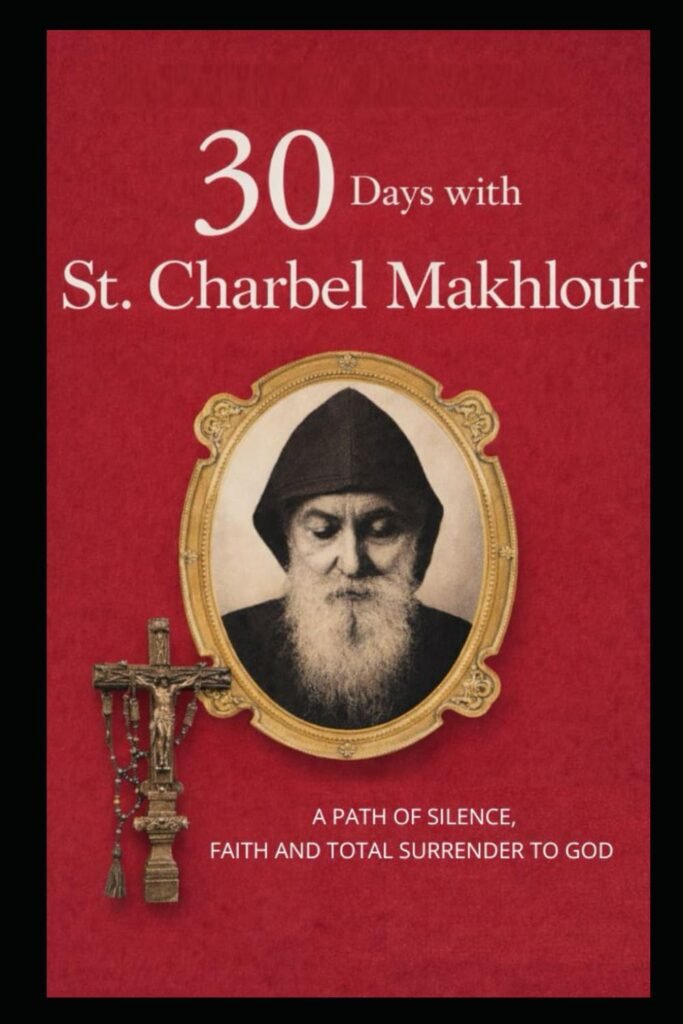
Small daily meditations inspired by the saint’s life
A model for today
In a society marked by anxiety, activism, and the relentless pursuit of recognition, Saint Charbel reminds us that true peace is born from communion with God.
His testimony remains relevant because it points to what never grows old: holiness.
📖 Keep digging deeper
➡️ 25 Inspiring Quotes from Saint Charbel’s Spiritual Legacy: Words of Faith for Difficult Times
11. The Life of a Hermit
After spending nearly sixteen years living in community at the Monastery of St. Maron, Brother Charbel felt an increasingly strong desire to devote himself entirely to a life of contemplation. Although he was already recognized as an exemplary monk, he believed God was inviting him to an even deeper level of prayer, solitude, and self-offering.
Within the tradition of the Maronite Catholic Church, the eremitical vocation is considered one of the highest expressions of consecrated life. A hermit does not withdraw from the Church or abandon the faithful; instead, he remains united to them through continual prayer, offering his life as an intercession for the salvation of the world.
In 1875, after a period of discernment and with the permission of his superiors, St. Charbel moved to the Hermitage of Saints Peter and Paul, located a short distance from the Monastery of Annaya.
He would spend the final twenty-three years of his earthly life there.
His desire for solitude was never an escape from people. Rather, it was a response to God’s call to love Him more completely and to pray unceasingly for all humanity.
Jesus Himself often sought solitude for prayer:
“But Jesus often withdrew to lonely places and prayed.” (Luke 5:16)
St. Charbel made this Gospel example the permanent pattern of his own life.
The Hermitage
His small hermitage reflected the radical simplicity he embraced.
Inside his cell there were only a few essential items:
- A simple wooden bed covered with straw
- A wooden headrest
- A modest table
- A small collection of liturgical books
- A crucifix
- An image of the Blessed Virgin Mary
Nothing more.
Every object reminded him that his true home was not on earth, but in heaven.
As St. Paul wrote:
“Our citizenship is in heaven.” (Philippians 3:20)
The Silence That Spoke of God
For St. Charbel, silence was never the absence of communication.
It was a continuous conversation with God.
In today’s world, our lives are often filled with constant notifications, social media, and endless streams of information.
St. Charbel points us toward a different path.
Silence purifies the heart.
In silence, authentic prayer takes root.
In silence, we become more attentive to the voice of God.
Perhaps this is why so many pilgrims who visit his humble hermitage in Annaya speak of experiencing an extraordinary sense of peace. Even now, the place where St. Charbel lived continues to invite visitors into a deeper encounter with God through the quiet witness of a life completely surrendered to Him.
📖 Keep reading
➡️ 10 Saint Charbel Quotes on Suffering That Offer Comfort in Hard Times
➡️ Finding Quiet Strength in Suffering Through Saint Charbel
➡️ The Mystery of Suffering: Insights from Saint Charbel Makhlouf
12. A Day in the Life of St. Charbel
The daily routine of St. Charbel Makhlouf reveals a life shaped by remarkable discipline, simplicity, and an unwavering focus on God. Every hour was intentionally dedicated to prayer, work, or spiritual reflection.
He believed that no moment should be wasted.
Every part of the day became an offering of love to the Lord.
A Typical Daily Schedule
| Time | Activity |
|---|---|
| 3:30 a.m. | Personal prayer and silent meditation |
| 4:00 a.m. | Liturgy of the Hours |
| 5:00 a.m. | Preparation for the Holy Mass |
| 6:00 a.m. | Celebration of the Eucharist |
| Morning | Spiritual reading and meditation |
| Midday | Manual labor |
| Afternoon | Prayer, Scripture reading, and simple daily tasks |
| Evening | Examination of conscience |
| Night | A brief period of rest |
His lifestyle was marked by extraordinary moderation.
He ate only what was necessary to sustain his health.
Frequent fasting formed a regular part of his spiritual discipline, and he deliberately avoided unnecessary comforts.
Those who knew him observed that he rarely complained and never grumbled.
Everything—whether pleasant or difficult—was offered to Christ with gratitude and love.
Work United with Prayer
Even after embracing the life of a hermit, St. Charbel did not abandon manual work.
He cultivated small gardens.
He prepared his own meals.
Whenever asked, he willingly assisted with simple tasks around the monastery.
For him, there was no division between prayer and labor.
Every ordinary duty became an act of worship.
His life beautifully reflected the words of St. Paul:
“Whatever you do, work at it with all your heart, as working for the Lord, not for human masters.” (Colossians 3:23)
St. Charbel’s daily example reminds us that holiness is not found only in extraordinary moments. It is built through faithful love expressed in the ordinary rhythms of everyday life, where every task can become a prayer when offered to God.
📖 Also read
➡️ Powerful Saint Charbel Quotes for Healing and Physical Illness
➡️ What Saint Charbel Teaches Us About Redemptive Suffering
13. The Holy Mass: The Heart of St. Charbel’s Life
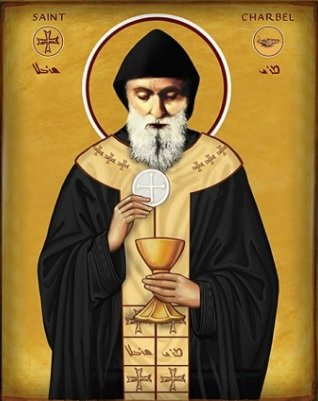
If there was one moment that St. Charbel Makhlouf looked forward to each day above all others, it was the celebration of the Holy Mass.
The Eucharist stood at the very center of his spirituality.
For St. Charbel, the Mass was far more than a religious obligation or daily routine.
It was a living encounter with Jesus Christ, truly present in the Blessed Sacrament.
The monks who lived with him testified that he celebrated every Mass with extraordinary reverence and profound recollection. Before approaching the altar, he often remained in silent prayer for several minutes, preparing his heart to enter into the mystery of Christ’s sacrifice.
His preparation for the Eucharist began long before the liturgy itself.
He spent time in prayer.
He meditated on the Scripture readings.
He examined his conscience.
Every detail reflected his deep awareness of the sacredness of the Holy Sacrifice of the Mass.
Jesus declared:
“Whoever eats my flesh and drinks my blood remains in me, and I in them.” (John 6:56)
St. Charbel embraced this promise with unwavering faith.
His deepest union with Christ was found in the Eucharist.
The Eucharist Shaped His Entire Life
For St. Charbel, the Mass was not simply one part of his daily schedule.
It was the source from which his entire spiritual life flowed.
From his communion with Christ came:
- His profound humility
- His patient endurance
- His strength to embrace sacrifice and penance
- His interior peace
- His compassionate love for others
Without the grace he received through the Eucharist, his remarkable witness of holiness would have been impossible.
A Timeless Invitation for Every Christian
The life of St. Charbel reminds us that authentic holiness begins with a close relationship with Jesus Christ.
Faithful participation in Sunday Mass remains the foundation of Catholic life.
Whenever circumstances allow, attending Mass during the week can deepen that relationship even further, nourishing the soul with God’s grace.
For the Catholic Church, the Eucharist remains the greatest treasure entrusted to believers—the real presence of Christ, who continues to strengthen His people and lead them toward eternal life.
📖 Keep reading
➡️ Five Days With Saint Charbel: A Free Catholic Devotional for Faith, Hope, and Prayer
➡️ Inspiring Saint Charbel Words for Caregivers and Loved Ones
14. The Heroic Virtues of St. Charbel
The Catholic Church officially recognized that St. Charbel Makhlouf practiced the Christian virtues to a heroic degree.
In Catholic theology, this does not mean living a perfect life without struggle. Rather, it means responding to God’s grace with exceptional fidelity, consistently practicing the virtues in an extraordinary way throughout one’s life.
St. Charbel’s holiness was expressed not through public achievements, but through countless hidden acts of love, sacrifice, and obedience.
Humility
St. Charbel never sought attention or recognition.
He preferred to remain hidden, allowing God alone to receive the glory.
Whenever others praised him, he redirected every compliment to the Lord, convinced that every good gift comes from God.
Jesus taught:
“For all those who exalt themselves will be humbled, and those who humble themselves will be exalted.” (Luke 14:11)
After his death, God fulfilled these words in a remarkable way, raising the humble monk of Annaya to worldwide recognition as one of the Church’s most beloved saints.
Obedience
Obedience was one of the defining characteristics of St. Charbel’s life.
He accepted the guidance of his religious superiors with trust, seeing legitimate authority as part of God’s providential plan.
His willingness to obey reflected Christ’s own perfect obedience to the Father.
Poverty
St. Charbel embraced evangelical poverty with joy.
He possessed only what was necessary for daily life.
He accumulated no wealth.
He sought no comfort or luxury.
His greatest treasure was not found in earthly possessions but in his relationship with God.
Chastity
Through his vow of consecrated chastity, St. Charbel offered his entire heart to Christ.
This complete dedication allowed him to love others with freedom, purity, and selfless charity, reflecting the universal love of the Gospel.
Charity
Although he lived as a hermit, St. Charbel never withdrew his love from the world.
His solitude became a ministry of intercession.
Each day he prayed for:
- The entire Church
- Sinners seeking conversion
- The sick and suffering
- Families in need
- Priests and religious
- Civil leaders
- Peace among nations
His hidden life demonstrates the enduring truth of Sacred Scripture:
“The prayer of a righteous person is powerful and effective.” (James 5:16)
Through his heroic virtues, St. Charbel reminds every Christian that true greatness is measured not by public success, but by faithful love for God expressed in the ordinary circumstances of daily life.
📖 Also read
➡️ Saint Charbel Quotes to Pray During Times of Bodily Weakness
➡️ Saint Charbel Quotes for Chronic Pain Warriors Seeking Hope
15. The Holy Death of St. Charbel
On December 16, 1898, during the celebration of the Holy Mass, one of the most significant moments of St. Charbel Makhlouf’s earthly life took place.
As he was pronouncing the words of consecration, he suffered a severe stroke.
Despite his sudden illness, he remained spiritually united to the Eucharistic sacrifice he had devoted his entire life to celebrating.
He was carried to his small cell, where he endured eight days of suffering with remarkable peace and unwavering faith.
Those who cared for him testified that he never complained.
He expressed no bitterness.
He offered no resistance to God’s will.
Instead, he continued to pray, embracing his final illness with the same trust and serenity that had marked every stage of his life.
On the night of December 24, 1898, the vigil of the Nativity of the Lord, St. Charbel peacefully surrendered his soul to God.
It was a fitting conclusion to a life entirely dedicated to Christ—the Savior whose birth the Church was preparing to celebrate.
His Final Witness
St. Charbel died in the same spirit in which he had lived:
- In prayer
- In silence
- United to the Holy Eucharist
- Completely surrendered to the will of God
His final days beautifully echo the words of St. Paul:
“I have fought the good fight, I have finished the race, I have kept the faith.” (2 Timothy 4:7)
These words seem to capture the essence of St. Charbel’s earthly journey—a life faithfully lived until the very end.
A Legacy That Endures
Following his death, the monks buried St. Charbel according to the customs of the Maronite Order.
At the time, nothing suggested that this humble hermit would one day become one of the most beloved saints in the Catholic Church.
Yet only a few days after his burial, extraordinary events began attracting attention throughout the region.
Witnesses reported mysterious lights appearing above his tomb.
These unusual signs marked the beginning of a remarkable story that would soon draw pilgrims, inspire countless testimonies of grace, and establish St. Charbel Makhlouf as one of the most widely venerated saints of the modern era.
📖 Keep reading
➡️ Finding Meaning in Pain: Timeless Lessons from Saint Charbel
➡️ Como Foi a Morte de São Charbel?
➡️ As Luzes Misteriosas Sobre o Túmulo de São Charbel
16. The Mysterious Lights Above St. Charbel’s Tomb
When St. Charbel Makhlouf died on December 24, 1898, it seemed that the life of a humble monk, who had spent decades hidden from the world, had quietly come to an end. Yet only a few days after his burial, extraordinary events began to unfold around his tomb, drawing the attention of the monks of the Monastery of St. Maron and the people living near Annaya.
For several consecutive nights, local residents reported seeing an intense light shining above the place where St. Charbel had been laid to rest. Witnesses described the phenomenon as unusually bright, steady, and visible even from a considerable distance.
As more people observed the same event, the reports spread quickly.
Farmers, pilgrims, and members of the religious community all recounted similar experiences, prompting the monastery’s superiors to investigate the matter with great care and prudence.
Although the Catholic Church always approaches extraordinary claims with caution, these unusual occurrences eventually led to the decision to reopen St. Charbel’s tomb for further examination.
The Church’s Prudence in Recognizing Miracles
The Catholic Church never declares an event to be miraculous solely because of popular testimony or widespread devotion.
Before officially recognizing any miracle or extraordinary sign, the Church conducts a thorough investigation. Witnesses are interviewed, medical experts may be consulted, historical evidence is carefully examined, and every possible natural explanation is considered.
The Catechism of the Catholic Church teaches that miracles are signs meant to strengthen faith, not replace it:
“The miracles of Christ and the saints confirm that the Kingdom of God is present among us.” (cf. Catechism of the Catholic Church, 547–550)
In the case of St. Charbel, the mysterious lights above his tomb attracted considerable attention. However, it was the remarkable series of events that followed—including documented healings and other extraordinary phenomena—that ultimately reinforced his growing reputation for holiness.
A Sign That Pointed to Christ
The Church has never taught that the lights themselves possessed any supernatural power or were an end in themselves.
Every authentic miracle points beyond itself to God.
The saints never seek to draw attention to themselves.
Their mission is always to lead others to Jesus Christ.
As the Lord taught:
“Let your light shine before others, that they may see your good works and glorify your Father in heaven.” (Matthew 5:16)
The entire life of St. Charbel Makhlouf reflected this Gospel truth. His quiet witness became a light that continues to guide countless people toward a deeper faith in Christ and a renewed trust in God’s mercy.
📖 Keep reading
➡️ As Luzes Misteriosas no Túmulo de São Charbel
➡️ Os Primeiros Milagres Após a Morte de São Charbel
➡️ O Que a Igreja Diz Sobre Sinais Extraordinários?
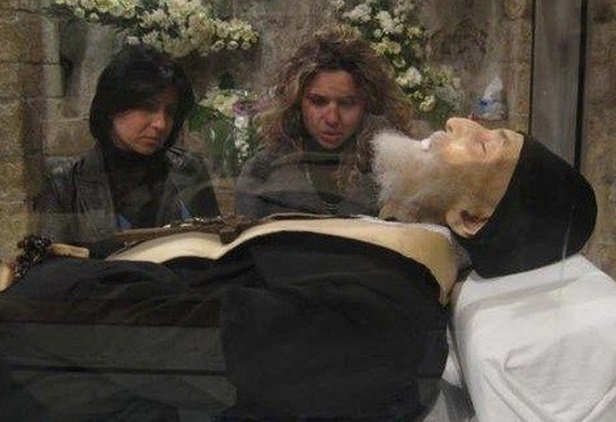
17. The Incorrupt Body of Saint Charbel
The Incorrupt Body of St. Charbel
Because of the extraordinary events reported around the tomb, the superiors of the monastery decided to open the grave and examine what had occurred.
What they discovered deeply surprised everyone present.
According to historical records preserved by the Lebanese Maronite Order, the body of St. Charbel Makhlouf showed unusual characteristics for someone who had been buried for several months.
Among the reported observations were:
- Extraordinary preservation of the body
- Flexibility of the limbs
- The absence of the normal signs of decomposition expected after death
- The presence of a reddish liquid that continued to flow from the body
Over the following decades, St. Charbel’s remains were examined on several occasions.
These events attracted attention not only from the religious world but also from researchers interested in understanding the phenomenon.
What Does “Incorrupt Body” Mean?
In Catholic tradition, an incorrupt body refers to a body that demonstrates an unusual degree of preservation after death.
However, the Church makes an important distinction.
Incorruptibility is not a requirement for sainthood.
Throughout history, many saints have experienced the normal process of bodily decomposition after death.
Likewise, the preservation of a body alone is not automatic proof of holiness.
The Church recognizes sanctity primarily through the person’s heroic practice of Christian virtues, complete fidelity to Christ, and—when applicable—the confirmation of miracles carefully investigated during the canonization process.
A Reminder of Christian Hope
The incorrupt body of St. Charbel points believers toward one of the central truths of the Christian faith:
Death does not have the final victory.
As St. Paul teaches:
“If Christ has been raised from the dead, so also will we be raised.” (cf. 1 Corinthians 15)
The phenomenon surrounding St. Charbel’s body naturally inspires wonder and reflection. However, its deepest purpose is not curiosity—it is to renew Christian hope in the resurrection promised by Jesus Christ and remind us that the destiny of every faithful believer is eternal life with God.
📖 Keep reading
➡️ O Corpo Incorrupto de São Charbel: História e Fé
➡️ Por Que o Corpo de São Charbel Não se Decompôs?
➡️ O Que Significa um Corpo Incorrupto na Igreja Católica?
18. The Scientific Mystery of St. Charbel’s Body
The body of St. Charbel Makhlouf has been examined on several occasions by physicians and specialists throughout the years.
Various reports have described characteristics considered unusual for remains that have been preserved for such an extended period of time.
Among the observations frequently mentioned are:
- Long-term preservation of bodily tissues
- The continued presence of a certain degree of flexibility
- The ongoing exudation of a liquid described as resembling a mixture of blood and plasma over many years
These unusual circumstances generated significant scientific interest.
However, it is important to understand that science and faith operate within different fields of inquiry.
Science seeks to investigate and understand natural phenomena through observation and analysis.
Faith recognizes God’s freedom to act within history and acknowledges realities that transcend the limits of human investigation.
When an event does not yet have a satisfactory scientific explanation, this does not automatically mean that science has “proven a miracle.” Likewise, the absence of a known explanation does not remove the need for careful spiritual discernment by the Church.
The Catholic Church has always approached extraordinary events with great prudence.
For this reason, miracles considered during beatification and canonization processes undergo rigorous medical examination by independent specialists before receiving theological evaluation.
Faith and Reason Walking Together
St. John Paul II beautifully expressed the relationship between faith and reason:
“Faith and reason are like two wings on which the human spirit rises to the contemplation of truth.”
The mystery surrounding St. Charbel’s body continues to attract attention precisely because it invites both careful investigation and deeper contemplation.
It encourages people not only to ask scientific questions but also to reflect on the greater spiritual message behind the life of a man who completely surrendered himself to God.
📖 Also read
➡️ Como a Ciência Estudou o Corpo de São Charbel
➡️ Fé e Ciência: O Mistério do Corpo Incorrupto
➡️ Os Relatórios Médicos Sobre São Charbel
19. The Oil of St. Charbel
Among the most recognized elements of devotion to St. Charbel Makhlouf is what is commonly known as the Oil of St. Charbel.
It is important to clarify that this oil does not possess magical power.
In Catholic tradition, it is considered a sacramental—a sacred sign established by the Church that helps prepare the faithful to receive God’s grace when used with faith, prayer, and proper devotion.
Sacramentals are different from the sacraments.
While the sacraments were instituted by Christ and communicate God’s grace through His divine authority, sacramentals are established by the Church to encourage holiness, strengthen faith, and deepen the spiritual life of believers.
The oil associated with the devotion to St. Charbel is often used during prayers for the sick, for families, and for those experiencing moments of physical, emotional, or spiritual difficulty.
How to Use the Oil Properly
The Church encourages the faithful to use sacramentals:
- Together with prayer
- With complete trust in God
- In harmony with participation in the sacraments
- Without superstition
- Without attributing independent power to the object itself
Every grace received ultimately comes from God alone.
St. Charbel is honored as an intercessor who prays for the faithful, never as the source of divine grace.
As St. Paul teaches:
“For there is one God and one mediator between God and mankind, the man Christ Jesus.” (1 Timothy 2:5)
The saints participate in God’s work as His friends, joining their prayers with ours and interceding before Him on behalf of His people.
The devotion to the Oil of St. Charbel, therefore, should always lead the believer beyond the physical sign and toward a deeper relationship with Jesus Christ, the true source of healing, mercy, and salvation.
📖 Keep reading
➡️ Como Usar o Óleo de São Charbel na Oração
➡️ O Óleo de São Charbel Faz Milagres?
➡️ Sacramentais: O Que Ensina a Igreja Católica?
20. Relics and Recognized Miracles of St. Charbel
Since his canonization, St. Charbel Makhlouf has become one of the most venerated saints in both the Eastern and Western Catholic traditions.
His relics have traveled to many countries, bringing together thousands of faithful people in celebrations, prayers, and moments of spiritual renewal.
In Catholic tradition, relics are not objects of worship or adoration.
They receive veneration because they remind believers of men and women who lived the Gospel with extraordinary faithfulness and became witnesses of Christ’s love in the world.
The Catechism of the Catholic Church explains:
“The honor given to the relics of the saints is connected with the veneration of those who glorified Christ through their lives.” (cf. CCC 1674)
Officially Recognized Miracles
During the processes of beatification and canonization, the Catholic Church carefully examined numerous reports of healings and extraordinary favors attributed to the intercession of St. Charbel.
Only after detailed medical investigations and theological evaluation were certain miracles officially recognized by the Church.
Even after his canonization, new testimonies continue to arrive at the Monastery of Annaya, where pilgrims and faithful share accounts of graces received through his prayers.
Among the most common intentions brought by devotees are requests for:
- Healing from serious illnesses
- Strengthening of faith
- Restoration of troubled families
- Protection of children
- Freedom from addictions
- Inner peace
- Help in situations that seem impossible
The Church encourages the faithful to seek the intercession of the saints while always remembering that every grace ultimately comes from the mercy and love of God.
As the Letter to the Hebrews teaches:
“Since we are surrounded by such a great cloud of witnesses…” (Hebrews 12:1)
St. Charbel belongs to this great communion of saints—those who have entered the glory of God and continue to pray for the Church on her earthly pilgrimage.
📖 Keep reading
➡️ Os Maiores Milagres de São Charbel
➡️ As Relíquias de São Charbel pelo Mundo
➡️ Milagres Reconhecidos Pela Igreja Católica
➡️ Como Pedir a Intercessão de São Charbel
21. Beatification and Canonization of St. Charbel
The reputation of St. Charbel Makhlouf’s holiness began spreading shortly after his death. The mysterious lights reported above his tomb, the extraordinary condition of his body, and the growing number of graces attributed to his intercession led pilgrims from different regions of Lebanon to visit the Monastery of Annaya.
However, the Catholic Church always approaches such events with great prudence and careful discernment.
Before anyone is officially proclaimed a saint, their entire life is thoroughly examined. The Church studies their writings, their witness of faith, their fidelity to the Gospel, and, when applicable, the miracles attributed to their intercession.
In the case of St. Charbel, this long process confirmed what many faithful had already recognized: he was a man who lived the Christian virtues in an extraordinary way.
The Beatification
On December 5, 1965, during the Second Vatican Council, Pope St. Paul VI officially declared Brother Charbel Makhlouf Blessed.
It was a historic moment not only for Lebanon but for the entire Catholic Church.
The Pope highlighted the monk’s life of silence, prayer, and penance as a powerful witness for the modern world—a reminder that true holiness is found in complete dedication to God.
The Canonization
After the recognition of additional miracles, Pope St. Paul VI canonized Charbel Makhlouf on October 9, 1977.
From that moment onward, he became officially recognized and venerated throughout the universal Catholic Church.
His liturgical feast is celebrated on July 24, a day when millions of faithful remember his life and seek his powerful intercession.
The Letter to the Hebrews reminds us:
“Remember your leaders, who spoke the word of God to you. Consider the outcome of their way of life and imitate their faith.” (Hebrews 13:7)
Canonization does not “create” a saint.
Rather, it officially recognizes what God has already accomplished in the life of that person.
Through canonization, the Church presents the saint as a model of Christian holiness and a witness who continues to encourage believers on their own journey toward God.
📖 Keep reading
➡️ Beatificação e Canonização de São Charbel: Como Aconteceu
➡️ Os Milagres Reconhecidos pela Igreja no Processo de Canonização
➡️ Por Que São Charbel Foi Canonizado?
22. How to Ask Saint Charbel for a Grace
How to Ask for the Intercession of St. Charbel
Millions of people around the world turn daily to the intercession of St. Charbel Makhlouf.
But how should we make such a request?
The Catholic Church teaches that the saints do not replace Christ.
Every grace comes from God alone.
The saints simply pray for us and with us as members of the Communion of Saints.
Just as we ask a friend on earth to pray for our needs, we can also ask those who already contemplate God in heaven to intercede for us before the Lord.
The Catechism of the Catholic Church teaches:
“The intercession of the saints is their most exalted service to God’s plan.” (cf. CCC 956)
How to Pray for St. Charbel’s Intercession
Before beginning your prayer, it is recommended to:
- Make the Sign of the Cross
- Place yourself in God’s presence
- Read a passage from Sacred Scripture
- Present your intention with sincerity and faith
- Conclude with the Our Father, Hail Mary, and Glory Be
More important than repeating many words is having a heart filled with trust in God’s providence.
Jesus taught:
“Whatever you ask for in prayer, believe that you have received it, and it will be yours.” (Mark 11:24)
However, this confidence must always be united with complete acceptance of God’s will, knowing that He sees beyond what we can understand.
When Do People Seek the Intercession of St. Charbel?
The faithful often ask for his prayers in situations such as:
- Serious illnesses
- Medical procedures and surgeries
- Anxiety and emotional struggles
- Depression and moments of deep suffering
- Restoration of marriages and families
- Conversion of loved ones
- Unemployment and financial difficulties
- Spiritual strengthening
- Vocational discernment
St. Charbel’s intercession reminds believers that they are never alone in their struggles. His life points us back to the source of every blessing: God’s infinite love and mercy revealed in Jesus Christ.
📖 Also read
➡️ Como Pedir uma Graça a São Charbel
➡️ Como Fazer um Pedido com Fé
➡️ Testemunhos de Graças Alcançadas
23. The Novena of St. Charbel
Among all the devotional practices dedicated to St. Charbel Makhlouf, his Novena holds a special place in the hearts of many faithful around the world.
It consists of nine consecutive days of prayer, during which believers present their intentions to God while seeking the intercession of the beloved Lebanese saint.
The number nine has a deep biblical meaning. It recalls the nine days when the Apostles remained united in prayer between the Ascension of the Lord and the coming of the Holy Spirit at Pentecost (cf. Acts 1:14).
A novena is not a magical formula or a way of forcing God’s will.
Rather, it is a spiritual journey of perseverance, trust, and faithful prayer.
Jesus Himself taught the importance of this attitude through a parable:
“It is necessary to pray always and never lose heart.” (Luke 18:1)
How to Pray the Novena of St. Charbel
During the nine days of prayer, it is recommended to:
- Choose a specific time for prayer each day
- Make the Sign of the Cross
- Read a passage from Sacred Scripture
- Pray the proper prayer of the novena
- Present your personal intention to God
- Thank the Lord for His love and providence
Whenever possible, the faithful are also encouraged to:
- Participate in the Holy Mass
- Receive the sacraments
- Practice an act of charity toward others
These practices help transform the novena into a deeper Christian experience—one that does not focus only on receiving a favor, but on growing closer to God through faith, surrender, and love.
Through the intercession of St. Charbel, the faithful are invited to strengthen their trust in God’s timing and remember that every prayer offered with a sincere heart is heard by the Father.
📖 Keep reading
➡️ Novena Completa de São Charbel
➡️ Como Fazer a Novena Passo a Passo
➡️ Novena de São Charbel em PDF Gratuito
24. The Most Well-Known Prayers to St. Charbel
Throughout the past decades, several prayers inspired by the spirituality and example of St. Charbel Makhlouf have become popular among Catholics around the world.
Although these prayers may have different intentions, they all share the same purpose:
To lead the faithful closer to Jesus Christ.
Among the most beloved prayers are:
Prayer for Healing
This prayer is frequently used by those who are sick and by family members who are seeking comfort and hope.
It reminds believers that God remains the true healer of both body and soul.
Prayer for the Family
Many devotees ask for St. Charbel’s intercession for their homes, praying for protection, unity between spouses, and spiritual strength for their children.
Prayer for Inner Peace
This prayer is especially sought during moments of anxiety, suffering, uncertainty, and emotional struggles.
It asks God for the grace to remain calm and trust in His providence even during difficult circumstances.
Prayer for Conversion
This prayer seeks the Lord’s mercy for those who desire a deeper return to the faith, reconciliation with God, and a renewed commitment to Christian life.
Prayer Before Surgery
Many faithful ask for St. Charbel’s intercession before medical procedures, placing their fears, concerns, and hopes into God’s loving hands.
Prayer Should Lead Us to the Sacraments
Christian prayer never replaces the essential means of grace given by Christ, including:
- The Holy Mass
- Confession
- The Holy Eucharist
- The reading of Sacred Scripture
On the contrary, authentic prayer leads believers to participate more deeply in these treasures of the Church.
As St. Paul encouraged the early Christians:
“Pray without ceasing.” (1 Thessalonians 5:17)
The prayers associated with St. Charbel are valuable because they do not end with the saint—they direct the heart toward God, the ultimate source of every grace, healing, and blessing.
📖 Keep reading
➡️ Oração de São Charbel para Cura
➡️ Oração de São Charbel para Ansiedade
➡️ Oração de São Charbel para Depressão
➡️ Oração de São Charbel para Casamentos
➡️ Oração de São Charbel para os Filhos
➡️ Oração de São Charbel para Doentes
25. The Spiritual Legacy of St. Charbel for the Modern World
We live in an age marked by information overload, anxiety, superficiality, and an increasingly accelerated way of life.
In this environment, St. Charbel Makhlouf remains remarkably relevant.
His life offers profound answers to some of the greatest struggles faced by modern humanity.
In a Noisy World…
St. Charbel teaches us the value of silence.
Not an empty silence.
Rather, the kind of silence that opens the heart to God’s presence and allows us to hear His voice more clearly.
In an Anxious World…
He reminds us that true peace does not come from controlling every circumstance, but from trusting in Divine Providence.
Jesus taught:
“Therefore do not worry about tomorrow, for tomorrow will worry about itself.” (Matthew 6:34)
The life of St. Charbel reveals that a heart surrendered to God can remain peaceful even in the midst of uncertainty.
In a Divided World…
St. Charbel invites us to rediscover the power of forgiveness, reconciliation, and charity.
His example reminds us that love is not merely a feeling, but a daily choice to reflect the mercy of Christ.
In a Materialistic World…
He reminds us that no earthly possession can fill the emptiness of a soul searching for God.
His life confirms the words of Jesus:
“For where your treasure is, there your heart will be also.” (Matthew 6:21)
A Saint for Every Generation
Today, devotion to St. Charbel can be found among people from every stage of life:
- Children
- Young people
- Married couples
- Priests
- Religious men and women
- The elderly
- The sick
- Professionals from many different fields
His life demonstrates that holiness does not belong only to the past.
It remains a real and possible path for everyone who desires to follow Christ with faithfulness and love.
An Invitation to Conversion
The greatest miracle associated with St. Charbel is not merely the extraordinary preservation of his body.
Nor is it only the countless healings and favors attributed to his intercession.
His greatest miracle is that he continues to lead souls to an encounter with Jesus Christ.
Whenever a person returns to the sacraments, rediscovers peace, forgives someone, rebuilds a broken family, or chooses to live the Gospel more deeply, the true purpose of devotion to the saints is fulfilled.
As St. John the Baptist declared:
“He must increase; I must decrease.” (John 3:30)
St. Charbel lived this message perfectly.
He chose a hidden life so that Christ might become known.
His entire existence points to the same truth: the holiness of the saints is not about drawing attention to themselves, but about revealing the greatness, mercy, and love of God.
26. The Worldwide Devotion to St. Charbel
What began in the small village of Bekaa Kafra in northern Lebanon has become one of the most remarkable Catholic devotions of modern times.
Today, St. Charbel Makhlouf is honored and venerated across nearly every continent.
His name can be found in:
- Churches
- Chapels
- Hospitals
- Religious communities
- Prayer groups
- The homes of Christian families
Although St. Charbel belongs to the Maronite Catholic tradition, devotion to him has crossed cultural, geographical, and liturgical boundaries.
Catholics of the Latin Rite, Eastern Catholics, and even many Christians from other traditions have come to know his life story and seek his intercession.
Why Has Devotion to St. Charbel Grown So Rapidly?
Several factors have contributed to the worldwide spread of his devotion.
Among them are:
- Testimonies of graces received through his intercession
- Reported physical healings
- Profound spiritual conversions
- The simplicity of his life
- His complete faithfulness to the Church
- His extraordinary example of humility
However, there is an even deeper reason behind his popularity.
St. Charbel leads people to Christ.
This was always the true purpose of his life.
He never sought attention for himself. His entire existence was directed toward making God known and helping souls grow closer to Jesus.
Devotion to St. Charbel in Brazil
In recent decades, Brazil has become one of the countries where devotion to the Lebanese saint has grown significantly.
Many dioceses and Catholic communities have:
- Images of St. Charbel
- Monthly celebrations
- Novena prayers
- Prayer groups
- Pilgrimages and devotional gatherings
Many descendants of Lebanese immigrants played an important role in spreading his devotion throughout Brazil.
Today, however, thousands of Brazilians with no family connection to Lebanon also turn daily to St. Charbel’s intercession, seeking spiritual strength, healing, and hope.
Devotion to St. Charbel in the United States
In the United States, several Maronite Catholic churches are dedicated to St. Charbel.
Beyond the Lebanese-American community, many people have discovered his story through books, documentaries, personal testimonies, and accounts of extraordinary favors received through prayer.
This growing interest can also be seen in online searches for topics such as:
- Saint Charbel healing
- Saint Charbel miracles
- Saint Charbel prayer
- Saint Charbel novena
The international devotion to St. Charbel reveals something profound: his message of prayer, silence, humility, and complete trust in God continues to speak powerfully to the spiritual needs of people everywhere.
His life belongs not only to Lebanon, but to the entire Catholic Church.
📖 Keep reading
➡️ São Charbel no Brasil: Onde Encontrar Igrejas e Comunidades
➡️ A Devoção Mundial a São Charbel
➡️ Como São Charbel se Tornou Conhecido no Mundo Inteiro
27. Pilgrimage to the Monastery of Annaya
Every year, hundreds of thousands of pilgrims travel to the Monastery of St. Maron in Annaya, Lebanon, seeking to pray and draw closer to God through the example and intercession of St. Charbel Makhlouf.
At this sacred place, visitors can find:
- The tomb of St. Charbel
- His former monastic cell
- The hermitage where he spent the final years of his life
- Objects used during his earthly journey
- Places dedicated to prayer and reflection
For many pilgrims, visiting Annaya becomes a deeply spiritual experience.
The peaceful atmosphere of the monastery preserves the same spirit of silence and recollection that marked the entire life of St. Charbel.
What Do Pilgrims Discover in Annaya?
Beyond the tomb of the saint, visitors can explore:
- The monastery church
- The museum dedicated to St. Charbel
- Historical manuscripts
- Liturgical vestments
- Ancient photographs
- Records of testimonies and reported miracles
Many pilgrims also leave letters containing prayer intentions, personal struggles, and expressions of gratitude for graces they believe were received through St. Charbel’s intercession.
A Pilgrimage of the Heart
Not everyone has the opportunity to travel to Lebanon.
However, the Catholic tradition reminds us that the most important pilgrimage takes place within the human heart.
Following the example of St. Charbel means:
- Participating faithfully in the Holy Mass
- Seeking the grace of the sacraments
- Cultivating moments of silence and prayer
- Practicing charity toward others
- Growing in a deeper relationship with God
The true purpose of visiting sacred places is not only to arrive at a physical destination, but to allow God to transform the soul.
The monastery of Annaya remains a powerful reminder that holiness is possible wherever a person sincerely seeks Christ with humility, faith, and love.
📖 Also read
➡️ Como Visitar o Mosteiro de Annaya
➡️ Conheça o Túmulo de São Charbel
➡️ O Eremitério Onde Viveu São Charbel
28. Interesting Facts About St. Charbel
Throughout the years, many details about the life of St. Charbel Makhlouf have captured the attention of historians, scholars, and faithful devotees around the world.
Behind his extraordinary spiritual legacy are many fascinating aspects that reveal the simplicity and depth of his life.
His Real Name
Many people do not know that his birth name was:
Youssef Antoun Makhlouf.
The name Charbel was only adopted after he entered religious life and received his monastic identity.
This new name represented a new mission completely dedicated to God.
He Lived Hidden from the World
Throughout his earthly life, very few people imagined that this humble monk would one day become known across the globe.
He never wrote famous books.
He never founded religious congregations.
He never preached to large crowds.
His mission unfolded almost entirely in silence, prayer, and complete surrender to God.
He Celebrated the Holy Mass with Deep Reverence
Many religious brothers who lived with him testified that simply attending a Mass celebrated by St. Charbel was enough to perceive his profound union with God.
His way of celebrating the Eucharist inspired recollection, respect, and deep devotion among those who witnessed it.
For him, the Holy Mass was not merely a religious obligation—it was the encounter with the living Christ.
He Loved Silence
St. Charbel spoke only when necessary.
A large part of his day was dedicated to prayer, meditation, and communion with God.
His silence was never emptiness or isolation.
It was a continuous conversation with the Lord.
In a world filled with noise and distractions, his example remains a powerful reminder of the importance of interior silence.
One of the Most Beloved Saints of the East
Today, St. Charbel is recognized as one of the greatest representatives of Maronite spirituality and one of the most venerated Eastern Catholic saints in the Church.
His life continues to inspire millions of people because it reveals a timeless truth:
A soul completely surrendered to God can transform the world—even through a life lived quietly and hidden from human recognition.
📖 Keep reading
➡️ 20 Curiosidades Sobre São Charbel
➡️ Fatos Pouco Conhecidos da Vida de São Charbel
➡️ Por Que São Charbel Continua Fascinando o Mundo?
29. What the Church Teaches About the Intercession of the Saints
Some people ask:
“Why should we ask for the intercession of St. Charbel if we can pray directly to God?”
The Catholic Church gives a clear answer.
Every Christian is called to pray directly to the Lord.
At the same time, Sacred Scripture teaches that God desires His children to pray for one another.
St. Paul wrote:
“First of all, then, I urge that supplications, prayers, intercessions, and thanksgivings be made for everyone.” (1 Timothy 2:1)
If we ask our brothers and sisters who are still living on earth to pray for us, we can also ask the intercession of those who already share in the glory of God.
This spiritual reality is known as:
The Communion of Saints
The Catechism of the Catholic Church teaches:
“The intercession of the saints is their most exalted service to God’s plan.” (CCC 956)
Therefore:
- We worship God alone
- We honor the saints
- We ask for their intercession
This distinction is essential for properly understanding Catholic teaching.
Every Grace Comes From God
St. Charbel does not replace Jesus Christ.
Christ remains:
- The one Savior
- The one Redeemer
- The one Mediator between God and humanity (cf. 1 Timothy 2:5)
The saints simply unite their prayers with ours and present our intentions before the Lord.
For this reason, authentic devotion to the saints always leads believers toward a deeper relationship with God, especially through:
- The Holy Sacraments
- The Word of God
- A life of Christian faith and charity
True devotion never ends with the saint—it always points toward Christ, the source of all grace and salvation.
📖 Also read
➡️ O Que Diz o Catecismo Sobre a Intercessão dos Santos
➡️ Podemos Pedir Orações aos Santos?
➡️ A Comunhão dos Santos Explicada
30. Frequently Asked Questions (FAQ) About St. Charbel
Did St. Charbel Really Perform Miracles?
The Catholic Church has recognized miracles attributed to the intercession of St. Charbel Makhlouf after careful medical and theological investigations.
In addition to officially recognized cases, many faithful people report personal graces received through his prayers, always understood with the guidance and discernment of the Church.
What Is the Most Well-Known Prayer to St. Charbel?
The prayer asking for his intercession for the healing of the sick is among the most widespread devotions, along with the Novena of St. Charbel.
Does St. Charbel Help People Who Suffer From Anxiety?
Many faithful turn to his intercession seeking inner peace, strength, and spiritual comfort during times of anxiety and uncertainty.
However, prayer does not replace professional medical or psychological support when such help is needed. Faith and proper care can walk together.
Does St. Charbel Help Those Experiencing Depression?
Many devotees testify that they have found spiritual consolation through his intercession.
The Church encourages believers to combine a life of prayer with appropriate treatment, support from qualified professionals, and participation in the sacraments.
How Do I Pray the Novena of St. Charbel?
The Novena of St. Charbel is prayed over nine consecutive days.
During this period, the faithful are encouraged to:
- Pray the specific prayers of the novena
- Meditate on the Word of God
- Present their personal intentions
- Participate in the Holy Mass whenever possible
Where Is the Body of St. Charbel Located?
His body rests at the Monastery of St. Maron in Annaya, Lebanon, one of the most important Christian pilgrimage destinations in the Middle East.
Does the Oil of St. Charbel Perform Miracles?
The oil associated with St. Charbel’s devotion is a sacramental used in prayer.
The Church teaches that every grace comes from God. The oil itself has no magical power and should never be understood as an object with independent supernatural force.
Why Did His Body Remain Incorrupt?
The condition of St. Charbel’s body has attracted both religious and scientific interest.
The Church considers it an extraordinary phenomenon, but his holiness is not based only on this event.
His sanctity is primarily recognized because of his heroic virtues, deep faith, and complete dedication to Christ.
Can I Ask St. Charbel for an Impossible Grace?
Yes.
The faithful may present any intention to God through the intercession of St. Charbel, always trusting in God’s wisdom and divine will.
Prayer expresses confidence that God can act beyond human limitations while recognizing that His plan is always perfect.
What Was the Greatest Miracle of St. Charbel?
According to Catholic faith, the greatest miracle connected with St. Charbel is not merely a physical phenomenon.
The greatest miracle is the transformation of hearts—the return of people to God, reconciliation with Him, and a renewed commitment to living the Gospel.
The true mission of St. Charbel continues to be the same as during his earthly life: to lead souls closer to Jesus Christ.
31. Conclusion
To know the life of St. Charbel Makhlouf is much more than studying the biography of a Lebanese monk who lived in the nineteenth century.
It is to discover how the grace of God can transform a simple life into a radiant testimony of faith for the entire Church.
His childhood shaped by faith, his complete dedication to monastic life, his years of silence in the hermitage, his profound love for the Eucharist, his humility, and his obedience reveal a timeless truth:
Holiness is born from daily faithfulness to the Gospel.
The miracles attributed to his intercession, the extraordinary preservation of his body, and the worldwide devotion surrounding his name are signs that point to a deeper reality:
God continues to act throughout history through those who allow themselves to be transformed by His grace.
Throughout this guide, we have seen that St. Charbel never sought fame, power, or human recognition.
His desire was to remain hidden so that Christ might be known.
This remains the greatest lesson of his life for Christians today.
In a world that often seeks attention, success, and external approval, St. Charbel reminds us that true greatness is found in humility, prayer, and complete surrender to God.
If this content has strengthened your faith, continue deepening your spiritual journey by exploring the other articles of the Catholic Library, where you will find studies about the life of St. Charbel, his prayers, novenas, miracles, Maronite spirituality, as well as content dedicated to other saints, the sacraments, and the teachings of the Catholic Church.
“Jesus Christ is the same yesterday and today and forever.” (Hebrews 13:8)
May, through the intercession of St. Charbel Makhlouf, the Lord grant each of us the grace of a persevering faith, an unwavering hope, and a charity that grows ever more perfect.
Amen.
About the Author
Wander Venerio Cardoso de Freitas is a theologian, educator, and author of books on Catholic spirituality, the lives of the saints, and Christian formation. He is the founder of the portal O Senhor Te Dê a Paz (Saints Library), dedicated to evangelization through articles, books, and digital content.