The Most Inspiring Quotes of Saint Charbel: Words That Continue to Transform Hearts Around the World
Throughout history, countless saints have left behind memorable words that continue to guide Christians in their spiritual journey. Among these remarkable witnesses of faith stands Saint Charbel Makhlouf, the humble Lebanese monk whose life of silence, prayer, and complete surrender to God continues to inspire millions across the globe.
Unlike many famous spiritual writers, Saint Charbel did not seek public recognition or literary fame. His greatest sermon was the witness of his life. Most of the sayings attributed to him have been preserved through his letters, spiritual traditions, testimonies of fellow monks, and reflections inspired by his teachings.
Today, the quotes of Saint Charbel are shared by Catholics from every continent because they express timeless truths about faith, humility, suffering, hope, and the transforming power of prayer.
His words are simple, yet profound.
They invite us to leave behind the noise of the world and rediscover the presence of God in silence.
In this article, you will discover some of the most inspiring sayings associated with Saint Charbel, understand their spiritual meaning, and learn how they can strengthen your daily relationship with Christ.
Who Was Saint Charbel?
Saint Charbel Makhlouf was born on May 8, 1828, in the small mountain village of Bekaa Kafra, Lebanon, one of the highest permanently inhabited villages in the Middle East. Raised in a humble Maronite Catholic family, he grew up surrounded by a deep spirit of faith, simplicity, and devotion that would shape the course of his entire life.
From an early age, Charbel showed an extraordinary love for prayer, silence, and solitude. While other children spent their free time playing, he often sought quiet places to pray and meditate, developing a profound relationship with God that became the foundation of his vocation.
At the age of twenty-three, he entered the Lebanese Maronite Order, leaving behind worldly ambitions to dedicate himself completely to Christ. Upon entering religious life, he embraced a path of sacrifice, obedience, and continual conversion, seeking nothing more than to know, love, and serve God with his whole heart.
After completing his religious formation and being ordained a priest, Saint Charbel spent many years living in monastic community before eventually becoming a hermit. There, in almost complete isolation, he devoted himself to an intense life of prayer, contemplation, manual labor, and Eucharistic worship.
For decades, his daily life was marked by:
- profound silence;
- frequent fasting and self-denial;
- humble manual labor;
- unwavering Eucharistic devotion;
- complete obedience to his religious superiors;
- deep humility;
- constant prayer;
- meditation on Sacred Scripture;
- love for the Blessed Virgin Mary;
- total trust in God’s Divine Providence.
Although he lived hidden from the world, his holiness could not remain unnoticed. Fellow monks admired his simplicity, charity, and unwavering commitment to the Gospel. His life became a powerful testimony that true greatness is found not in fame or earthly success, but in complete surrender to God’s will.
Following his death on December 24, 1898, extraordinary events surrounding his tomb attracted widespread attention. Reports of mysterious lights, the preservation of his body for many years, and countless miraculous healings through his intercession spread rapidly throughout Lebanon and eventually around the world.
Today, Saint Charbel is recognized as one of the most beloved Catholic saints of modern times. Millions of pilgrims visit his monastery each year, and countless faithful continue to seek his intercession for physical healing, spiritual renewal, family needs, and a deeper relationship with Jesus Christ. His life remains a timeless reminder that a soul completely united with God can become a powerful instrument of grace, hope, and holiness for the entire world.
📚 This article is part of the Ultimate Guide to St. Charbel
If you want to discover the complete story of St. Charbel Makhlouf—from his childhood, religious vocation, and monastic life to the miracles recognized by the Church, the mystery of his incorrupt body, his prayers, the novena, his powerful intercession, and his extraordinary path to holiness—be sure to visit our Ultimate Guide to St. Charbel, the most comprehensive resource on our website about this beloved Maronite saint.
Why Are Saint Charbel’s Quotes So Powerful?
The beauty of Saint Charbel’s spirituality lies in its simplicity.
His wisdom was not born in classrooms or public debates.
It was born in prayer.
Every word attributed to him reflects a heart completely united with God.
His teachings remain relevant because they address the deepest needs of every human soul:
- inner peace;
- trust during suffering;
- perseverance;
- humility;
- forgiveness;
- hope;
- eternal life.
In a culture filled with constant distractions, Saint Charbel reminds us that silence is not emptiness—it is the place where God speaks.
1. “Whoever possesses God lacks nothing.”
This brief statement summarizes the entire Christian life.
The world constantly teaches us to seek success, wealth, popularity, and recognition.
Saint Charbel teaches the opposite.
If God occupies the first place in our lives, everything else finds its proper order.
This quote reminds us of the words of Jesus:
“Seek first the kingdom of God and His righteousness, and all these things shall be added to you.” (Matthew 6:33)
Reflection
True happiness does not depend on possessions.
It depends on God’s presence.
2. “Silence is the language of God.”
Saint Charbel and the Transforming Power of Silence
Saint Charbel Makhlouf discovered one of the deepest truths of spiritual life: God often speaks not through noise, but through silence.
For decades, Saint Charbel lived a hidden life in the Lebanese mountains, dedicated to prayer, contemplation, work, fasting, and union with God. Far from the distractions and ambitions of the world, he entered into a profound silence that was not emptiness, loneliness, or isolation, but a place of encounter with the Creator.
For many people, silence can feel uncomfortable. We are surrounded by constant sounds: notifications, messages, social media, news, entertainment, and endless information. The modern world teaches us to fill every empty moment, but Saint Charbel reminds us that an empty space before God can become a place where the soul is filled with His presence.
Silence is not simply the absence of words. True Christian silence is an attitude of the heart. It is the moment when the soul stops running after the noise of the world and turns its attention toward God.
In silence, we begin to recognize the movements of our own heart. We discover our fears, our wounds, our desires, and our need for divine grace. More importantly, we create space for God to speak.
The prophet Elijah experienced this reality when he encountered God not in the powerful wind, the earthquake, or the fire, but in the “gentle whisper” (1 Kings 19:12). This biblical passage reveals a profound spiritual truth: God does not need noise to transform a soul. His voice often comes quietly, inviting us to listen with the heart.
Saint Charbel understood that a soul constantly occupied with worldly distractions can struggle to recognize God’s presence. Therefore, his silence became a form of prayer. Every moment of solitude, every silent prayer before the Blessed Sacrament, and every hidden sacrifice became an act of love offered to God.
His life teaches us that silence is not an escape from reality but a deeper entrance into it. The person who learns to be silent before God becomes more capable of listening, loving, forgiving, and serving others.
Reflection: Rediscovering Silence in a Noisy World
In today’s digital world, perhaps one of the greatest spiritual disciplines is simply learning to be silent before God.
Many people feel spiritually tired not because God is far away, but because their hearts are constantly overwhelmed by noise. Without moments of silence, the soul can lose sensitivity to God’s presence and become dominated by anxiety, fear, and distractions.
Saint Charbel invites us to recover small moments of sacred silence:
- Spend a few minutes each day without your phone, simply praying before God.
- Sit quietly before the Blessed Sacrament when possible.
- Begin and end your day with a moment of gratitude and prayer.
- Allow God to speak before filling your heart with your own words.
Silence is where God heals hidden wounds. It is where He strengthens weak hearts. It is where He reminds us that our identity does not come from achievements, recognition, or the approval of others, but from being beloved children of God.
Saint Charbel’s silent life speaks loudly to our generation: when the heart becomes quiet, the voice of God becomes clearer.
Perhaps today God is not asking you to do something extraordinary. Perhaps He is simply inviting you to stop, be still, and allow Him to speak.
As Psalm 46:10 reminds us:
“Be still and know that I am God.”
Following the example of Saint Charbel, let us rediscover the beauty of silence — not as an absence of life, but as the place where the soul encounters the living God.

3. “Prayer changes the person who prays.”
Prayer is not merely asking God to change circumstances.
Prayer changes us.
As we spend time in God’s presence, our fears gradually become trust.
Our impatience becomes peace.
Our pride becomes humility.
Reflection
The greatest miracle of prayer is often the transformation of the heart.
4. “Offer Everything to God With Love.”
Saint Charbel and the Holiness of Everyday Life
Saint Charbel Makhlouf taught a profound spiritual truth: nothing is insignificant when it is offered to God with love.
For him, every moment of life could become an offering — prayer, work, suffering, sacrifice, and even the smallest daily responsibilities. He understood that God does not look only at the greatness of our actions, but at the love and sincerity with which we perform them.
Saint Charbel’s life was a testimony that holiness is not reserved only for extraordinary deeds. His hidden years of prayer, silence, obedience, and service showed that simple actions, when united with love for God, can become paths of sanctification.
Many people believe they need to do something remarkable to become holy, but Saint Charbel reminds us that God is present in the ordinary moments of life. A parent caring for a family, a worker fulfilling duties with honesty, a person enduring difficulties with faith — all of these can become offerings pleasing to God.
Even suffering can have a deeper meaning when united with Christ. Saint Charbel teaches us not to waste our struggles but to place them in God’s hands, trusting that He can transform our difficulties into sources of grace.
As Saint Paul reminds us:
“Whatever you do, do everything for the glory of God.” (1 Corinthians 10:31)
Reflection
Holiness is built through small acts performed with great love. Every prayer, sacrifice, act of kindness, and moment of patience offered to God has eternal value.
Saint Charbel invites us to ask:
“Am I offering my daily life to God with love?”
Because when we place everything in God’s hands, even the simplest moments become opportunities for holiness.
5. “Humility opens the door to every virtue.”
Saint Charbel never sought admiration.
He desired only to belong completely to Christ.
Humility frees the soul from pride and opens the heart to God’s grace.
Jesus Himself taught:
“Whoever humbles himself will be exalted.” (Matthew 23:12)
Reflection
The path upward in God’s Kingdom always begins by going downward in humility.
6. “Do not fear suffering when God walks beside you.”
Saint Charbel knew physical pain.
He experienced sacrifice throughout his monastic life.
Yet he never viewed suffering as meaningless.
United with Christ, suffering becomes a path of purification, compassion, and deeper communion with God.
Reflection
Pain may shape the body.
Faith shapes the soul.7. “The Eucharist is Heaven on Earth.”
For Saint Charbel, the Holy Mass was the center of life.
His final earthly act was celebrating the Eucharist.
His love for Jesus in the Blessed Sacrament remains one of the defining features of his spirituality.
Reflection
Every Mass is an invitation to encounter Christ personally.
8. “Trust God’s Timing.”
Saint Charbel and the Spiritual Wisdom of Waiting on God
One of the greatest challenges of modern life is learning how to wait.
We live in a world that celebrates speed and instant results. Technology allows us to receive answers within seconds, purchases arrive within days, and messages are delivered immediately. This culture of urgency can slowly influence our spiritual life, making us expect God to act according to our schedule and our plans.
However, Saint Charbel Makhlouf teaches us a different path: the path of patience, trust, and surrender to Divine Providence.
Throughout his life, Saint Charbel embraced a hidden and simple existence. He did not seek recognition, success, or human approval. He spent years in prayer, silence, and sacrifice, trusting that God was working even when nothing seemed to change on the outside.
For many years, his holiness was known by only a few people. The world did not immediately recognize the depth of his spiritual life. Yet God was preparing something greater. After his death, Saint Charbel became known throughout the world because God’s plan was revealed at the right moment.
His life reminds us of an important spiritual truth: God is never late. He acts according to perfect wisdom, not according to human impatience.
Many times, we pray for healing, a change in circumstances, the restoration of a relationship, financial help, or a deeper experience of faith. When the answer does not come quickly, we may feel forgotten by God.
But Saint Charbel teaches us that waiting does not mean abandonment.
Sometimes, before God changes our situation, He first changes our heart.
God uses times of waiting to strengthen our faith, purify our intentions, increase our dependence on Him, and prepare us to receive His blessings with greater maturity.
A seed planted in the ground does not become a tree overnight. It remains hidden for a time, growing silently beneath the surface. In the same way, God’s grace often works invisibly within us before producing visible fruits.
Saint Charbel’s Lesson: Patience Is an Expression of Faith
Saint Charbel understood that true faith is not only believing when prayers are answered. True faith is trusting God even when the answer has not yet arrived.
Anyone can rejoice when everything goes according to their desires, but spiritual maturity appears when we remain faithful during seasons of waiting.
The saints teach us that God’s silence is not the absence of His presence. Sometimes, silence is the place where God performs His deepest work.
Saint Charbel’s entire life was an act of patience:
- patience in prayer;
- patience in suffering;
- patience in solitude;
- patience in serving God;
- patience in trusting Divine Providence.
He did not try to force God’s plans. Instead, he surrendered his own desires and allowed God to guide every step of his journey.
Reflection: Waiting With Faith Is Also a Form of Prayer
Waiting is often seen as a passive experience, but in the spiritual life, waiting with faith is an active expression of trust.
When you continue praying despite difficulties, you are telling God:
“Lord, I trust You even when I do not understand. I believe Your plan is greater than my own.”
This type of prayer transforms the heart.
During moments of waiting, God invites us to grow in virtues that cannot be learned instantly:
- patience;
- humility;
- perseverance;
- confidence;
- surrender.
Perhaps you are currently waiting for an answer from God. Maybe you are facing a situation that seems unchanged despite your prayers. Saint Charbel invites you not to lose hope.
Remember that God sees what you cannot see.
He knows the right moment, the right path, and the right way to act. His timing is not based on delay, but on love.
A Prayer Inspired by Saint Charbel
Lord, teach me to trust Your timing.
When I become anxious, remind me that Your plans are greater than mine.
Give me patience when answers seem far away and strengthen my faith during moments of uncertainty.
Help me surrender my worries to Your Divine Providence and believe that You are working even when I cannot see.
Through the intercession of Saint Charbel, give me a peaceful heart that waits with hope and confidence.
Amen.
Saint Charbel’s message for our generation is simple but profound:
Do not rush what God is preparing. Do not abandon faith because you cannot yet see the results. The God who begins a work in your heart is faithful to complete it.
As Scripture reminds us:
“For everything there is a season, and a time for every matter under heaven.” (Ecclesiastes 3:1)
Trust God’s timing. The waiting itself may be part of the miracle He is already creating within you.
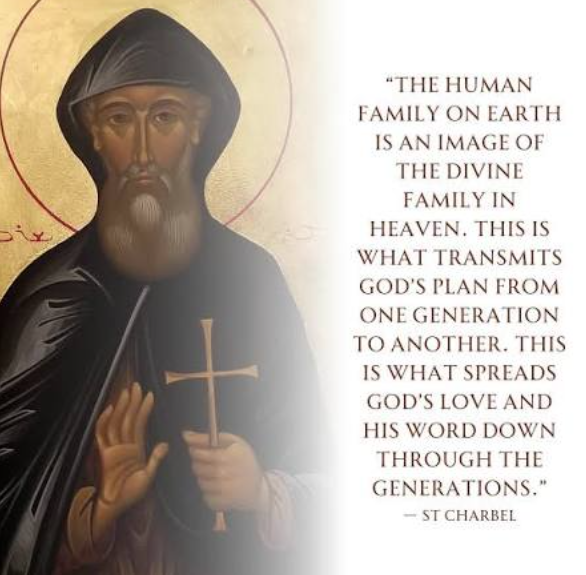
9. “Mary always leads us to Jesus.”
Saint Charbel possessed deep devotion to the Blessed Virgin Mary.
He saw her not as the destination but as the perfect guide leading believers to her Son.
Reflection
Authentic Marian devotion always brings us closer to Christ.
10. “Love Without Expecting Anything in Return.”
Saint Charbel and the Beauty of Selfless Christian Love
One of the greatest challenges of the Christian life is learning to love with a pure heart — a love that does not depend on recognition, gratitude, or personal benefit.
The world often teaches us to measure relationships by what we receive in return. We help when we expect appreciation, we give when we hope to receive something back, and we show kindness when it brings some advantage to our own lives.
However, the Gospel reveals a much higher form of love: the love that gives freely because it reflects the very heart of God.
Saint Charbel Makhlouf understood this truth deeply. His entire life was an offering of love to God and to others. Living in humility, silence, and prayer, he did not seek praise, popularity, or human recognition. His joy came from knowing that every small sacrifice made out of love was seen by God.
For Saint Charbel, true charity was not about being noticed by people. It was about pleasing the Lord.
He lived the words of Jesus:
“When you give alms, do not let your left hand know what your right hand is doing, so that your giving may be in secret; and your Father who sees in secret will reward you.” (Matthew 6:3-4)
This teaching reveals the heart of authentic Christian love: it does not seek applause because its reward comes from God.
Saint Charbel’s Hidden Life of Love
Many people imagine love only through great gestures, extraordinary sacrifices, or visible acts of kindness. Saint Charbel teaches us that love is often found in the hidden moments of everyday life.
His years of prayer, obedience, silence, and sacrifice were acts of love offered completely to God. Although the world knew little about him during his lifetime, Heaven knew the value of his dedication.
He reminds us that no act of love is ever insignificant when it is done with a sincere heart.
A simple prayer for someone who is suffering, a word of encouragement, forgiveness offered to someone who hurt us, patience with a family member, or a silent sacrifice made for another person can become a beautiful offering before God.
Love does not become greater because many people see it. Love becomes greater because it is offered with sincerity.
The Difference Between Human Love and Divine Love
Human love can sometimes be influenced by emotions, expectations, and conditions. We may love others while secretly hoping they will respond in the same way.
Divine love is different.
God loves us not because we are perfect, successful, or deserving. He loves us because love is His very nature.
Saint Charbel invites us to imitate this love by asking:
“Do I love because I receive something in return, or do I love because Christ lives in me?”
This question can transform our relationships.
When love is based only on what we receive, disappointment quickly appears. But when love is rooted in God, we discover a freedom that cannot be taken away by the reactions of others.
We become capable of forgiving without receiving an apology, serving without being thanked, and giving without needing recognition.
Love in the Family and Daily Life
The spirituality of Saint Charbel is not only for monks or people living a secluded life. His example speaks directly to ordinary Christians.
Every home is a place where selfless love can be practiced.
A husband can love his wife through patience and sacrifice.
A wife can love her husband through forgiveness and support.
Parents can love their children through dedication and guidance.
Children can honor their parents through gratitude and respect.
Friends can demonstrate Christ’s love through loyalty and compassion.
Small acts performed with great love can transform relationships and bring the presence of God into daily life.
Reflection: Every Act of Selfless Love Reflects the Heart of Christ
Jesus Christ showed the greatest example of unconditional love when He gave His life on the Cross for humanity.
He did not wait for us to become perfect before loving us. He did not demand anything before offering forgiveness. He loved first.
Saint Charbel followed this same path: a life completely surrendered to God and offered for the good of others.
Today, we are invited to examine our own hearts:
- Do I love only when I am appreciated?
- Do I forgive only when others apologize?
- Do I serve only when someone notices?
- Can I offer kindness even when there is no reward?
The Christian journey calls us to move from a love based on exchange to a love based on grace.
Keep Reading
📖 The Incorrupt Body of Saint Charbel: The Extraordinary Mystery That Continues to Inspire the World
📖 25 Inspiring Quotes from Saint Charbel’s Spiritual Legacy: Words of Faith for Difficult Times
📖 St. Charbel for Kids: The Inspiring Story of Learning to Love God
📖 How to Seek God by Following the Example of Saint Charbel
📖 10 Timeless Lessons from Saint Charbel That Can Transform Your Relationship with God

A Prayer Inspired by Saint Charbel
Lord Jesus,
Teach me to love with a generous and pure heart.
Remove from me the desire for recognition and help me serve others with humility.
Give me the grace to forgive, to be patient, and to offer kindness even when nothing comes back to me.
Through the example and intercession of Saint Charbel, teach me to love as You loved — freely, completely, and without conditions.
May every small act of charity become an offering of love to Your Sacred Heart.
Amen.
Saint Charbel’s message for our time is a reminder that true love does not need applause to have value.
The love that is hidden from the world is never hidden from God.
Every act of selfless love, no matter how small, reflects the heart of Christ and helps bring His presence into a world that desperately needs authentic love.
What Can We Learn from Saint Charbel Today?
Although more than a century has passed since his death, Saint Charbel’s message feels remarkably relevant.
Modern society struggles with:
- anxiety;
- loneliness;
- endless distractions;
- fear of the future;
- loss of purpose.
His life offers an alternative.
Instead of constant noise, he proposes silence.
Instead of anxiety, trust.
Instead of ambition, humility.
Instead of despair, hope.
Instead of selfishness, generous love.
These values remain timeless because they are rooted in the Gospel itself.
How to Apply Saint Charbel’s Wisdom in Daily Life
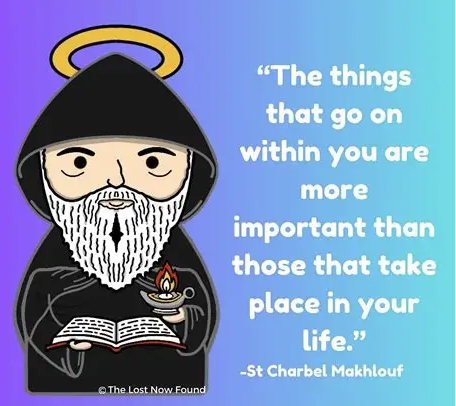
His teachings are not reserved for monks.
Every Christian can practice them.
You can begin today by:
- praying before starting your day;
- spending five minutes in silence;
- reading Scripture daily;
- attending Mass whenever possible;
- forgiving those who have hurt you;
- practicing gratitude;
- helping someone anonymously;
- trusting God during difficult seasons.
Small acts of faith gradually transform the heart.
📖 Keep digging deeper
Book Recommendation: Discover the Power and Faith of St. Charbel
Title: The Life and Miracles of Saint Charbel
- Rating: ⭐⭐⭐⭐⭐ 5.0 out of 5 stars
Why You Should Read The Life and Miracles of Saint Charbel
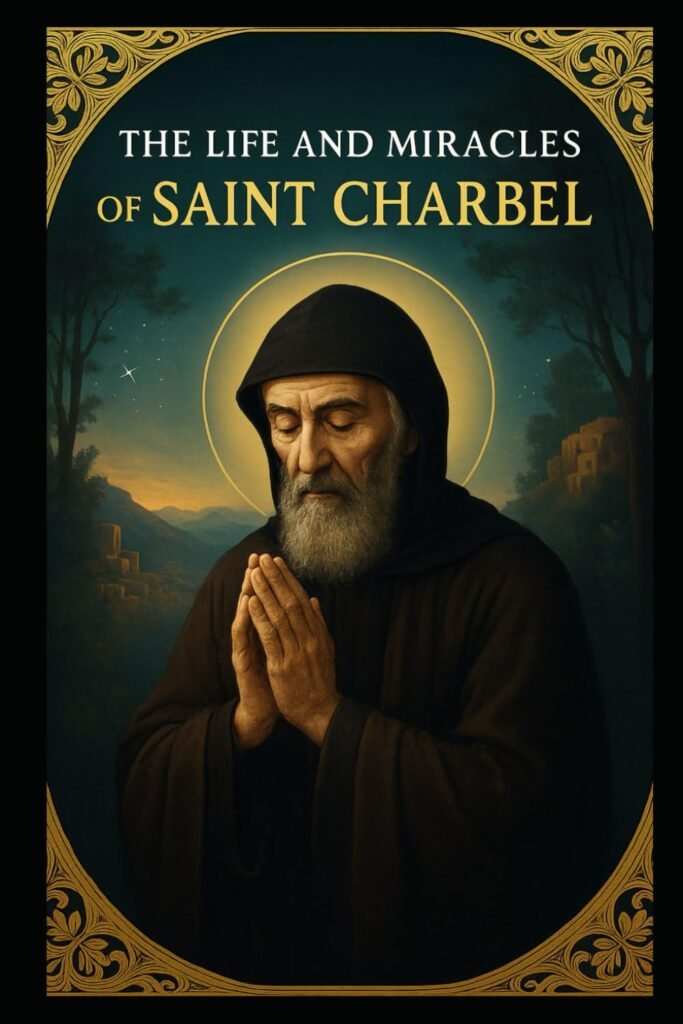
If you are looking for a deeply inspiring spiritual journey, “The Life and Miracles of Saint Charbel” by Wander Venerio is a must-read for Catholics and spiritual seekers alike.
Frequently Asked Questions
Did Saint Charbel actually write many books?
No.
Unlike many Doctors of the Church, Saint Charbel left relatively few written works.
Most quotations associated with him come from his spiritual legacy, monastic traditions, personal writings, and teachings preserved by those who knew him.
Why are Saint Charbel’s quotes so popular?
Because they are simple, deeply biblical, and centered on the essentials of Christian life: prayer, humility, silence, love, and trust in God.
What is Saint Charbel best known for?
He is especially known for his life of holiness, his extraordinary devotion to the Eucharist, the remarkable events surrounding his tomb, and the countless miracles attributed to his intercession.
Final Reflection
The greatest quote of Saint Charbel may not be found in words at all.
It is found in the testimony of his life.
He preached through silence.
He evangelized through humility.
He inspired through prayer.
His entire existence proclaimed one simple truth:
God alone is enough.
In an age that constantly encourages us to seek more possessions, more attention, and more recognition, Saint Charbel gently reminds us that lasting peace is discovered only in complete surrender to Christ.
His wisdom continues to echo across generations because it speaks directly to the deepest longing of every human heart—the desire to know God, to trust Him completely, and to live a life transformed by His love.
May these inspiring sayings encourage you to seek silence, deepen your prayer life, embrace humility, and walk each day with greater confidence in God’s providence.
“Be still, and know that I am God.” (Psalm 46:10)
Keep Reading on the Blog
If this article inspired you, continue exploring the rich spirituality of Saint Charbel through these in-depth guides:
📖 10 Saint Charbel Quotes on Suffering That Offer Comfort in Hard Times
📖 Saint Charbel: The Miracle Saint Who Still Changes Lives Today
📖 30 Días con San Charbel Makhlouf: Un Camino de Silencio, Fe y Abandono Total en Dios
📖 Finding Quiet Strength in Suffering Through Saint Charbel
📖 The Mystery of Suffering: Insights from Saint Charbel Makhlouf
About the Author
Wander Venerio C. de Freitas is a Brazilian Catholic theologian, educator, and author dedicated to promoting authentic Catholic spirituality through Sacred Scripture, Sacred Tradition, the Catechism of the Catholic Church, and the witness of the saints. Through The Lord of Peace, he publishes in-depth articles designed to help readers deepen their relationship with Jesus Christ, grow in faith, and discover the timeless wisdom of the Catholic Church.