Daily Habits Inspired by Saint Charbel to Transform Your Spiritual Life
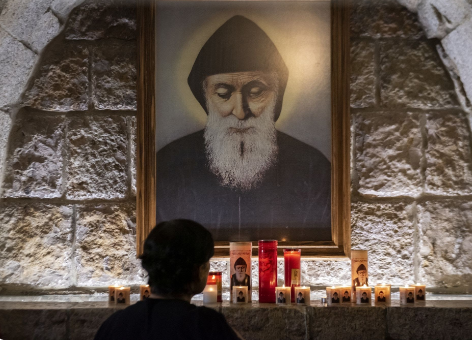
In a modern culture defined by non-stop notifications, constant hustle, and relentless noise, the human soul often longs for quiet anchor points. The contemporary American lifestyle frequently measures human worth by external productivity, social media presence, and instant communication, leaving many Christians spiritually exhausted and mentally overwhelmed. In the middle of this hyper-connected wilderness, Saint Charbel Makhlouf, the beloved 19th-century Maronite Catholic monk and hermit of Lebanon, offers a striking and timeless antidote to modern restlessness. Though he lived a life of radical hiddenness and silence in the Monastery of Saint Maron in Annaya, his spiritual power has radiated across the entire globe, earning him a reputation as one of the most prolific miracle-workers in Church history.
Saint Charbel did not write long theological treatises or give public speeches. Instead, his very life was his masterpiece—a living testament to the extraordinary power of quiet fidelity and complete surrender to God. Catholic theology teaches us that holiness is not reserved for extraordinary times or elite mystics, but is the universal call of every baptized Christian. You do not need to abandon your family, quit your job, or move to an isolated hermitage in the Lebanese mountains to benefit from Saint Charbel’s holy example. By looking at his monastic life through the deep lens of Sacred Scripture and traditional Maronite theology, we can discover how ordinary routines can become altars of grace. We can weave his timeless virtues into our daily routines, turning noisy days into sanctuaries of divine intimacy.
Habits of Prayer and Divine Intimacy
Guard the First Moments of Your Day for Silence
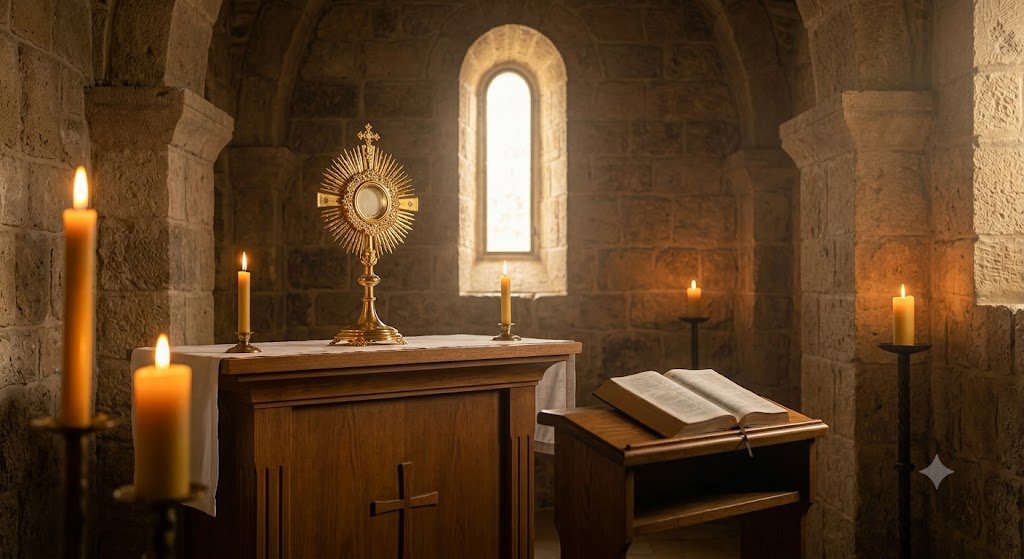
Saint Charbel spent long hours in silent adoration before the Blessed Sacrament before the sun even rose, preparing his soul for the gift of a new day. This practice directly reflects the biblical model set by Christ Himself, who “rose early in the morning, while it was still dark, and went off to a deserted place, where he prayed” (Mark 1:35). In our modern world, the first instinct upon waking is often to grab a smartphone, filling the mind with news, alarms, and social media feeds before the heart has even spoken to its Creator. This immediate sensory overload sets a tone of anxiety and reactivity that persists throughout the day. By consciously guarding your first ten minutes for quiet prayer, you give God the true first fruits of your attention, allowing His voice to speak to your heart in the “still, small voice” (1 Kings 19:12) before the world demands your focus.
Make the Eucharist the Center of Your Daily Schedule
For Saint Charbel, Holy Mass was not merely a weekly obligation or a pious ritual; it was the sacred heartbeat around which his entire day revolved. Catholic theology teaches that the Eucharist is the real presence of Jesus Christ—Body, Blood, Soul, and Divinity—and stands as the “source and summit of the Christian life” (Lumen Gentium, 11). The Maronite Liturgy constantly emphasizes the mystical altar as the source of heavenly medicine and divine life for the soul. While attending daily Mass is not always feasible due to demanding work schedules or family responsibilities, you can intentionally center your day around the Eucharist. This can be accomplished by visiting a local chapel for ten minutes of Eucharistic Adoration, stopping by a church during lunch, or making a devout Spiritual Communion while commuting, uniting your daily trials to the holy sacrifice of the Mass.
Pray Ejaculatory Prayers Throughout the Day
The Lebanese hermit maintained a state of continuous recollection of God through brief, repeating prayers that kept his mind elevated to heaven. This habit directly fulfills St. Paul’s exhortation to the Thessalonians to “pray without ceasing” (1 Thessalonians 5:17). In classical Catholic spirituality, these brief aspirations are called “arrow prayers” because they shoot directly from the heart to God during the busyness of daily affairs. By adopting simple, repeating prayers—such as “Jesus, I trust in You,” “O God, come to my assistance,” or the ancient Jesus Prayer, “Lord Jesus Christ, Son of God, have mercy on me, a sinner”—you keep your soul anchored in God’s presence whether you are driving in heavy traffic, typing emails, or doing household chores.
Practice an Evening Examination of Conscience
Before retiring to sleep, Saint Charbel spent dedicated time reflecting on his day, repenting of any flaws, and surrendering his night to God’s care. Catholic spiritual tradition places immense value on the daily Examen, a practice deeply rooted in St. Paul’s call for believers to examine themselves honestly before God (1 Corinthians 11:28). The human heart easily accumulates spiritual dust throughout the day through uncharitable thoughts, impatience, or forgotten graces. Spending five minutes before bed reviewing your day—thanking God for His specific blessings, asking forgiveness for stumbles, and placing your worries into His hands—ensures that you close your eyes with a clean conscience and rest deeply in divine peace.
Habits of Mind and Digital Detachment
Fast from Unnecessary Noise and Distraction
Saint Charbel lived in strict silence within his hermitage to keep his mind completely clear for communion with God. In Christian theology, silence is never merely an empty absence of sound, but the necessary spiritual atmosphere for divine conversation and discernment. As the Prophet Hosea reveals regarding God’s tender love for His people, the Lord desires to lead the soul into the wilderness to speak directly to her heart (Hosea 2:14). Modern culture suffers from a chronic phobia of silence, filling every spare second with podcasts, background television, or endless scrolling. Implementing an intentional “Digital Fast”—such as turning off the car radio during your commute or establishing phone-free evenings—creates the quiet inner sanctuary required to hear God’s guidance.
Read and Meditate on Sacred Scripture
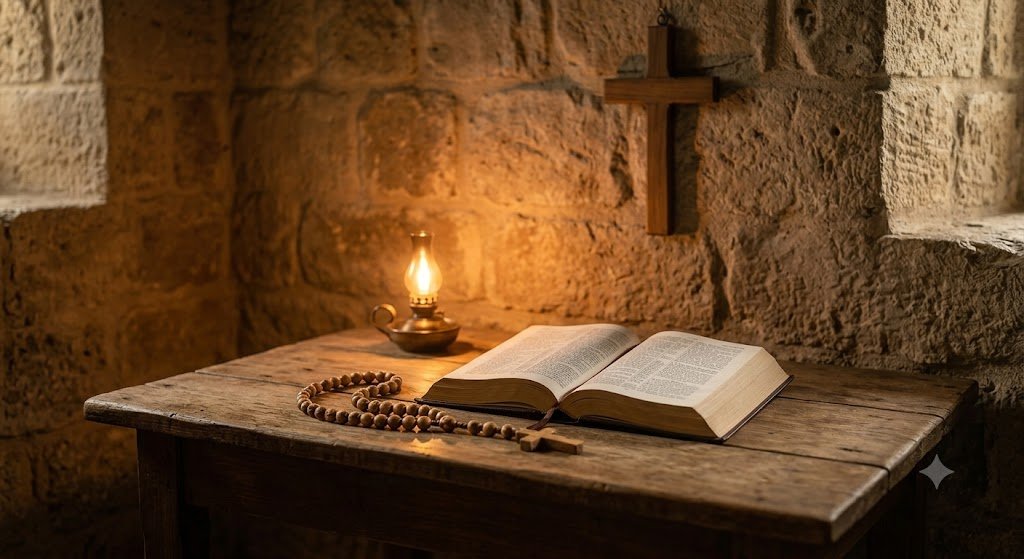
Saint Charbel’s humble hermit cell contained almost no physical belongings, but Sacred Scripture was always present on his small desk. As St. Jerome famously warned the early Church, “Ignorance of Scripture is ignorance of Christ.” The Word of God is not merely historical text, but a living, breathing encounter with the Lord that shapes our worldview and heals our intellect. Integrating the ancient monastic habit of Lectio Divina (divine reading) into your daily routine allows the divine text to penetrate your daily decisions, fulfilling St. Paul’s command to “let the word of Christ dwell in you richly” (Colossians 3:16) and transforming how you evaluate success, suffering, and purpose.
Guard Your Senses
A foundational aspect of Maronite monastic theology is the custody of the eyes and internal senses to preserve spiritual purity. Jesus explicitly highlighted the spiritual weight of what we absorb through our senses, teaching that “the lamp of the body is the eye; if your eye is sound, your whole body will be filled with light” (Matthew 6:22). In an era flooded with explicit media, sensationalist news, and toxic online discourse, unguarding your eyes leads directly to spiritual apathy and anxiety. Being intentionally selective about the images, media, and entertainment you consume protects the grace of your soul, keeping your inner light shining brightly without the corrosion of worldly bitterness.
Habits of Work, Simplicity, and Mortification
Sanctify Manual Labor and Daily Chores
Saint Charbel spent long, grueling hours working in the monastery vineyards and fields, offering every physical movement as a silent prayer of love to God. Catholic theology of work reveals that human labor, when consciously united to the divine life of Christ, ceases to be mere toil and becomes a participation in God’s creative work and a powerful path to personal holiness (Genesis 2:15). Instead of treating daily chores—such as folding laundry, filing reports, or washing dishes—as annoying interruptions to your day, turn them into intentional acts of worship. Offering up mundane or difficult work for specific intentions, family members, or the salvation of souls transforms ordinary tasks into eternal treasures.
Choose Voluntary Simplicity
Saint Charbel wore a worn wool habit and slept on a thin mattress of leaves and straw, completely detached from material luxury. This radical simplicity reflects Christ’s primary Beatitude: “Blessed are the poor in spirit, for theirs is the kingdom of heaven” (Matthew 5:3). In a consumerist society that constantly demands we buy more to feel complete, practicing daily micro-mortifications builds essential spiritual freedom and self-discipline. Choosing to drink your coffee black, resisting impulse purchases, or systematically decluttering your home to share excess goods with the poor helps detach your heart from earthly things and anchor your security firmly in God alone.
Accept Daily Crosses Without Complaint
When Saint Charbel encountered physical sickness, harsh winter weather, or heavy monastic duties, he endured them with calm, cheerful patience and total surrender. Jesus clearly invited all who follow Him: “If anyone wishes to come after me, he must deny himself and take up his cross daily and follow me” (Luke 9:23). Modern culture teaches us to eliminate all discomfort immediately and to complain loudly when plans go wrong. Refraining from complaining during unexpected traffic jams, minor health issues, or workplace frustrations transforms ordinary suffering into redemptive grace, uniting your daily burdens with Christ’s ultimate sacrifice on Calvary.
Habits of Charity and Relationship with Others
Cultivate Hidden Charity
Saint Charbel never sought human praise, public recognition, or credit for his immense spiritual gifts; he preferred to remain hidden in the shadow of God’s glory. This practice directly aligns with Jesus’ fundamental teaching on true virtue: “When you give alms, do not let your left hand know what your right hand is doing, so that your almsgiving may be secret. And your Father who sees in secret will repay you” (Matthew 6:3-4). Performing acts of service without demanding appreciation—such as secretly paying for someone’s meal or quietly completing a family member’s chore—purifies your heart from pride and aligns your motives with the selfless love of God.
Practice Radical Humility in Conversation
In community life with his fellow monks, Saint Charbel consistently chose the lowest place, preferred to listen rather than instruct, and never argued to prove his point. Catholic theology places humility as the foundation of all spiritual growth, perfectly demonstrated by Christ who “humbled himself, becoming obedient to death” (Philippians 2:8). In our culture of intense online debate and personal branding, practicing radical humility is revolutionary. Choosing to listen actively, resisting the temptation to boast about your achievements, and letting go of the need to win every argument fosters authentic evangelical peace in your home and workplace.
Habits of Marian Devotion and Divine Trust
Entrust Your Day to Our Lady
As a Maronite monk, Saint Charbel held a profound, filial love for the Blessed Virgin Mary, honoring her as the holy Mother of God and protectress of souls. From the cross, Jesus entrusted Mary to the Church to be the spiritual Mother of every disciple (John 19:27). The Eastern and Western Catholic traditions agree that running to Mary is the fastest path to intimacy with her Son. Making the daily Rosary or the traditional Angelus prayer a firm pillar of your schedule places your family, health, and spiritual struggles under her maternal protection, ensuring that your daily steps are guided by her intercession.
Live in Radical Trust of Divine Providence
Saint Charbel lived free from panic or spiritual anxiety because he rested entirely in the loving care of God’s providence. Jesus commanded His followers not to be consumed by worry about tomorrow, reminding us that our heavenly Father knows every need before we even ask (Matthew 6:25-34). When financial burdens, health crises, or global instability threaten to overwhelm your peace, consciously replace fear with a vocal act of trust in God. Stating clearly, “Lord, I do not see the way forward, but I trust in Your divine providence,” releases the illusion of control and opens the soul to peace.
Frequent the Sacrament of Reconciliation
The monks who lived alongside Saint Charbel documented his constant desire for a pure heart through regular, humble Confession. In Catholic theology, the Sacrament of Reconciliation does far more than erase past sins; it restores sanctifying grace and imparts specific sacramental strength to overcome future temptations (John 20:23). Making a habit of regular Confession—at least once a month—prevents spiritual compromise, keeps your conscience sensitive to truth, and ensures that your soul remains fully alive to the promptings of the Holy Spirit.
Living Saint Charbel’s Legacy Today

Saint Charbel’s miraculous life proves to the modern world that true greatness does not depend on public recognition, worldly wealth, or cultural influence. Holiness is built steadily day by day through quiet, repeated acts of love, patient endurance, and total surrender to God’s holy will. By weaving these timeless, scripturally rooted habits into your daily life, you can cultivate an inner hermitage of divine peace, remaining deeply anchored in Christ no matter how chaotic the world around you becomes.
📚 This article is part of the Ultimate Guide to St. Charbel
If you want to discover the complete story of St. Charbel Makhlouf—from his childhood, religious vocation, and monastic life to the miracles recognized by the Church, the mystery of his incorrupt body, his prayers, the novena, his powerful intercession, and his extraordinary path to holiness—be sure to visit our Ultimate Guide to St. Charbel, the most comprehensive resource on our website about this beloved Maronite saint.
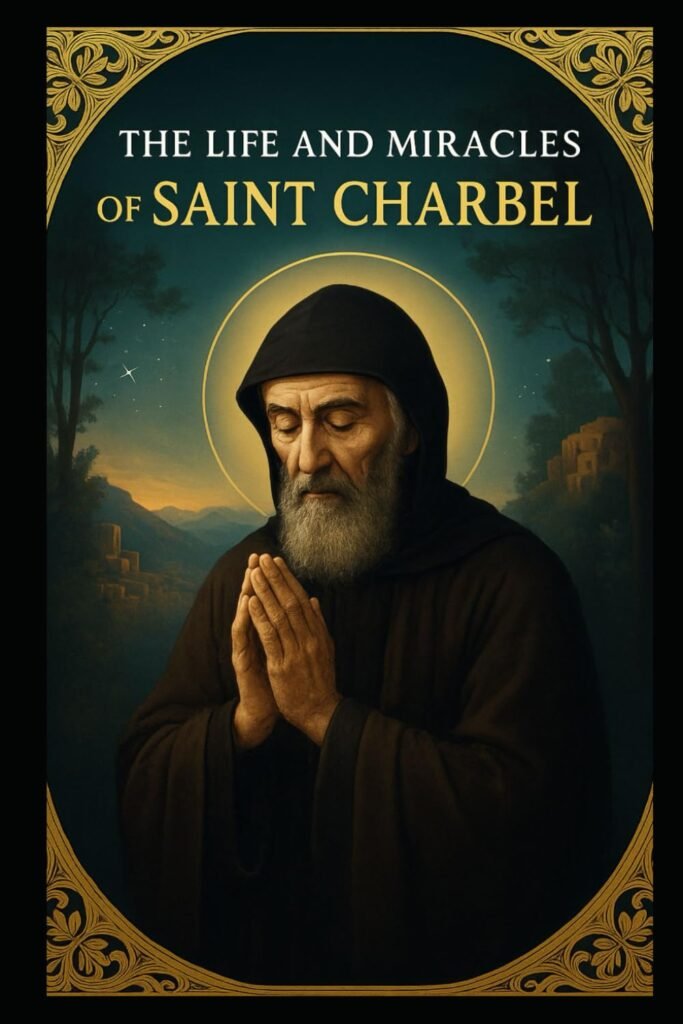
Discover the remarkable story of Saint Charbel, the miracle-working saint who continues to transform lives.
In this captivating book, you will explore how a humble Lebanese monk—marked by prayer, silence, and unshakable faith—became one of the greatest symbols of holiness in the Catholic Church.
From his devout childhood in the mountains of Lebanon to his radical choice of the hermit life, Saint Charbel lived in total surrender to God. After his death, supernatural signs and extraordinary healings captured the attention of the entire world, firmly establishing his reputation for sanctity. This book unveils the most striking moments of his life, the miracles officially recognized by the Church, and the deep spiritual power that flows from his intercession.
A reading that renews faith, strengthens the soul, and inspires a life of prayer and trust in God.
About the Author
Wander Venerio Cardoso de Freitas is a theologian, educator, and author of books on Catholic spirituality, the lives of the saints, and Christian formation. He is the founder of the portal O Senhor Te Dê a Paz (Saints Library), dedicated to evangelization through articles, books, and digital content.