There are moments in life when ordinary words are not enough.
A person may pray for healing and still remain sick. A mother may cry because she does not know how to help her child. A marriage may be passing through a difficult season. Someone may be exhausted by financial problems, loneliness, fear, or uncertainty about the future.
In these moments, the spiritual legacy of Saint Charbel Makhlouf speaks with particular force.
Saint Charbel did not leave behind a philosophy of easy answers. His life pointed toward something deeper: silence, prayer, sacrifice, humility, Eucharistic devotion, and complete trust in God.
His example continues to inspire people around the world because it reminds us that faith is not the absence of suffering. Faith is learning to remain with God even when suffering does not immediately disappear.
Below are 25 original reflections inspired by the spirituality and legacy of Saint Charbel. They are not presented as verbatim quotations from the saint. Instead, they express themes associated with his life and spiritual witness, while offering practical encouragement for people facing real problems today.
1. “When you cannot see the way forward, remain faithful to the One who sees it.”
For those who are afraid of the future
Fear often comes from uncertainty.
We want to know what will happen tomorrow, whether our health will improve, whether our family will remain together, whether we will find work, or whether a difficult situation will finally end.
Saint Charbel’s life teaches another way.
We do not need to understand everything before trusting God.
Sometimes faith means taking the next step without seeing the entire road.
Prayer:
Saint Charbel, help me trust God when I cannot understand what is happening in my life.
2. “A restless heart searches everywhere; a prayerful heart learns where to remain.”
For those suffering from anxiety
Modern life constantly demands our attention.
Messages, bills, responsibilities, news, family problems and uncertainty can leave the mind exhausted.
Saint Charbel’s spirituality was profoundly connected with silence.
Silence does not mean that problems disappear.
It means creating enough interior space to remember that God is still present.
If your mind is overwhelmed today, begin with five quiet minutes.
Put down the phone.
Breathe slowly.
Make the Sign of the Cross.
Then simply say:
“Jesus, I trust in You.”
📚 This article is part of the Ultimate Guide to St. Charbel
If you want to discover the complete story of St. Charbel Makhlouf—from his childhood, religious vocation, and monastic life to the miracles recognized by the Church, the mystery of his incorrupt body, his prayers, the novena, his powerful intercession, and his extraordinary path to holiness—be sure to visit our Ultimate Guide to St. Charbel, the most comprehensive resource on our website about this beloved Maronite saint.
3. “Do not measure God’s love by the speed of your answer.”
For those whose prayers seem unanswered
One of the most painful experiences in prayer is waiting.
You pray.
You ask.
You cry.
And nothing seems to change.
This can create the painful question:
“Does God hear me?”
The spiritual legacy of Saint Charbel points toward patient trust.
An unanswered prayer is not necessarily an ignored prayer.
Sometimes God changes the circumstances.
Sometimes He changes us within the circumstances.
And sometimes the answer comes in a way we never expected.
4. “The wounded heart does not need to hide from God.”
For those who are suffering emotionally
Many people believe they must become strong before approaching God.
But prayer is not a reward for people who have everything under control.
Bring God your exhaustion.
Bring Him your tears.
Bring Him your confusion.
Bring Him even the words you cannot formulate.
The person who approaches God wounded is not weak.
He or she is beginning to understand dependence on grace.
5. “When suffering becomes heavy, carry it with Christ rather than carrying it alone.”
For those facing illness
Illness can change everything.
A diagnosis can create fear about the future, financial concerns, family worries and questions about why this is happening.
Saint Charbel became particularly associated with prayer for the sick and with countless testimonies of people seeking his intercession.
But Christian faith does not promise that every illness will disappear immediately.
Instead, it invites us to place suffering before Christ.
Ask for healing.
Yes.
But also ask for courage.
Ask for wisdom.
Ask for peace.
Ask for the grace to endure each day.
6. “Your family does not need perfection; it needs prayer, patience and love.”
For families going through difficult times
Families experience misunderstandings.
Parents make mistakes.
Children make mistakes.
Husbands and wives sometimes become distant.
Words are spoken in anger.
Old wounds remain unresolved.
Saint Charbel’s spirituality reminds us of the value of sacrifice, humility and silence.
Sometimes saving a relationship begins with something very small:
choosing not to answer anger with anger.
Pray before speaking.
Listen before judging.
Forgive when possible.
And ask God to heal what you cannot repair by your own strength.
7. “A person may lose many things and still possess hope.”
For those experiencing financial difficulties
Financial problems can affect much more than a bank account.
They can affect sleep.
Marriage.
Self-esteem.
Family relationships.
Even faith.
When money becomes scarce, the temptation is to believe that the future has disappeared.
It has not.
Your financial situation is a circumstance.
It is not your identity.
Ask God for wisdom, work, discipline and opportunities.
Then take practical steps.
Faith does not eliminate responsibility.
It gives courage to continue.
8. “The quietest prayer can reach the deepest place.”
For those who struggle to pray
Some people think prayer requires beautiful words.
It does not.
You can pray while crying.
You can pray while walking.
You can pray while sitting beside a hospital bed.
You can pray when you have no words.
Sometimes one sentence is enough:
“Lord, stay with me.”
The spiritual life is not measured by the quantity of words but by the sincerity of the heart.
9. “Do not allow yesterday’s failure to become tomorrow’s identity.”
For those carrying guilt
Everyone has a past.
Some people carry memories they wish they could erase.
Mistakes.
Sins.
Broken relationships.
Words they regret.
Decisions they would change.
But repentance means that the past does not have to control the future.
God’s mercy is greater than your worst moment.
Return to Him.
Seek forgiveness.
Make amends where possible.
Then begin again.
10. “Humility does not make you smaller; it makes room for grace.”
For those struggling with pride or frustration
We often want control.
We want people to recognize our efforts.
We want our plans to succeed.
We want answers immediately.
But Saint Charbel’s life was marked by radical humility.
Humility means recognizing:
I am not God.
I do not control everything.
I need grace.
I need other people.
And I need to surrender what I cannot control.
That realization can bring extraordinary freedom.
11. “When you cannot change the situation, ask God to transform the heart facing it.”
For those trapped in difficult circumstances
Perhaps you cannot change another person’s behavior.
Perhaps you cannot immediately change your financial situation.
Perhaps you cannot undo a diagnosis.
Perhaps you cannot control what happened yesterday.
But you can ask God to transform your heart.
Give you patience.
Give you wisdom.
Give you courage.
Give you discernment.
Give you peace.
Sometimes the first miracle is not the disappearance of the problem.
It is the discovery that you can face it without losing your faith.
12. “Do not confuse God’s silence with God’s absence.”
For those who feel abandoned
This is one of the deepest spiritual wounds.
You pray, but you feel nothing.
You go to Mass, but your heart feels empty.
You ask God for help, but heaven seems silent.
Saint Charbel’s life strongly reminds us of the spiritual value of silence.
God does not always reveal Himself through dramatic experiences.
Sometimes He works quietly.
Like a seed beneath the soil.
You cannot see it.
But something is happening.
13. “A heart that learns gratitude becomes stronger against despair.”
For those losing hope
Despair makes us look only at what is missing.
Gratitude teaches us to notice what remains.
Perhaps you still have someone who loves you.
Perhaps you woke up today.
Perhaps you have another opportunity to begin again.
Perhaps you can still pray.
Gratitude does not deny suffering.
It prevents suffering from becoming the only thing we can see.
14. “Forgiveness is not forgetting the wound; it is refusing to let the wound govern your future.”
For those who were deeply hurt
Forgiveness can be one of the hardest Christian acts.
Especially when the wound is deep.
Forgiving does not mean pretending that nothing happened.
It does not necessarily mean restoring trust immediately.
It does not eliminate the need for justice or healthy boundaries.
Forgiveness means refusing to allow hatred to become the permanent ruler of your heart.
Ask God for the grace to begin that journey.
15. “Do not be ashamed of needing God.”
For those who feel weak
Our culture often celebrates independence.
Be strong.
Solve everything.
Need nobody.
But Christianity proposes something radically different.
We are creatures.
God is our Creator.
We need Him.
Saint Charbel’s life was built around this dependence.
The person who kneels before God is not defeated.
He is recognizing where true strength begins.
16. “When the world becomes noisy, return to the presence of God.”
For those overwhelmed by modern life
We live surrounded by noise.
Notifications.
Opinions.
Arguments.
Advertising.
Social media.
News.
Pressure.
The soul can become exhausted without realizing it.
Saint Charbel’s devotion to silence offers a powerful spiritual lesson.
Create moments without screens.
Sit quietly.
Read the Gospel.
Pray the Rosary.
Remain before the Blessed Sacrament when possible.
Your soul needs silence just as your body needs rest.
17. “The Eucharist teaches the heart that love is capable of giving itself completely.”
For those seeking deeper faith
The Eucharist occupied a central place in Saint Charbel’s spiritual life.
For Catholics, the Eucharist is not merely a symbol of religious identity.
It is the sacramental presence of Christ.
When we contemplate Christ giving Himself, we discover another definition of love.
Love is not merely emotion.
Love is self-giving.
Love serves.
Love sacrifices.
Love remains faithful.
18. “You do not need to understand every trial to remain faithful during it.”
For those asking, “Why me?”
One of the most difficult questions human beings ask is:
“Why is this happening to me?”
Sometimes we receive explanations.
Sometimes we do not.
Christian hope does not depend on having every answer.
It depends on knowing whom we trust.
Saint Charbel’s life points toward perseverance rather than constant explanation.
There are seasons in which faith means saying:
“Lord, I do not understand, but I will not abandon You.”
19. “A small act of love can become a great prayer.”
For those who feel spiritually useless
Not everyone can do extraordinary things.
But everyone can love.
A glass of water.
A kind word.
A visit.
A meal prepared for someone.
A patient response.
A prayer for a stranger.
A moment of listening.
The Christian life is often transformed through ordinary acts performed with extraordinary love.
20. “When you are exhausted, do not make despair your counselor.”
For those who feel emotionally exhausted
Exhaustion changes our perception.
Problems appear larger.
The future appears darker.
Small difficulties seem impossible.
Before making major decisions while overwhelmed, pause.
Rest.
Pray.
Speak with someone trustworthy.
Seek appropriate professional help when necessary.
And remember:
You do not have to solve your entire life today.
Sometimes today’s task is simply to remain faithful until tomorrow.
21. “God can work through the waiting season.”
For those tired of waiting
Waiting can feel like wasted time.
Waiting for healing.
Waiting for employment.
Waiting for reconciliation.
Waiting for a response.
Waiting for a new opportunity.
But spiritual growth often occurs precisely during seasons when nothing seems to be happening.
Waiting can teach patience.
It can purify motives.
It can deepen prayer.
It can reveal what truly matters.
Do not assume that a slow season is a useless season.
22. “The soul becomes free when it stops trying to control what belongs to God.”
For those obsessed with control
Control feels safe.
But absolute control is impossible.
You cannot control other people’s opinions.
You cannot control every event.
You cannot guarantee the future.
You cannot prevent every loss.
The spiritual path is learning the difference between responsibility and control.
Do what belongs to you.
Then surrender what does not.
That distinction can transform the way you live.
23. “Let your suffering become a place where compassion is born.”
For those who have suffered deeply
Pain can make us bitter.
But it can also make us compassionate.
Someone who has experienced loneliness may become more attentive to lonely people.
Someone who has experienced illness may understand the sick more deeply.
Someone who has lost something precious may become more sensitive to another person’s grief.
Your suffering does not have to be meaningless.
With God’s grace, it can become a source of compassion.
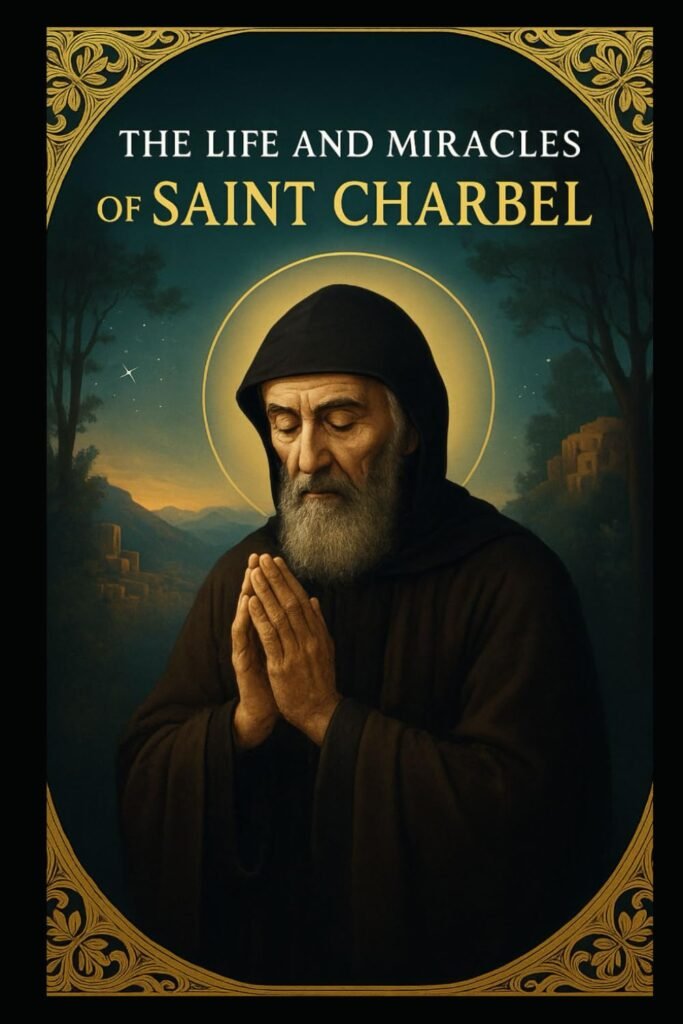
Discover the remarkable story of Saint Charbel, the miracle-working saint who continues to transform lives.
In this captivating book, you will explore how a humble Lebanese monk—marked by prayer, silence, and unshakable faith—became one of the greatest symbols of holiness in the Catholic Church.
From his devout childhood in the mountains of Lebanon to his radical choice of the hermit life, Saint Charbel lived in total surrender to God. After his death, supernatural signs and extraordinary healings captured the attention of the entire world, firmly establishing his reputation for sanctity. This book unveils the most striking moments of his life, the miracles officially recognized by the Church, and the deep spiritual power that flows from his intercession.
A reading that renews faith, strengthens the soul, and inspires a life of prayer and trust in God.
24. “When you feel far from God, take one small step toward Him.”
For those who have abandoned prayer
Maybe you have not prayed in months.
Maybe you stopped going to church.
Maybe disappointment made you angry with God.
Do not think you need to return perfectly.
Take one step.
Make the Sign of the Cross.
Say one Our Father.
Open one page of the Gospel.
Enter a church.
Sit quietly.
The road back to God can begin with a very small movement of the heart.
25. “Peace begins when the heart learns to say: ‘God, I place my life in Your hands.’”
For those who need a new beginning
Perhaps this is the deepest lesson we can draw from the spiritual legacy of Saint Charbel.
Trust does not mean that we stop acting.
It means that we stop believing that everything depends exclusively on us.
We work.
We pray.
We seek medical care when necessary.
We repair relationships.
We look for employment.
We educate our children.
We make responsible decisions.
And through everything, we place our lives in God’s hands.
That is not passivity.
It is faithful surrender.
A Prayer Inspired by the Spiritual Legacy of Saint Charbel
Saint Charbel, faithful servant of God,
teach me to remain faithful when life becomes difficult.
When fear enters my heart, help me trust.
When illness brings uncertainty, help me persevere.
When my family is struggling, help me love with patience.
When financial difficulties discourage me, help me seek wisdom and courage.
When I cannot see the future, help me place tomorrow in God’s hands.
When I feel alone, remind me that God has not abandoned me.
When I am wounded, teach me forgiveness.
When I am proud, teach me humility.
When I am restless, lead me back to silence.
And when I do not understand God’s plans,
teach me to remain faithful.
Saint Charbel Makhlouf,
pray for us.
Amen.
What Saint Charbel’s Life Can Teach Us Today
The greatest legacy of Saint Charbel is not a collection of inspirational phrases.
It is a life.
A life of prayer.
A life of sacrifice.
A life centered on Christ.
A life marked by silence, humility and Eucharistic devotion.
That is why his witness continues to speak to people experiencing very modern problems.
The world has changed.
Human technology has changed.
Communication has changed.
But the human heart still experiences fear, loneliness, illness, grief, guilt, financial uncertainty and the desire to find meaning.
And this is precisely where the witness of the saints remains relevant.
Saint Charbel does not teach us that Christians will never suffer.
He teaches us something more profound:
suffering does not have to separate us from God.
When You Are Going Through a Difficult Time
If you are reading this because you are facing a serious problem, do not rush through these words.
Choose one reflection.
Read it slowly.
Close your eyes.
Take a few moments of silence.
Then tell God exactly what is happening.
You do not need sophisticated theological language.
Speak honestly.
“Lord, You know what I am carrying. I cannot carry it alone. Help me.”
Then take the next responsible step.
Sometimes that step is prayer.
Sometimes it is forgiveness.
Sometimes it is asking for help.
Sometimes it is seeing a doctor.
Sometimes it is looking for work.
Sometimes it is having an honest conversation with someone you love.
And sometimes it is simply getting through today without giving up.
A Simple 25-Day Saint Charbel Spiritual Challenge
You can use these reflections as a 25-day spiritual journey.
Day 1: Trust God with your future.
Day 2: Spend five minutes in silence.
Day 3: Pray for a situation that seems unanswered.
Day 4: Give your wounds to God.
Day 5: Pray for someone who is sick.
Day 6: Pray for your family.
Day 7: Ask God for wisdom regarding finances.
Day 8: Say a simple prayer without many words.
Day 9: Ask forgiveness for something you regret.
Day 10: Practice humility.
Day 11: Surrender something you cannot control.
Day 12: Remain faithful during spiritual dryness.
Day 13: Write down three things for which you are grateful.
Day 14: Pray for the grace to forgive.
Day 15: Tell God where you feel weak.
Day 16: Spend some time away from unnecessary digital noise.
Day 17: Attend Mass and contemplate the Eucharist.
Day 18: Offer God your unanswered questions.
Day 19: Perform one hidden act of kindness.
Day 20: Rest and refuse to make despair your guide.
Day 21: Ask God for patience during a waiting season.
Day 22: Surrender the need to control everything.
Day 23: Turn one painful experience into an act of compassion.
Day 24: Take one small step back toward God.
Day 25: Pray: “God, I place my life in Your hands.”
Final Reflection
Saint Charbel’s spiritual legacy does not invite us to escape the difficulties of life.
It invites us to encounter God within them.
If you are suffering today, your story is not finished.
If you are waiting, do not assume that God has forgotten you.
If you are sick, continue to hope while seeking the care you need.
If your family is struggling, keep praying and take concrete steps toward reconciliation.
If you have fallen, begin again.
If you are afraid, place your fear before God.
And if you cannot see the road ahead, take the next faithful step.
The deepest lesson of Saint Charbel’s life can be summarized in a simple spiritual attitude:
Pray. Trust. Persevere. Remain close to Christ.
You do not need to understand everything today.
You only need to remain faithful to the next step.
Saint Charbel Makhlouf, pray for us and lead us closer to Christ.
About the Author
Wander Venerio Cardoso de Freitas is a theologian, educator, and author of books on Catholic spirituality, the lives of the saints, and Christian formation. He is the founder of the portal O Senhor Te Dê a Paz (Saints Library), dedicated to evangelization through articles, books, and digital content.