
There was a time when sitting in complete silence for just ten minutes felt excruciatingly uncomfortable to me. I remember walking into an empty adoration chapel, turning off my phone, and sitting on a wooden bench, only to experience an immediate flood of restlessness, anxiety, and mental noise. My mind scrambled for something—anything—to check, read, or process. I kept asking myself: Why is silence so terrifying? Why does my soul feel so agitated the moment the noise of the world stops? If you have ever sat down to pray only to find the quiet unbearable, I want to assure you: you are not broken. You are simply suffering from the spiritual condition of a noise-addicted culture, and the path back to peace is waiting for you in the ancient heart of Catholic tradition.
Our modern world is systematically engineered to eliminate quietness. Through constant notifications, background media, and non-stop entertainment, we have conditioned our minds to expect perpetual stimulation.
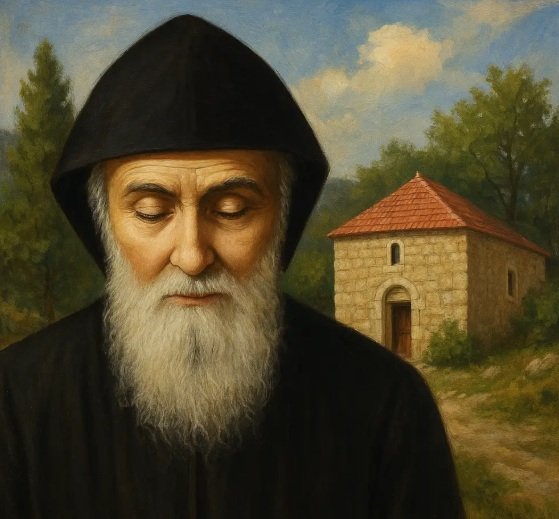
When silence feels so difficult, turning to Saint Charbel Makhlouf—the miraculous Maronite monk and hermit of Mount Lebanon—offers a radical blueprint for restoration. Saint Charbel spent decades in the Hermitage of Saints Peter and Paul in Annaya, immersed in profound quiet, fasting, and perpetual Eucharistic adoration. In this comprehensive guide, grounded in Sacred Scripture, the Catechism of the Catholic Church (CCC), and Saint Charbel’s monastic witness, we will explore why modern Catholics fear quietness and how to cultivate the lost habit of listening to God.
Table of Contents
- The Crisis of Perpetual Noise in Modern Culture
- What Sacred Scripture Teaches About Hearing God in Quietness
- The Catechism on Interior Silence as the Doorway to Prayer
- Saint Charbel Makhlouf: The Silent Giant of Lebanon
- 4 Practical Steps to Build Interior Silence in a Noisy World
- A Prayer to Saint Charbel for the Grace of Interior Quiet
- Frequently Asked Questions
- Final Reflection
The Crisis of Perpetual Noise in Modern Culture
Why has silence become one of the hardest ascetical disciplines for contemporary Christians? Spiritual writers have long observed that physical noise often serves as an anesthetic for interior pain. When we strip away external sound, we are suddenly forced to confront what lies within our own hearts:
- Unprocessed Grief and Anxiety: Constant noise acts as a shield against buried worries, unresolved guilt, and personal insecurities.
- Fear of Being Alone with Self: In a culture that equates busyness with worth, quietness can feel like unproductive stagnation.
- Over-Stimulation of the Nervous System: Constant screen time trains the brain to crave novel hits of dopamine, making stillness feel physically unnatural.
Cardinal Robert Sarah famously wrote that noise is a dictatorship that suffocates the human spirit. Until we learn to break this addiction, our prayer life will remain superficial, unable to reach the quiet depths where God speaks. True interior silence is not merely the absence of words or sounds; it is the presence of a soul positioned in attentive adoration.
By fleeing from quietness, we unwittingly lock out the divine Physician who seeks to heal our wounded memories. When we dare to embrace sacred stillness, the initial discomfort gradually yields to an overwhelming experience of grace and clarity. In that holy quiet, Christ reassures us that we are fully known, deeply forgiven, and loved beyond measure. Returning to silence is therefore not a burden to endure, but a doorway into authentic spiritual restoration.
📚 This article is part of the Ultimate Guide to St. Charbel
If you want to discover the complete story of St. Charbel Makhlouf—from his childhood, religious vocation, and monastic life to the miracles recognized by the Church, the mystery of his incorrupt body, his prayers, the novena, his powerful intercession, and his extraordinary path to holiness—be sure to visit our Ultimate Guide to St. Charbel, the most comprehensive resource on our website about this beloved Maronite saint.
What Sacred Scripture Teaches About Hearing God in Quietness
Sacred Scripture consistently reveals that God rarely competes with the clamor of the world; instead, He communicates in the stillness of a humble heart:
- The Gentle Whisper to Elijah: When the Prophet Elijah sought the Lord on Mount Horeb, God was not in the great wind, nor in the earthquake, nor in the fire. God revealed Himself in “a still small voice”—a gentle whisper (1 Kings 19:11-13).
- Be Still and Know: The Psalmist gives us the foundational rule of contemplation: “Be still, and know that I am God” (Psalm 46:10). The Hebrew root for “be still” (rafah) literally means to let go, cease striving, or slacken your grip.
- Christ’s Habit of Solitude: Throughout the Gospels, Jesus repeatedly withdrew from crowds to silent, desolate places to commune with His Father: “And in the morning, a great while before day, he rose and went out to a lonely place, and there he prayed” (Mark 1:35).
The Catechism on Interior Silence as the Doorway to Prayer
The Catholic Church’s magisterial teaching explicitly identifies silence not merely as the absence of noise, but as a active, loving presence.
The Catechism of the Catholic Church highlights the vital role of quietness in authentic spiritual life:
- Contemplative Prayer as Silent Love: The Catechism defines interior prayer as a silent surrender to God: “Contemplative prayer is the simplest expression of the mystery of prayer. It is a gift, a grace; it can be accepted only in humility and poverty. Contemplative prayer is a covenant relationship established by God within our heart. Contemplative prayer is a communion of love” (CCC 2713).
- Silence as the Hearing of the Word: The Catechism teaches that vocal prayer must give way to silent listening: “Silent prayer is a hearing of the Word of God. Far from being passive, such attentiveness is the obedience of faith, the unconditional acceptance of a servant, and the loving commitment of a child” (CCC 2716).
- Purification of the Heart: To pray silently requires an intentional clearing of internal distractions, turning our focus entirely back to the Holy Spirit dwelling within our souls (CCC 2727).
Saint Charbel Makhlouf: The Silent Giant of Lebanon
If you want to master interior quietness, look to Saint Charbel Makhlouf (1828–1898). Canonized by Pope Paul VI in 1977, this Maronite monk lived a life so hidden that his face was rarely seen by outsiders, yet his intercession has produced thousands of documented physical and spiritual miracles worldwide.
Saint Charbel understood that silence is the language of eternity:
1. The Hermitage as a Fortress of Prayer
In 1875, after years in community life at the Monastery of St. Maron in Annaya, Charbel received permission to live as a hermit at the Hermitage of Saints Peter and Paul. He spent 23 years in intense solitude, speaking only when commanded by his superiors. His silence was not cold or isolationist; it was a burning act of love that united him continuously to the Eucharistic Heart of Jesus.
2. Transformed by the Blessed Sacrament
Saint Charbel spent hours preparing for the Holy Sacrifice of the Mass and hours in silent thanksgiving afterward. In the quiet of his chapel, knelt on a woven straw mat, he allowed the Divine Presence to absorb his thoughts, desires, and anxieties. For Charbel, silence was the vessel that held the Real Presence.
3. Speech Purified from Worldly Gossip
Charbel recognized that chatter corrodes the soul. By guarding his eyes and his tongue, he preserved his interior capacity to hear the delicate prompts of the Holy Spirit. His life proves that when a man becomes silent, God speaks through him with miraculous power.
4 Practical Steps to Build Interior Silence in a Noisy World
You do not need to move to a monastery in Lebanon to cultivate interior quietness. You can begin building a habit of listening to God right where you are through these incremental steps:
1. Create a “Digital Fasting” Threshold
Before entering your morning prayer space or walking into a church for Holy Mass, turn off your mobile phone completely for at least 15 minutes prior. Allow your nervous system time to settle down so your mind is not processing the latest headlines or notifications while trying to talk to God.
2. Practice the “Five Minutes of Holy Stillness”
Do not jump straight into vocal prayers or reading books the moment you sit down to pray. Spend the first 5 minutes of your prayer time in absolute physical and vocal stillness. Simply breathe, place yourself consciously in the presence of the Holy Trinity, and pray silently: “Speak, Lord, for your servant hears” (1 Samuel 3:10).
3. Embrace External Quiet in the Home
Designate specific “zones of silence” in your daily routine. Drive to work once a week with the radio turned off. Wash the dishes without a podcast running in the background. Allow these small pockets of natural quiet to habituate your mind to stillness.
4. Anchor Your Thoughts with a Sacred Word
When your mind inevitably wanders during silent prayer—as even the greatest saints experienced—do not get frustrated. Gently bring your focus back to Christ by mentally repeating a sacred name or short Scripture passage, such as “Jesus,” “Lord have mercy,” or “My Lord and my God.”
A Prayer to Saint Charbel for the Grace of Interior Quiet
Take a deep breath, quiet your thoughts, and pray this prayer slowly:
Saint Charbel, holy hermit of Annaya, lover of silence and faithful adorer of the Most Blessed Sacrament, look upon my restless and noisy heart today. You fled the distractions of the world to seek the one thing necessary, finding in solitude the rich treasure of God’s presence.
Intercede for me before the Throne of Almighty God. Obtain for me the grace to quiet my anxious mind, to cast aside digital distractions, and to tame my unquiet tongue.
Teach me to love interior silence as you loved it. Help me to sit patiently before the Eucharistic Heart of Jesus, to listen for His gentle voice, and to find in Him the true peace that the world can never give.
Saint Charbel, silent worker of miracles, pray for me. Amen.
Frequently Asked Questions
What if my mind is flooded with intrusive thoughts when I try to sit in silence?
Experiencing intrusive thoughts or a flood of anxieties during silent prayer is completely normal. Do not fight the thoughts directly with anger; simply acknowledge them, hand them over to Jesus, and gently refocus your attention on His presence.
Is silence in prayer the same as meditation in non-Christian religions?
No. Non-Christian eastern meditation often aims to empty the mind into a state of void or self-annihilation. Christian silent prayer (contemplation) aims to fill the mind and heart with a Person—Jesus Christ. Christian silence is an active, loving gaze directed toward our Living God.
How long should I spend in silent prayer each day?
Begin small. If you are unaccustomed to quietness, start with 5 to 10 minutes of intentional silence daily. As your spiritual stamina grows, gradually expand your quiet time to 15 or 30 minutes, ideally before the Blessed Sacrament in Adoration.

Final Reflection
When silence feels so difficult, remember that quietness is not an empty void to be feared; it is the holy sacred space where God meets you.
Saint Charbel’s miraculous life stands as a timeless witness that true power, healing, and peace are discovered not in the noise of the world, but in the quiet depth of a soul surrendered to God. Turn off the noise today, open the door of your heart, and listen to the gentle voice that has been waiting for you all along.
Deepen Your Faith with the Story of Saint Charbel
If you were moved by this article, discover the complete journey of faith, silence, and supernatural healings in The Life and Miracles of Saint Charbel by Wander Venerio Cardoso de Freitas.
Discover how a humble Lebanese hermit became one of the Catholic Church’s greatest miracle workers.
Explore the documented miracles and official healings recognized by the Church.
Renew your daily prayer life with timeless spiritual lessons.
🛒 [Get Your Paperback / Kindle Copy on Amazon]
About the Author
Wander Venerio C. de Freitas is a Brazilian Catholic theologian, educator, and author dedicated to promoting authentic Catholic spirituality through Sacred Scripture, Sacred Tradition, the Catechism of the Catholic Church, and the witness of the saints. Through The Lord of Peace, he publishes in-depth articles designed to help readers deepen their relationship with Jesus Christ, grow in faith, and discover the timeless wisdom of the Catholic Church.
Continue Reading on Our Website
Deepen your devotion and explore more inspiring Catholic resources:
50 Inspiring Saint Charbel Quotes That Will Strengthen Your Faith and Bring You Closer to God
Why Pray the St. Charbel Novena? A Complete Guide to the Spiritual Power of Nine Days of Prayer
10 Timeless Lessons from Saint Charbel That Can Transform Your Relationship with God
Why Do Millions of People Pray to Saint Charbel? The Extraordinary Faith Behind the Miracles
Finding Quiet Strength in Suffering Through Saint Charbel
10 Saint Charbel Quotes on Suffering That Offer Comfort in Hard Times
Powerful Saint Charbel Quotes for Healing and Physical Illness
What Saint Charbel Teaches Us About Redemptive Suffering
Five Days With Saint Charbel: A Free Catholic Devotional for Faith, Hope, and Prayer
Inspiring Saint Charbel Words for Caregivers and Loved Ones
Saint Charbel Quotes to Pray During Times of Bodily Weakness
Saint Charbel Quotes for Chronic Pain Warriors Seeking Hope
Finding Meaning in Pain: Timeless Lessons from Saint Charbel
Saint Charbel on Divine Mercy During Physical Affliction
Saint Charbel Quotes on Bearing Your Daily Cross with Grace
Encouraging Saint Charbel Quotes for Hospital Patients
The Most Inspiring Quotes of Saint Charbel: Words of Faith, Prayer, and Silence
Saint Charbel Quotes When Healing Seems Impossible
Saint Charbel for Catholics Who Are Still Faithful but Secretly Losing Hope