There was a time in my life when I continued going to Sunday Mass, kneeling for the Rosary, and saying all the right prayers, while carrying a silent, heavy secret inside: my heart was completely out of hope. From the outside, I appeared like a steadfast, practicing Catholic. But inside, after years of unanswered prayers, family trials, and persistent spiritual dryness, my flame of expectation had burned down to a faint ember. I kept asking myself: How long can I keep going through the motions when I feel so abandoned? Is it possible to be faithful and yet feel secretly losing hope? If you are sitting in the pews today doing your duty while silently weeping behind closed doors, I want to reassure you: your quiet endurance is not hypocrisy; it is the battleground where heroic faith is born.
Spiritual fatigue among faithful Catholics is a quiet epidemic. You have not abandoned God, nor have you embraced scandal or mortal sin, yet the sheer weight of chronic suffering has left your spirit exhausted.
When you feel like your silent endurance is running out, turning to Saint Charbel Makhlouf (1828–1898) offers an anchor of supernatural strength. Known as the Miracle Worker of Lebanon, Saint Charbel lived a life of absolute hiddenness, silence, and continuous adoration in the Hermitage of Annaya. In this comprehensive guide, grounded in Sacred Scripture, the Catechism of the Catholic Church (CCC), and Saint Charbel’s powerful witness, we will explore why faithful souls lose hope and how to receive God’s quiet renewal.
Table of Contents
- The Hidden Burden of the Faithful Soul
- The Theological Virtue of Hope in Catholic Doctrine
- What Sacred Scripture Says About Waiting in the Dark
- Saint Charbel: The Silent Anchor for Hopeless Hearts
- 4 Practical Steps to Reclaim Hope When You Are Exhausted
- A Prayer to Saint Charbel for Those Secretly Losing Hope
- Frequently Asked Questions
- Final Reflection
The Hidden Burden of the Faithful Soul
Why do practicing, devout Catholics find themselves secretly losing hope? Often, it is not a sudden crisis of faith, but the slow, corrosive effect of unfulfilled expectations:
- Unanswered Long-Term Prayers: Praying for years for the conversion of a child, the healing of an illness, or relief from financial ruin without seeing visible change.
- The Weight of Spiritual Dryness: Continuing daily prayer habits without experiencing any emotional consolation, peace, or felt sense of God’s presence.
- Ecclesial and Worldly Exhaustion: Feeling overwhelmed by moral decline in culture and scandal within the Church, leading to a sense that evil is winning.
Recognizing this internal weariness is essential. God does not demand that you pretend to be strong when you are broken; He simply asks you to bring your brokenness to Him.
📚 This article is part of the Ultimate Guide to St. Charbel
If you want to discover the complete story of St. Charbel Makhlouf—from his childhood, religious vocation, and monastic life to the miracles recognized by the Church, the mystery of his incorrupt body, his prayers, the novena, his powerful intercession, and his extraordinary path to holiness—be sure to visit our Ultimate Guide to St. Charbel, the most comprehensive resource on our website about this beloved Maronite saint.
The Theological Virtue of Hope in Catholic Doctrine
To rebuild your spirit when you are secretly losing hope, Catholic theology offers a liberating distinction: Christian hope is not an optimistic emotion; it is a supernatural virtue infused into the soul at Baptism.
The Catechism of the Catholic Church defines hope with profound clarity:
- Hope Transcends Human Feelings: “Hope is the theological virtue by which we desire the kingdom of heaven and eternal life as our happiness, placing our trust in Christ’s promises and relying not on our own strength, but on the help of the grace of the Holy Spirit” (CCC 1817).
- Hope as an Anchor for the Soul: Citing the Letter to the Hebrews, the Catechism describes hope as “a sure and steadfast anchor of the soul” (CCC 1820). An anchor is tested precisely when the waters are rough, not when the sea is calm.
- Preservation Through Trial: The Catechism teaches that hope keeps us from discouragement and sustains us during times of abandonment: “It preserves from selfishness and leads to the happiness that flows from charity” (CCC 1818).
What Sacred Scripture Says About Waiting in the Dark
Sacred Scripture is filled with holy men and women who remained steadfast while feeling crushed by despair:
- Abraham Hoping Against Hope: Saint Paul writes of Abraham that “in hope he believed against hope, that he should become the father of many nations” (Romans 4:18), even when his physical body was as good as dead.
- The Cry of the Exhausted Psalmist: King David openly confessed his exhaustion to God: “I am weary with my moaning; every night I flood my bed with tears… My eye wastes away because of grief” (Psalm 6:6-7).
- Strength for the Weary: The Prophet Isaiah offers a timeless promise to those whose spiritual stamina is depleted: “They who wait for the Lord shall renew their strength; they shall mount up with wings like eagles; they shall run and not be weary; they shall walk and not faint” (Isaiah 40:31).
Saint Charbel: The Silent Anchor for Hopeless Hearts
Saint Charbel Makhlouf spent 23 years in the extreme solitude of the Hermitage of Saints Peter and Paul in Lebanon. He did not preach grand sermons, write books, or hold ecclesiastical office. Yet, millions of desperate, hopeless souls have found miraculous physical and spiritual restoration through his quiet intercession.
Saint Charbel speaks directly to the soul that is secretly losing hope:
1. The Power of Hidden Endurance
In his hermit cell, Saint Charbel endured long hours of physical cold, intense fasting, and spiritual battles in total obscurity. He proved that a life hidden with Christ in God possesses immense supernatural weight. Your unseen fidelity when you feel like giving up is transforming your soul and saving others.
2. Silent Trust Before the Eucharist
Charbel spent up to three hours preparing for Holy Mass and hours in silent adoration afterward. When his heart was heavy, he did not seek worldly distractions; he sat before the Real Presence of Jesus in the Blessed Sacrament. He knew that the Eucharist is the source of all endurance.
3. Miracles Born Out of Desperate Situations
After his death in 1898, a miraculous light emanated from Charbel’s tomb for 45 nights. Today, his shrine in Annaya receives millions of pilgrims, and thousands of documented healings have occurred—most notably for those with terminal illnesses who had lost all human hope. Saint Charbel specializes in impossible cases.
4 Practical Steps to Reclaim Hope When You Are Exhausted
If you are currently struggling to keep going, do not demand emotional perfection from yourself. Apply these practical Catholic steps:
1. Shift from Emotional Hope to Volitional Hope
Remind yourself that feeling hopeless is an emotional state, whereas living in hope is a decision of the will. When you choose to say, “Jesus, I trust in You,” despite feeling utter exhaustion, your act of trust carries double the spiritual merit.
2. Bring Your Secret Pain to the Confessional
Spiritual fatigue thrives in secrecy. Use the Sacrament of Reconciliation not only to confess sins, but to lay down your spiritual exhaustion. Tell the priest: “Father, I am being faithful, but my heart feels empty and hopeless.” Receiving sacramental absolution restores the infused virtue of hope in your soul.
3. Rest in the Presence of the Blessed Sacrament
When you have no words or prayers left, go to an Adoration chapel and simply sit or kneel. You do not need to pray the Rosary or read a spiritual book; allow Christ in the Monstrance to look at you and strengthen your weary spirit.
4. Ask Saint Charbel for a “Quiet Miracle”
Saint Charbel is famous for physical healings, but his greatest gift is interior peace. Ask him specifically for the grace of perseverance—the “quiet miracle” of waking up tomorrow with renewed strength to carry your cross.
A Prayer to Saint Charbel for Those Secretly Losing Hope
Take a slow breath, look upon an image of Saint Charbel or a crucifix, and pray these words:
Saint Charbel, holy hermit of Annaya, silent adorer of the Blessed Sacrament and refuge of the brokenhearted, look upon my exhausted soul today. You know the weight of long, silent trials and the quiet suffering of a heart that feels weary.
Intercede for me before the Sacred Heart of Jesus. Obtain for me the theological virtue of hope when my own human strength has failed. Heal the secret wounds of my heart, banish spiritual discouragement, and lift the heavy fog of despair from my mind.
Stand beside me in my daily duties. Help me to remain faithful to the Sacraments, to trust in God’s hidden timing, and to rest in His infinite mercy.
Saint Charbel, miracle worker of hopeless cases, pray for me. Amen.
Frequently Asked Questions
Is it a sin to feel like I am losing hope in my prayers?
Feeling emotionally exhausted, discouraged, or weary in prayer is not a sin; it is a common human and spiritual trial. It becomes a sin of despair only if you deliberately choose to reject God’s mercy, abandon the Sacraments entirely, and believe that God is incapable of saving or helping you.
Why does God allow faithful Catholics to go through long seasons of hopelessness?
God permits seasons of dryness and fatigue to purify our faith. When we pray and stay faithful without receiving emotional consolations or immediate answers, we learn to love God for His own sake, rather than for the good feelings or blessings He gives us.
How can Saint Charbel help if my problem is spiritual rather than physical?
While Saint Charbel is globally renowned for physical miracles, his entire earthly life was dedicated to interior, spiritual warfare. He intercedes powerfully for interior peace, mental clarity, freedom from anxiety, and the grace of final perseverance.
Final Reflection
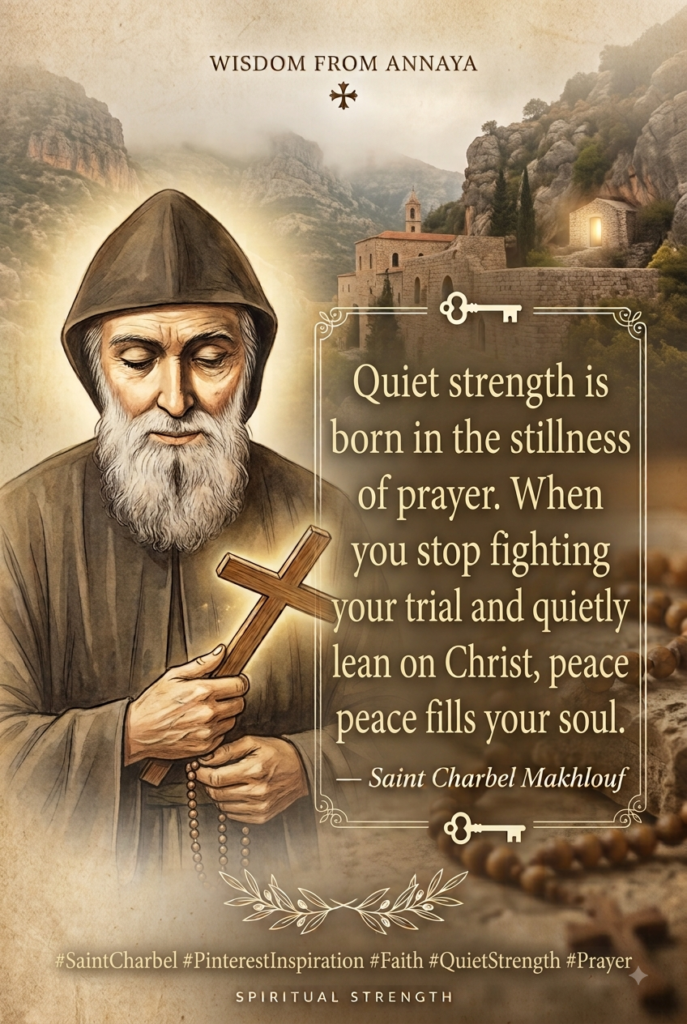
If you are secretly losing hope today, remember that your presence in the Church is a profound victory of grace.
Saint Charbel’s life reminds us that God does His deepest work in the silence of our hearts. Do not give up now. Lay your weariness at the foot of the altar, trust in the quiet intercession of Saint Charbel, and let Jesus sustain your soul through one more day.
About the Author
Wander Venerio Cardoso de Freitas is a theologian, educator, and author of books on Catholic spirituality, the lives of the saints, and Christian formation. He is the founder of the portal O Senhor Te Dê a Paz (Saints Library), dedicated to evangelization through articles, books, and digital content.
Continue Reading on Our Website
Deepen your devotion and explore more inspiring Catholic resources:
Finding Quiet Strength in Suffering Through Saint Charbel
10 Saint Charbel Quotes on Suffering That Offer Comfort in Hard Times
Powerful Saint Charbel Quotes for Healing and Physical Illness
What Saint Charbel Teaches Us About Redemptive Suffering
Five Days With Saint Charbel: A Free Catholic Devotional for Faith, Hope, and Prayer
Inspiring Saint Charbel Words for Caregivers and Loved Ones
Saint Charbel Quotes to Pray During Times of Bodily Weakness
Saint Charbel Quotes for Chronic Pain Warriors Seeking Hope
Finding Meaning in Pain: Timeless Lessons from Saint Charbel
Saint Charbel on Divine Mercy During Physical Affliction
Saint Charbel Quotes on Bearing Your Daily Cross with Grace
Encouraging Saint Charbel Quotes for Hospital Patients
The Most Inspiring Quotes of Saint Charbel: Words of Faith, Prayer, and Silence
Saint Charbel Quotes When Healing Seems Impossible
Saint Charbel for Catholics Who Are Still Faithful but Secretly Losing Hope