The Incorrupt Body of Saint Charbel: A Mystery That Has Fascinated the World for More Than a Century
Throughout the history of Christianity, countless saints have been remembered for their holiness, heroic virtues, and unwavering faith. Yet only a small number have become associated with extraordinary physical phenomena after death. Among them, Saint Charbel Makhlouf occupies a unique place.
More than one hundred years after his passing, the story of the incorrupt body of Saint Charbel continues to captivate believers, historians, physicians, scientists, and researchers from around the world. His life of profound humility and prayer, combined with the mysterious events surrounding his tomb, has transformed him into one of the most beloved Catholic saints of modern times.
For millions of Christians, Saint Charbel is much more than a historical figure. He is a powerful intercessor before God, known for countless testimonies of healing, spiritual renewal, family restoration, and miraculous favors.
This article explores the remarkable story of Saint Charbel’s incorrupt body, examines what actually happened after his death, explains what the Catholic Church teaches about incorruptibility, and reflects on the spiritual lessons that continue to inspire people of every culture and generation.
Who Was Saint Charbel?
Saint Charbel Makhlouf was born as Youssef Antoun Makhlouf on May 8, 1828, in the small mountain village of Bekaa Kafra, Lebanon, one of the highest permanently inhabited villages in the Middle East.
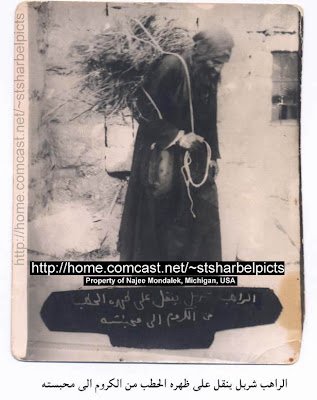
Raised in a humble Christian family, he displayed extraordinary devotion from an early age. While other children played outdoors, young Youssef often sought solitude inside a small cave, where he prayed before an image of the Blessed Virgin Mary.
At the age of twenty-three, he entered the Lebanese Maronite Order, leaving behind worldly ambitions to dedicate his entire life to God.
Upon entering religious life, he received the name Charbel, honoring an early Christian martyr.
His life became an extraordinary testimony of:
- profound humility;
- complete obedience;
- intense Eucharistic devotion;
- continuous prayer;
- voluntary poverty;
- rigorous fasting;
- love for silence;
- total abandonment to Divine Providence.
After years as a monk, he obtained permission to live as a hermit, spending the final decades of his life almost entirely in solitude, prayer, manual labor, and contemplation.
His greatest desire was not recognition but union with Christ.
The Final Days of Saint Charbel
On December 16, 1898, while celebrating the Holy Mass, Saint Charbel suddenly suffered a severe stroke.
Despite his condition, witnesses reported that he struggled to complete the Eucharistic celebration with deep reverence and devotion.
For eight days he endured great physical suffering, offering everything to God without complaint.
He peacefully entered eternal life on December 24, 1898, Christmas Eve.
His fellow monks buried him in the monastery cemetery at Saint Maron Monastery in Annaya, believing they were saying farewell to a holy monk whose quiet life would soon be forgotten.
Instead, his death marked the beginning of an extraordinary chapter that continues to this day.
The Mysterious Lights Above His Tomb
Shortly after Saint Charbel’s burial, local villagers and monks began noticing unusual lights shining above his grave during the night.
The mysterious glow appeared repeatedly, attracting increasing attention.
At first, many assumed the lights were caused by natural phenomena.
However, as more reliable witnesses reported seeing the same luminous manifestations, Church authorities decided to investigate.
The reports continued for weeks, strengthening the growing conviction that something extraordinary had occurred.
The First Exhumation
Church officials eventually authorized the opening of Saint Charbel’s tomb.
What they discovered surprised everyone present.
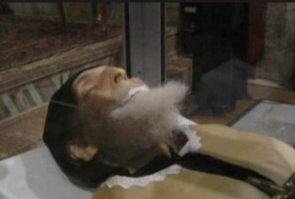
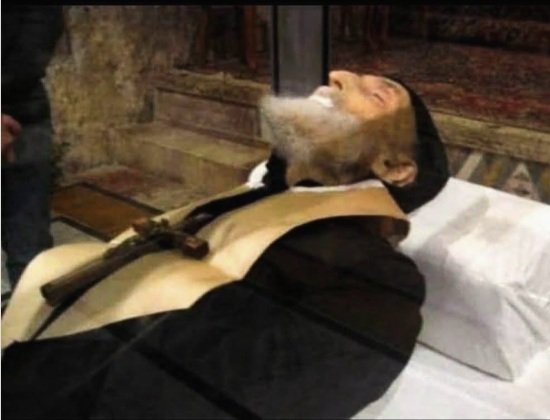
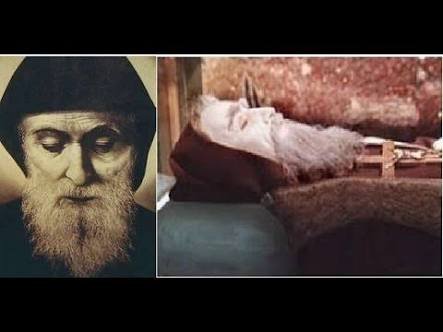
Although buried in a damp environment that normally accelerates decomposition, his body showed an exceptional degree of preservation.
Even more astonishing was the presence of a reddish fluid that appeared to flow from the body.
The monks carefully cleaned the remains, replaced the burial garments, and transferred the body to another location.
Yet the mysterious fluid continued to appear for many years afterward.
The phenomenon soon became known throughout Lebanon and eventually spread across the Christian world.
The Extraordinary Fluid
One of the most remarkable aspects of Saint Charbel’s story concerns the unusual fluid reportedly exuding from his body.
Over several decades, physicians, scientists, and Church-appointed investigators examined the phenomenon.
Various natural explanations were proposed, including environmental conditions and biological processes.
However, no single explanation has fully accounted for every documented observation recorded throughout the years.
This mystery greatly contributed to Saint Charbel’s reputation for holiness and attracted thousands of pilgrims seeking prayer and healing.
What Does “Incorrupt” Mean?
Within Catholic tradition, an incorrupt body refers to human remains that display an unusual level of preservation after death.
The Catholic Church approaches such cases with great prudence.
It is important to understand that incorruptibility is not considered proof of sainthood.
Likewise, many canonized saints experienced ordinary bodily decomposition.
Holiness is recognized through:
- heroic virtue;
- fidelity to Christ;
- authentic Christian witness;
- verified miracles;
- careful historical investigation;
- theological examination.
Incorruptibility may be viewed as an extraordinary sign worthy of study, but never as the foundation of Christian faith.
Science and the Mystery
Throughout the twentieth century, numerous medical examinations attempted to understand the condition of Saint Charbel’s body.
Researchers analyzed environmental factors, burial conditions, climate, and possible biological explanations.
Although certain aspects may be explained naturally, many observers believe the complete series of events surrounding his body remains difficult to explain fully.
The Catholic Church does not present these events as scientific proof of divine intervention.
Rather, it encourages believers to see them as possible signs that invite deeper faith, conversion, and trust in God while respecting legitimate scientific inquiry.
Faith and reason are not enemies. The Church has long taught that authentic scientific investigation and authentic faith ultimately seek the same truth. For this reason, Saint Charbel’s case continues to be studied with both reverence and intellectual honesty.
Miracles Attributed to Saint Charbel
Today, Saint Charbel is recognized worldwide as one of the Catholic Church’s most powerful intercessors.
Thousands of testimonies describe extraordinary favors received through his prayers.
Among the most frequently reported are:
- physical healing;
- recovery from serious illnesses;
- restoration of families;
- freedom from addictions;
- spiritual conversions;
- renewed hope;
- peace during suffering;
- strengthening of faith.
Every miracle officially recognized by the Catholic Church undergoes an extensive and rigorous investigation before receiving approval.
Why Millions Visit Annaya Every Year
The Monastery of Saint Maron in Annaya has become one of the world’s most important Catholic pilgrimage sites.
Each year, believers from every continent travel there seeking prayer, healing, thanksgiving, or simply spiritual peace.
Many pilgrims testify that visiting Saint Charbel’s shrine deepens their faith and strengthens their relationship with Christ.
The atmosphere of silence surrounding the monastery reflects the very life Saint Charbel embraced.
Saint Charbel’s Legacy
Although the physical condition of Saint Charbel’s body has naturally changed over time, his spiritual legacy remains stronger than ever.
His greatest miracle is perhaps not the preservation of his body but the countless lives transformed through his example.
He teaches modern Christians that holiness is not reserved for extraordinary people.
It grows through daily fidelity, humility, prayer, sacrifice, forgiveness, charity, and unwavering confidence in God.
In an age dominated by noise, distraction, and constant activity, Saint Charbel reminds us that silence can become a place where God speaks to the human heart.
His witness encourages us to seek holiness not through spectacular achievements but through ordinary faithfulness lived with extraordinary love.
Spiritual Lessons from Saint Charbel
Saint Charbel’s life offers timeless lessons for every Christian.
Silence Opens the Heart to God
His silence was never emptiness but a space filled with God’s presence.
Prayer Transforms the Soul
He believed that every genuine transformation begins before the Blessed Sacrament.
Humility Is the Path to Greatness
Saint Charbel never sought recognition, yet God made his example known throughout the world.
Trust in Divine Providence
He accepted suffering with serenity, believing that God never abandons those who place their confidence in Him.
Love for the Eucharist
The Holy Mass was the center of his existence.
His final earthly act was celebrating the Eucharist, revealing where his heart truly rested.
What Does the Catholic Church Teach About Extraordinary Signs?
The Catholic Church encourages prudence whenever extraordinary phenomena are reported.
Miracles, incorrupt bodies, and other remarkable events are never the foundation of Christian belief.
Instead, the Church teaches that faith rests upon Jesus Christ, Sacred Scripture, Sacred Tradition, and the Sacraments.
Extraordinary signs should always lead believers toward deeper conversion, greater charity, more frequent participation in the Eucharist, and a more faithful Christian life.
Frequently Asked Questions
Is Saint Charbel’s body still completely incorrupt?
Over the years, natural changes have occurred. Nevertheless, his relics remain deeply venerated, and the historical accounts of his body’s remarkable preservation continue to inspire devotion.
Does the Catholic Church consider incorruptibility a miracle?
Not necessarily. The Church regards incorruptibility as a phenomenon worthy of investigation but not as automatic proof of sanctity.
Where is Saint Charbel buried?
Saint Charbel’s shrine is located at Saint Maron Monastery in Annaya, Lebanon, one of the most visited pilgrimage destinations in the Middle East.
How can I ask for Saint Charbel’s intercession?
Catholics are encouraged to pray with confidence, asking Saint Charbel to intercede before God while remaining faithful to the Gospel, the Sacraments, and the teachings of the Church.
Conclusion
The story of the incorrupt body of Saint Charbel continues to inspire wonder, devotion, and thoughtful reflection across the world. While the extraordinary events surrounding his remains have attracted worldwide attention, they are ultimately secondary to the profound witness of his life.
Saint Charbel did not seek fame, miracles, or admiration. He sought only God.
His example reminds us that true greatness is found in humility, faithful prayer, silent sacrifice, unwavering hope, and complete trust in Divine Providence.
Whether one approaches his story from the perspective of history, science, or faith, Saint Charbel’s life points beyond extraordinary phenomena to the eternal call to holiness.
May his example encourage us to deepen our relationship with Christ, embrace the beauty of prayer, remain faithful during times of suffering, and trust that God continues to work powerfully in the lives of those who seek Him with sincere hearts.
“Blessed are the pure in heart, for they shall see God.” (Matthew 5:8)
Continue Reading on Our Blog
If you enjoyed this article, we also recommend:
📖 The Lebanese Saint Who Continues to Inspire Millions of Believers
📖 Saint Charbel: The Miracle Saint Who Still Changes Lives Today
📖 30 Días con San Charbel Makhlouf: Un Camino de Silencio, Fe y Abandono Total en Dios
📖 The Life of Saint Charbel: History, Miracles, and Spirituality
📖 Novena of Saint Charbel: 9 Days of Prayer to Receive Graces
Discover more books and reflections from the Wisdom of the Saints Collection, a series dedicated to presenting the lives, teachings, and spirituality of the great saints of the Catholic Church.
By: Venerio W. / Deanhaiha C.