There are saints whose stories inspire admiration.
There are others whose lives seem to speak directly to the wounds, fears, and hopes of ordinary people.
Saint Charbel Makhlouf belongs to this second group.
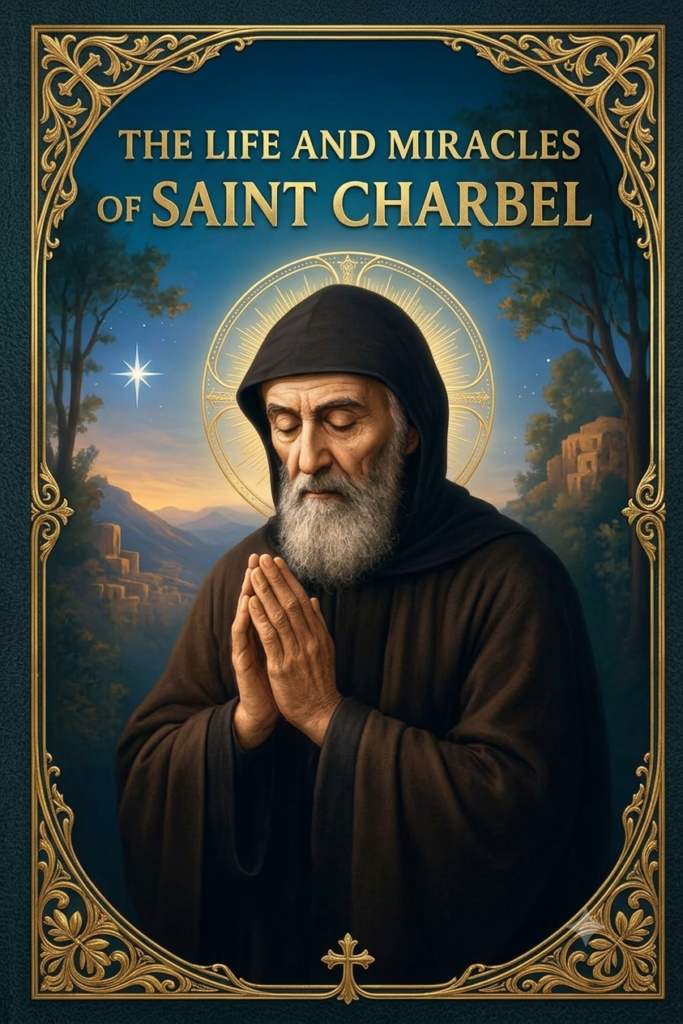
Born in Lebanon in 1828, Saint Charbel lived a remarkably hidden life. He was a Maronite monk, priest, hermit, and man of profound prayer. He did not seek fame, wealth, influence, or recognition.
And yet, after his death, his name began to travel far beyond the monastery where he had lived.
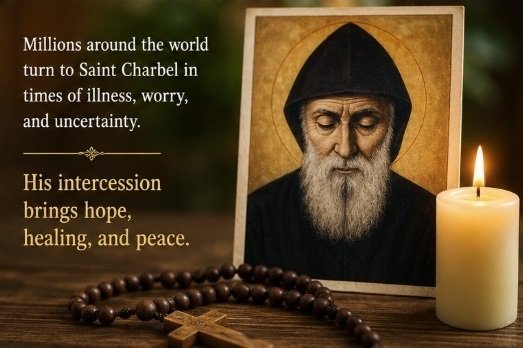
Today, Catholics and Christians around the world turn to Saint Charbel in prayer, especially when facing illness, family difficulties, impossible situations, and deep spiritual struggles.
But why has this humble Lebanese monk become one of the most beloved saints of modern times?
Here are 10 reasons Saint Charbel continues to touch millions of hearts.
1. Saint Charbel Lived a Life Completely Centered on God
Perhaps the first reason people love Saint Charbel is also the simplest:
He gave his entire life to God.
From his youth, Charbel showed a strong attraction toward prayer and religious life. Eventually, he entered the Lebanese Maronite Order and received the religious name Charbel.
His vocation was not based on seeking personal comfort.
He chose a demanding path of prayer, obedience, sacrifice, silence, and service.
Later, he became a hermit, dedicating long periods of his life to contemplation.
In a world constantly demanding attention, Saint Charbel represents something radically different.
He reminds us that a human life does not become meaningful because it is famous.
It becomes meaningful when it is given to God.
2. His Humility Speaks to a World Obsessed With Recognition
Modern culture often teaches people to seek visibility.
Social media rewards attention.
Success is frequently measured by followers, money, possessions, and public recognition.
Saint Charbel followed the opposite path.
He wanted to disappear from the world’s spotlight.
His life as a hermit was marked by humility and hiddenness. He did not build a personal brand. He did not seek applause.
He simply wanted to belong to God.
This makes his example surprisingly relevant today.
Many people are exhausted by the pressure to prove themselves.
Saint Charbel offers another possibility:
You do not need to be famous to have a life of extraordinary value.
You can live quietly, faithfully, and generously—and still transform the world.
3. His Extraordinary Devotion to Prayer
Prayer was not an occasional activity in Saint Charbel’s life.
It was at the center of his existence.
His spirituality was deeply Eucharistic and contemplative. His daily life was structured around worship, silence, work, sacrifice, and communion with God.
This is one reason people searching for Saint Charbel prayers continue to discover his spirituality.
People come to him when they feel overwhelmed.
They pray when they are sick.
They pray when someone they love is suffering.
They pray when they do not know what decision to make.
And sometimes they simply pray because they want to become closer to God.
Saint Charbel’s life teaches an important lesson:
Prayer is not merely asking God for things. Prayer is learning to remain with God.
4. The Miracles Associated With Saint Charbel Fascinate Millions
Another major reason for the devotion to Saint Charbel is the extraordinary number of miracles and extraordinary favors associated with his intercession.
After his death in 1898, devotion to him spread rapidly.
Reports of healings and other extraordinary events contributed greatly to the growth of his reputation as a powerful intercessor.
The Church investigated miracles connected with his intercession during the canonical process that eventually led to his beatification and canonization.
Saint Charbel was beatified by Pope Paul VI in 1965 and canonized by the same pope in 1977.
For Catholics, these events are particularly important because canonization involves a formal process of discernment by the Church.
The miracles associated with Saint Charbel therefore form an important part of the story of his growing devotion.
But his popularity is not based only on miracles.
There is something deeper.
5. People Turn to Saint Charbel When They Are Suffering
Human suffering crosses every border.
A person in Brazil can experience the same fear as someone in Lebanon.
A mother worried about her child can understand the anxiety of another mother thousands of miles away.
A person facing illness does not need to speak the same language as someone praying beside them.
This is one reason devotion to Saint Charbel has become so international.
People bring their suffering to him.
They ask for his intercession during sickness, family crises, emotional struggles, financial difficulties, and moments when they feel powerless.
Saint Charbel does not present Christianity as a life without suffering.
His own life was marked by sacrifice.
Instead, his example points toward a Christian understanding of suffering in which pain can be united with faith, prayer, and trust in God.
6. His Lebanese Heritage Gives His Story a Unique Place in Christianity
Saint Charbel was born in Lebanon and belonged to the Maronite Catholic tradition.
This gives his story a distinctive connection with the ancient Christian heritage of the Middle East.
Lebanon has a long and extraordinary Christian history.
Saint Charbel emerged from this environment of ancient faith, monasticism, liturgy, and devotion.
For many Christians, discovering Saint Charbel is also an opportunity to discover something about the Eastern Catholic traditions that form part of the richness of the universal Church.
His story demonstrates that holiness does not belong to one nation or culture.
A saint may come from a small village in Lebanon and eventually become loved by people on every continent.
7. His Life Was Simple—and That Makes It Powerful
Saint Charbel did not accomplish extraordinary things according to ordinary standards.
He did not become a politician.
He did not command an army.
He did not accumulate wealth.
He did not become a celebrity.
His life was characterized by prayer, work, sacrifice, silence, and religious obedience.
And this simplicity is precisely what makes his story so powerful.
In a complicated world, people often long for something authentic.
Saint Charbel’s spirituality was not built around complicated formulas.
It was built around a few fundamental realities:
God. Prayer. The Eucharist. Sacrifice. Humility. Love.
His life reminds us that spiritual greatness can grow from apparently ordinary actions performed with extraordinary faithfulness.
8. Saint Charbel Gives People Hope in Difficult Situations
There are moments when human solutions seem insufficient.
A diagnosis can frighten a family.
A broken relationship can leave someone emotionally devastated.
A financial crisis can make the future appear uncertain.
A personal failure can create the feeling that everything has been lost.
In these moments, people frequently search for saints whose lives can help them rediscover hope.
Saint Charbel has become one of those spiritual companions.
Devotees ask for his intercession not because they believe the saint replaces God, but because Catholics understand the saints as friends and intercessors who point us toward Christ.
This distinction is essential.
Saint Charbel does not take the place of God.
His life directs the believer toward God.
That is the heart of Catholic devotion to the saints.
9. His Devotion Continues to Cross Borders and Languages
One of the most remarkable aspects of Saint Charbel’s popularity is how far his devotion has traveled.
He was born in Lebanon.
He lived as a monk and hermit there.
Yet today his name is known in countries throughout the world.
Prayers, novenas, biographies, testimonies, pilgrimages, churches, statues, religious images, and devotional books have helped spread his story internationally.
This global devotion reveals something important.
The saints are not simply historical figures.
Their witness can speak to people living centuries later.
A person reading about Saint Charbel today can discover questions that remain as relevant as they were in the nineteenth century:
Am I putting God first?
Do I know how to pray?
Can I live with greater humility?
Can I trust God during suffering?
What does it mean to sacrifice something for love?
These questions have not become outdated.
10. Saint Charbel Shows That Holiness Is Possible
Perhaps this is the most important reason of all.
Saint Charbel’s life demonstrates that holiness is not reserved for extraordinary personalities.
He was not famous during his lifetime.
He lived far from the centers of power.
He did not possess the technology, wealth, or communication tools that define our modern world.
Yet his witness continues to inspire people.
His life tells us something profoundly hopeful:
A person can become holy through faithfulness.
Holiness begins with responding to God’s grace.
It grows through prayer.
It requires perseverance.
It often involves sacrifice.
And it can flourish even when nobody is watching.
That message is desperately needed today.
What Can We Learn From Saint Charbel Today?
Saint Charbel is not merely a saint to whom we can ask for favors.
He is also a teacher through his example.
His life invites us to reconsider what we call success.
Perhaps success is not always having more.
Perhaps it is becoming more faithful.
Perhaps it is not being noticed.
Perhaps it is loving when nobody applauds.
Perhaps it is not avoiding every form of suffering.
Perhaps it is learning to remain close to God when suffering arrives.
The spirituality of Saint Charbel challenges modern Christians to recover the importance of silence, prayer, sacrifice, Eucharistic devotion, and trust in Divine Providence.
A Simple Prayer to Saint Charbel
If you are discovering Saint Charbel for the first time, you can begin with a simple prayer.
You do not need complicated words.
Speak to God sincerely and ask Saint Charbel to intercede for you.
Saint Charbel, faithful servant of God, pray for me. Help me remain close to Christ in times of joy and suffering. Teach me to pray with greater faith, to live with humility, and to trust God’s will even when I cannot understand His plans. Intercede for my family, my loved ones, and all those who are suffering. May your example lead me closer to Jesus Christ. Amen.
Why Do People Still Love Saint Charbel?
The answer goes far beyond the stories of miracles.
People love Saint Charbel because his life represents something the modern world desperately needs.
Silence in a noisy world.
Faith in a skeptical world.
Humility in a culture of self-promotion.
Prayer in an age of distraction.
Hope in the middle of suffering.
His story reminds us that the deepest treasures of Christianity are not necessarily found in wealth, fame, or power.
They are found in communion with God.
That is why a humble Lebanese hermit who died more than a century ago continues to inspire people today.
Saint Charbel and the Power of a Hidden Life
One of the most beautiful lessons of Saint Charbel is that a hidden life can have an enormous spiritual impact.
During his earthly life, relatively few people knew him.
After his death, his witness reached millions.
This should encourage anyone who feels that their life is insignificant.
A mother raising children with faith may never become famous.
A father praying every night for his family may never receive public recognition.
A catechist teaching children may never appear in a newspaper.
A person quietly caring for an elderly relative may never be celebrated.
But God sees what the world does not see.
Saint Charbel’s life illustrates this mystery beautifully.
What is hidden from people is never hidden from God.
Saint Charbel’s Message for the Modern Family
Families today face enormous pressures.
Technology competes for attention.
Parents struggle to find time for prayer.
Children grow up surrounded by countless voices telling them what they should desire.
Families can become physically close while becoming spiritually distant.
Saint Charbel offers a powerful counterexample.
His life invites families to recover simple spiritual practices:
praying together;
attending Mass;
reading Scripture;
practicing forgiveness;
making time for silence;
teaching children about the saints;
trusting God during difficult periods;
placing Christ at the center of family life.
The goal is not to imitate the external details of a hermit’s life.
The goal is to imitate his love for God.
Saint Charbel’s Legacy Is Still Growing
More than a century after his death, Saint Charbel remains a powerful figure of Catholic devotion.
His story continues to be told.
His prayers continue to be prayed.
His intercession continues to be sought.
His life continues to inspire people who are searching for deeper faith.
And perhaps his greatest legacy is not the number of people who know his name.
It is the number of people who, after discovering his life, turn their hearts toward God.
That is the true purpose of a saint.
A saint does not invite us to stop at the saint.
A saint points beyond himself.
Saint Charbel points to Christ.
Final Reflection: Why Saint Charbel Matters Today
Why is Saint Charbel one of the most loved saints today?
Because his life answers some of the deepest questions of the human heart.
Can I find God in silence?
Can I remain faithful when life becomes difficult?
Can suffering have meaning?
Can a simple life become extraordinary?
Can prayer change the way I face my problems?
Can I trust God even when I cannot see the outcome?
Saint Charbel’s life responds with a powerful witness:
Yes—when God becomes the center of our lives.
His story began in a small Lebanese village.
It continued through a life of monastic dedication, priesthood, solitude, prayer, and sacrifice.
And it continues today in the hearts of people who invoke his intercession throughout the world.
Perhaps that is why Saint Charbel remains so beloved.
He reminds us that holiness does not require fame.
It requires fidelity.
And sometimes the quietest life can leave the loudest testimony.
Saint Charbel, pray for us.
📚 This article is part of the Ultimate Guide to St. Charbel
If you want to discover the complete story of St. Charbel Makhlouf—from his childhood, religious vocation, and monastic life to the miracles recognized by the Church, the mystery of his incorrupt body, his prayers, the novena, his powerful intercession, and his extraordinary path to holiness—be sure to visit our Ultimate Guide to St. Charbel, the most comprehensive resource on our website about this beloved Maronite saint.
Saint Charbel Makhlouf was a Lebanese Maronite Catholic monk, priest, and hermit who lived from 1828 to 1898. He became widely known for his profound life of prayer, humility, and devotion to God.
Why is Saint Charbel famous?
Saint Charbel is particularly known for his ascetic life, devotion to prayer and the Eucharist, and the numerous miracles and favors attributed to his intercession after his death.
What is Saint Charbel the patron saint of?
Saint Charbel is especially invoked by Catholics seeking his intercession for healing and difficult situations. Popular devotion particularly associates him with physical and spiritual healing.
When was Saint Charbel canonized?
Saint Charbel was canonized by Pope Paul VI in 1977.
Where was Saint Charbel born?
Saint Charbel was born in the village of Bekaa Kafra, in Lebanon, in 1828.
How did Saint Charbel die?
Saint Charbel died on December 24, 1898, after suffering a serious illness. He had spent the final years of his life as a hermit dedicated to prayer and contemplation.
Can I pray to Saint Charbel for healing?
Catholics may ask Saint Charbel to intercede for them before God, including in times of illness. Christian prayer ultimately places trust in God’s wisdom and will.
Why is Saint Charbel important today?
Saint Charbel’s example remains relevant because he represents prayer, humility, sacrifice, silence, Eucharistic devotion, and complete trust in God—virtues that remain deeply important in modern life.
Discover More About Saint Charbel
If the life of Saint Charbel has touched your heart, continue exploring his story through his childhood, religious vocation, years as a hermit, devotion to the Eucharist, miracles, and the testimonies associated with his intercession.
The more we discover about Saint Charbel, the more clearly we see that his story is ultimately not about seeking extraordinary experiences.
It is about learning to love God more deeply.
And perhaps that is the greatest reason why Saint Charbel remains so loved today.
Saint Charbel, pray for us.
About the Author
Wander Venerio Cardoso de Freitas is a theologian, educator, and author of books on Catholic spirituality, the lives of the saints, and Christian formation. He is the founder of the portal O Senhor Te Dê a Paz (Saints Library), dedicated to evangelization through articles, books, and digital content.