12 Bible Verses That Deepen Devotion to Saint Charbel (2026)
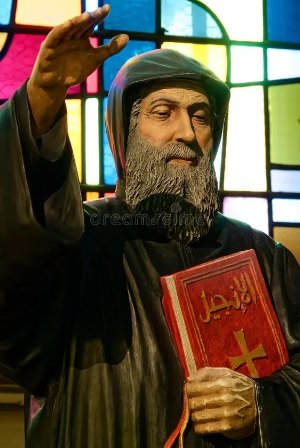
Saint Charbel Makhlouf is one of the most beloved saints of the Catholic Church. His life of silence, prayer, fasting, humility, and complete trust in God continues to inspire millions of Christians worldwide.
Although Saint Charbel lived in nineteenth-century Lebanon, his spirituality was deeply rooted in the eternal Word of God. Every major virtue that shaped his life finds its foundation in Sacred Scripture.
The Bible was not merely a book to him—it was the living voice of God, guiding him toward holiness through daily conversion and faithful obedience.
As Jesus said:
“Heaven and earth will pass away, but my words will never pass away.” (Matthew 24:35)
In this article, we will explore twelve biblical passages that help us understand Saint Charbel’s spirituality and invite us to grow closer to Christ through his example.
Why Read the Bible When Honoring Saint Charbel?
Authentic Catholic devotion always leads believers toward Jesus Christ.
Saint Charbel never sought attention for himself.
His entire life pointed toward God.
The Catechism of the Catholic Church teaches:
“The Church forcefully and specifically exhorts all the Christian faithful to learn the surpassing knowledge of Jesus Christ by frequent reading of the divine Scriptures.” (CCC 133)
Reading Scripture while reflecting on Saint Charbel’s life allows us to imitate his virtues rather than simply admire them.
📚 This article is part of the Ultimate Guide to St. Charbel
If you want to discover the complete story of St. Charbel Makhlouf—from his childhood, religious vocation, and monastic life to the miracles recognized by the Church, the mystery of his incorrupt body, his prayers, the novena, his powerful intercession, and his extraordinary path to holiness—be sure to visit our Ultimate Guide to St. Charbel, the most comprehensive resource on our website about this beloved Maronite saint.
“Trust in the Lord with all your heart and lean not on your own understanding; in all your ways acknowledge Him, and He will make your paths straight.”(Proverbs 3:5–6)
Among the many virtues that distinguished Saint Charbel Makhlouf, perhaps none shines more brightly than his unwavering trust in Divine Providence. Throughout his life as a Maronite monk and hermit, he surrendered every aspect of his existence to God. He did not seek fame, comfort, influence, or recognition. Instead, he embraced a hidden life marked by silence, prayer, manual labor, fasting, and total abandonment to the will of the Father.
Saint Charbel understood a profound truth taught throughout Sacred Scripture: God’s wisdom infinitely surpasses human reasoning. Even when His plans remain mysterious, they are always directed toward our eternal good.
The Book of Isaiah reminds us:
“For My thoughts are not your thoughts, neither are your ways My ways, declares the Lord. As the heavens are higher than the earth, so are My ways higher than your ways and My thoughts than your thoughts.”(Isaiah 55:8–9)
Saint Charbel lived this biblical truth every day. Rather than relying on his own understanding, he entrusted himself completely to God, believing that the Lord guides every event according to His loving providence. His hidden vocation demonstrates that holiness is not measured by public achievements but by faithful obedience to God’s will.
This confidence reflects the teaching of Jesus Himself:
“Do not worry about tomorrow, for tomorrow will worry about itself. Each day has enough trouble of its own.”(Matthew 6:34)
Christ calls His disciples to abandon anxious self-reliance and to place their confidence in the Father’s care. Saint Charbel embodied this Gospel invitation through a life of profound serenity, even amid sacrifice and hardship.
The Catechism of the Catholic Church teaches:
“Trust in God is a disposition of the heart by which one relies entirely on His goodness and His almighty power.”(cf. CCC 2090–2092)
This trust is not passive resignation. Rather, it is an act of theological faith through which believers freely entrust themselves to the God who is infinitely wise, faithful, and loving. It recognizes that God’s providence governs history and that He can bring good even from suffering and trials (cf. Romans 8:28).
Saint Charbel’s life also echoes the words of Saint Peter:
“Cast all your anxiety on Him because He cares for you.”(1 Peter 5:7)
In a world marked by uncertainty, fear, financial worries, illness, family struggles, and constant change, these words remain deeply relevant. Saint Charbel reminds us that authentic peace does not come from controlling every circumstance but from entrusting our lives to the One who holds all things in His hands.
His example invites us to cultivate a childlike confidence in God, believing that even when we cannot understand His plans, we can always trust His love.
Book Recommendation: Discover the Power and Faith of St. Charbel
If you are looking for a deeply inspiring spiritual journey, “The Life and Miracles of Saint Charbel” by Wander Venerio is a must-read for Catholics and spiritual seekers alike.
Spiritual Reflection
Every Christian eventually faces moments when God’s plan seems hidden. Illness, unanswered prayers, disappointments, or unexpected hardships may tempt us to rely solely on our own strength or to lose hope.
Saint Charbel gently teaches us another way—the way of faith. He reminds us that God’s providence is never absent, even when His purposes remain unseen. By surrendering our fears, ambitions, and uncertainties to the Lord, we discover the peace that Christ promised:
“Peace I leave with you; My peace I give to you. I do not give to you as the world gives. Do not let your hearts be troubled and do not be afraid.”(John 14:27)
May the example of Saint Charbel inspire us to trust the Lord wholeheartedly, confident that the God who faithfully guided his life continues to guide ours toward holiness and eternal communion with Him.
2. Seek God in Silence
Psalm 46:10
“Be still, and know that I am God.”
Silence was not an escape from the world for Saint Charbel.
It was the place where he encountered God.
Modern life is filled with constant distractions, noise, and endless digital stimulation.
Saint Charbel reminds us that God often speaks in quiet moments.
Spiritual Reflection
Spend a few minutes each day in silent prayer before the Blessed Sacrament or in a peaceful place, allowing God’s presence to calm your heart.
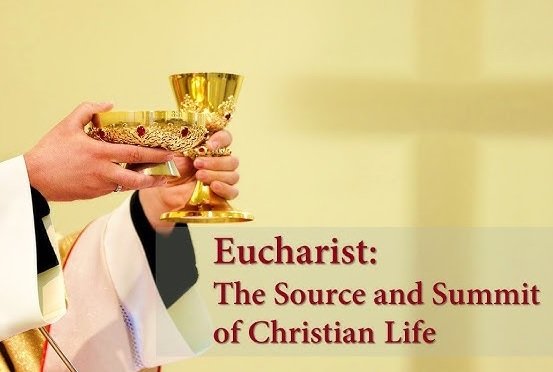
3. The Eucharist Is the Source of Life
John 6:54–56
“Whoever eats my flesh and drinks my blood has eternal life, and I will raise them up at the last day. For my flesh is true food and my blood is true drink. Whoever eats my flesh and drinks my blood remains in me, and I in them.”(John 6:54–56)
EUCHARIST
No passage of Sacred Scripture expresses the heart of Saint Charbel Makhlouf’s spirituality more profoundly than Jesus’ Bread of Life Discourse in the Gospel of John. For Saint Charbel, the Holy Eucharist was not simply one devotion among many—it was the very center of his existence, the source of his strength, and the path that led him to complete union with Christ.
Every day, his life revolved around the celebration of the Holy Sacrifice of the Mass, prolonged moments of Eucharistic Adoration, and deep contemplation of the mystery of Christ truly present in the Blessed Sacrament. His love for the Eucharist shaped every aspect of his vocation, transforming his silence, fasting, manual labor, and prayer into an offering united to the sacrifice of Christ.
The Catholic Church teaches with clarity:
“In the most blessed sacrament of the Eucharist ‘the Body and Blood, together with the soul and divinity, of our Lord Jesus Christ and, therefore, the whole Christ is truly, really, and substantially contained.'”(Catechism of the Catholic Church, 1374)
This doctrine is not merely a theological opinion but a truth revealed by Christ Himself.
When Jesus declared:
“My flesh is true food, and my blood is true drink.”(John 6:55)
many of His disciples found His teaching difficult to accept.
The Gospel tells us:
“From this time many of His disciples turned back and no longer followed Him.”(John 6:66)
Significantly, Jesus did not soften His words or explain them as a mere symbol. Instead, He allowed those who rejected His teaching to depart and then turned to the Twelve:
“You do not want to leave too, do you?”(John 6:67)
Peter answered with one of the greatest professions of faith in the New Testament:
“Lord, to whom shall we go? You have the words of eternal life.”(John 6:68)
Saint Charbel lived with that same faith. He believed that Christ is truly and substantially present in the Eucharist, exactly as the Church has proclaimed since the apostolic age.
His devotion also reflects the words of Jesus at the Last Supper:
“This is My Body, which is given for you… This cup is the new covenant in My Blood.”(Luke 22:19–20)
The Church understands these words literally and sacramentally. At every Holy Mass, through the ministry of the ordained priest acting in persona Christi, the bread and wine become the Body and Blood of Christ through the mystery of transubstantiation (cf. CCC 1376).
For Saint Charbel, every celebration of the Eucharist was a participation in the one sacrifice of Calvary, made sacramentally present upon the altar.
The Catechism beautifully summarizes this mystery:
“The Eucharist is ‘the source and summit of the Christian life.'”(CCC 1324)
Everything in the Christian life flows from the Eucharist and leads back to it.
Saint Charbel understood this better than most. His extraordinary holiness did not arise from extraordinary experiences but from ordinary fidelity to Christ in the Blessed Sacrament.
He reminds us that authentic devotion is never separated from the Eucharist, because every grace received through the saints ultimately comes from Christ, who continues to nourish His Church with His own Body and Blood.
As Saint Paul writes:
“The cup of blessing that we bless, is it not a participation in the Blood of Christ? The bread that we break, is it not a participation in the Body of Christ?”(1 Corinthians 10:16)
The Eucharist is therefore not merely a sacred remembrance of Christ’s Passion. It is a real participation in His saving sacrifice and a foretaste of the heavenly banquet promised to those who remain faithful.
Spiritual Reflection
In a world filled with distractions and empty promises, Saint Charbel invites us to rediscover the greatest treasure entrusted to the Church—the Holy Eucharist.
Every time we approach the altar with faith, we encounter not a symbol, but the living Jesus Christ, who offers Himself as the Bread of Life for the salvation of the world.
His example encourages us to participate in the Holy Mass with greater reverence, receive Holy Communion worthily, spend time in Eucharistic Adoration, and allow Christ’s real presence to transform every aspect of our lives.
As Jesus promised:
“Whoever feeds on My flesh and drinks My blood remains in Me, and I in them.”(John 6:56)
May Saint Charbel inspire us to place the Eucharist at the very center of our spiritual lives, recognizing in the Blessed Sacrament the inexhaustible source of grace, peace, holiness, and eternal life.
4. Pray Without Ceasing
1 Thessalonians 5:16–18
“Rejoice always, pray continually, give thanks in all circumstances.”
Saint Charbel transformed every moment into prayer.
Whether working, fasting, celebrating the Divine Liturgy, or living in solitude, his heart remained united with God.
Prayer is not limited to church.
It becomes a way of life.
Practical Lesson
Offer your daily work, family responsibilities, and struggles as acts of prayer.
5. Carry Your Cross Faithfully
Luke 9:23
“Whoever wants to be my disciple must deny themselves and take up their cross daily and follow me.”
Saint Charbel embraced sacrifice joyfully.
His fasting, discipline, and simplicity were never acts of self-punishment.
They were expressions of love for Christ.
Jesus teaches that authentic discipleship includes self-denial and perseverance.
Every Christian has a cross to carry.
United with Christ, suffering can become a path toward holiness.
6. Humility Before God
Philippians 2:3–5
“In humility value others above yourselves… Have the same mindset as Christ Jesus.”
Despite becoming known for holiness, Saint Charbel desired to remain hidden.
He sought neither admiration nor influence.
Humility allowed God’s grace to shine through him.
True holiness never promotes pride.
Instead, it reflects Christ’s own humility.
7. Love God Above Everything
Matthew 22:37
“Love the Lord your God with all your heart and with all your soul and with all your mind.”
This commandment summarizes Saint Charbel’s entire life.
Everything he did flowed from his love for God.
His example challenges modern Christians to examine their priorities.
What occupies first place in our hearts?
8. Remain Faithful in Difficult Times
James 1:12
“Blessed is the one who perseveres under trial.”
Saint Charbel experienced physical hardship, sacrifice, and intense spiritual discipline.
Yet he remained faithful.
The Letter of James reminds believers that perseverance produces spiritual maturity.
Faith grows strongest when tested.
9. Let Your Light Shine
Matthew 5:16
“Let your light shine before others, that they may see your good deeds and glorify your Father in heaven.”
Although Saint Charbel sought solitude, his holiness eventually became known throughout the world.
Authentic Christian witness does not seek applause.
It quietly reflects God’s goodness.
Millions continue to discover Christ through Saint Charbel’s example.
10. Hope in God’s Mercy
Psalm 103:8
“The Lord is compassionate and gracious, slow to anger, abounding in steadfast love.”(Psalm 103:8)
One of the most beautiful characteristics of Saint Charbel Makhlouf’s spirituality was his unwavering confidence in the infinite mercy of God. Although he lived a life of remarkable holiness, profound asceticism, and continual prayer, he never relied on his own virtues. Instead, he placed all his hope in the boundless compassion of the Lord.
Saint Charbel understood that salvation is not earned by human perfection but received as a gift of divine grace. His life reflected the conviction that God’s mercy is greater than every human weakness, and that no repentant sinner is beyond the reach of His forgiveness.
The Psalmist proclaims:
“The Lord is compassionate and gracious, slow to anger, abounding in steadfast love.”(Psalm 103:8)
These words reveal the very heart of God—a Father who delights not in condemnation but in reconciliation. Throughout salvation history, the Lord continually calls His people back to Himself, offering forgiveness, healing, and a new beginning.
This truth reaches its fullest expression in Jesus Christ, who came into the world not to condemn sinners but to save them:
“For God did not send His Son into the world to condemn the world, but to save the world through Him.”(John 3:17)
Saint Charbel deeply believed that every person, regardless of past failures, could find hope by turning sincerely to Christ. His confidence in divine mercy echoed the words of the prophet Isaiah:
“Though your sins are like scarlet, they shall be as white as snow.”(Isaiah 1:18)
This promise reminds us that God’s forgiveness is capable of completely restoring the repentant heart.
For Saint Charbel, the ordinary path to experiencing this mercy was the Sacrament of Reconciliation. He frequently examined his conscience, sought conversion, and encouraged others to approach God’s mercy with humility and confidence.
The risen Christ entrusted this ministry of forgiveness to His Apostles when He declared:
“Receive the Holy Spirit. If you forgive anyone’s sins, their sins are forgiven; if you retain anyone’s sins, they are retained.”(John 20:22–23)
From the earliest centuries, the Church has understood these words as the institution of the Sacrament of Penance, through which Christ continues to reconcile sinners with the Father.
The Catechism of the Catholic Church teaches:
“Those who approach the sacrament of Penance obtain pardon from God’s mercy for the offense committed against Him and are, at the same time, reconciled with the Church.”(CCC 1422)
Furthermore, the Catechism beautifully describes God’s initiative in conversion:
“The Gospel is the revelation in Jesus Christ of God’s mercy to sinners.”(CCC 1846)
Saint Charbel knew that authentic holiness is not the absence of struggle but the continual willingness to return to God whenever we fall. Like the Prodigal Son, whose father ran to embrace him before a single word of explanation was spoken (cf. Luke 15:11–32), every repentant sinner is welcomed by the Father’s infinite love.
This confidence also echoes the words of Saint John:
“If we confess our sins, He is faithful and just and will forgive us our sins and purify us from all unrighteousness.”(1 John 1:9)
God never grows weary of forgiving.
It is we who often grow weary of asking.
Pope Francis frequently reminded the faithful of this profound truth, teaching that God’s mercy is inexhaustible for those who sincerely repent and open their hearts to His grace.
Saint Charbel’s life stands as a living testimony that no darkness is stronger than the light of Christ, and no wound is beyond the healing power of divine mercy.
Spiritual Reflection
Every Christian experiences moments of weakness, failure, and discouragement. At times, our sins or past mistakes may tempt us to believe that we are beyond God’s forgiveness.
Saint Charbel gently reminds us that God’s mercy is always greater than our sins. The Lord never rejects a humble and contrite heart. Instead, He invites us to return to Him with confidence, trusting in His infinite love and compassion.
Whenever we approach the Sacrament of Reconciliation with sincere repentance, we encounter not merely a ritual, but the merciful Christ Himself, who restores our friendship with God and fills our souls with His sanctifying grace.
As Jesus declared:
“There will be more rejoicing in heaven over one sinner who repents than over ninety-nine righteous persons who do not need to repent.”(Luke 15:7)
May the example of Saint Charbel inspire us never to despair of God’s mercy, but to approach Him with humble hearts, confident that His love is stronger than our failures and that His forgiveness always opens the way to new life in Christ.
Hope in God’s Mercy
11. The Saints Pray for Us
Revelation 5:8
“The twenty-four elders… held golden bowls full of incense, which are the prayers of God’s people.”
Catholic devotion to the saints is rooted in the Communion of Saints.
The Book of Revelation presents the saints offering the prayers of God’s people before God.
When Catholics ask Saint Charbel for intercession, they are asking a faithful servant of Christ to pray with them—not to replace Christ, the one Mediator (1 Timothy 2:5).
All grace comes from God alone.
12. Seek Holiness Every Day
1 Peter 1:15–16
“Be holy, because I am holy.”
Perhaps no verse better captures Saint Charbel’s life.
Holiness is not reserved for priests, monks, or mystics.
It is God’s universal call to every baptized Christian.
The Second Vatican Council reminds us that all believers are called to the fullness of Christian life (Lumen Gentium, 40).
Saint Charbel simply responded generously to that invitation.
How These Bible Verses Can Transform Your Spiritual Life
Meditating on these passages can help you:
Strengthen your trust in God’s providence.
Develop a deeper love for the Holy Eucharist.
Build a consistent prayer life.
Grow in humility and charity.
Face suffering with hope.
Rediscover the beauty of silence.
Live the Gospel more faithfully each day.
Saint Charbel’s holiness was not based on extraordinary experiences but on ordinary faithfulness to God’s Word.
A Prayer Inspired by These Bible Verses
Heavenly Father,
Through the intercession of Saint Charbel, teach us to love Your Word with sincere hearts.
May Sacred Scripture become the light that guides our decisions, strengthens our faith, comforts us in suffering, and leads us ever closer to Jesus Christ.
Grant us the grace to imitate Saint Charbel’s humility, trust, perseverance, and love for the Holy Eucharist.
May Your Word transform our lives each day, so that we may become faithful witnesses of the Gospel.
Through Christ our Lord.
Amen.
Frequently Asked Questions (FAQ)
Did Saint Charbel read the Bible every day?
As a Maronite monk, Saint Charbel lived immersed in Sacred Scripture through the Divine Liturgy, personal prayer, and meditation. The Bible profoundly shaped his spirituality.
Which Bible verse best represents Saint Charbel?
Many Catholics associate John 6:54–56 with Saint Charbel because of his deep devotion to the Holy Eucharist.
Why is silence important in Saint Charbel’s spirituality?
Silence creates space to hear God’s voice, grow in prayer, and deepen one’s relationship with Christ.
Does the Bible support asking saints to pray for us?
Catholics point to passages such as Revelation 5:8, Revelation 8:3–4, and the doctrine of the Communion of Saints, while recognizing that Jesus Christ remains the unique Mediator of salvation (1 Timothy 2:5).
How can I imitate Saint Charbel through Scripture?
Read the Bible daily, participate in the Holy Mass, receive the Sacraments, practice charity, cultivate silence before God, and strive to live each day according to the Gospel.
Final Reflection
Saint Charbel’s extraordinary holiness did not come from extraordinary circumstances but from extraordinary fidelity to God’s Word. Every page of Scripture invites us to the same journey of trust, prayer, humility, perseverance, and love for Christ.
If these twelve Bible verses become part of your daily prayer, they can help deepen not only your devotion to Saint Charbel but, above all, your relationship with Jesus—the source of every grace and the ultimate goal of every authentic Catholic devotion.
Continue Reading on Our Website
Deepen your devotion and explore more inspiring Catholic resources:
Wander Venerio Cardoso de Freitas is a theologian, educator, and author of books on Catholic spirituality, the lives of the saints, and Christian formation. He is the founder of the portal O Senhor Te Dê a Paz (Saints Library), dedicated to evangelization through articles, books, and digital content.