
It is one of the most confusing and painful experiences in the life of a Christian. You go to Sunday Mass, you recite your daily prayers, you try your best to live a moral life, and yet, inside your soul, there is only a strange, echoing silence.
God feels thousands of miles away. Prayer feels like speaking to a brick wall. The spiritual joy and comfort you once felt during Holy Communion or Adoration have completely evaporated, leaving behind a cold, heavy numbness.
What makes this season especially agonizing is that you cannot point to a specific cause. You haven’t committed a grave mortal sin, abandoned your faith, or walked away from the Sacraments. You simply feel spiritually dead inside, and you don’t know why.
When you find yourself wandering through this spiritual desert, Saint Charbel Makhlouf (1828–1898), the holy Maronite hermit of Lebanon, stands as a quiet lighthouse. Having spent 23 years in total solitude, fasting, and perpetual Eucharistic prayer, Saint Charbel understood the deep silence of God. Grounded in Sacred Scripture, mystical theology, and Catholic doctrine, this guide explores why God allows seasons of spiritual dryness and how Saint Charbel’s wisdom can guide you back to peace.
Table of Contents
- The Anatomy of Spiritual Dryness: Why Does God Feel Distant?
- Distinguishing Sin from the “Dark Night of the Soul”
- Biblical Foundations: The Deserts of the Saints and Prophets
- Catholic Church Doctrine on Spiritual Consolation and Desolation
- Saint Charbel’s Remedy: Faith Beyond Emotion
- Practical Steps for Navigating Spiritual Numbness
- Prayer to Saint Charbel During Times of Spiritual Dryness
- Frequently Asked Questions
- Final Reflection
The Anatomy of Spiritual Dryness: Why Does God Feel Distant?
Spiritual dryness is not a sign that God has abandoned you; it is often a sign that He is drawing you deeper.
When we first begin to seek God, He frequently grants us spiritual “consolations”—sweet feelings of peace, warmth during prayer, and emotional clarity. These spiritual gifts encourage us to keep praying. However, if we are not careful, we can easily become attached to the feelings of God rather than to the God of feelings.
God allows the feeling of His presence to recede for several reasons:
- To Wean Us Off Spiritual Emotionalism: God wants us to love Him for who He is, not merely for the emotional comfort He provides.
- To Strengthen Supernatural Faith: True faith is proven when we continue to pray, fast, and attend Mass even when we feel absolutely nothing.
- To Purify Our Intentions: Spiritual dryness purifies our motives, teaching us to seek God’s will rather than our own spiritual satisfaction.
- To Make Us Humble: Feeling dry reminds us that grace is a free gift from God, not something we can manufacture through our own efforts.
Distinguishing Sin from the “Dark Night of the Soul”
Before navigating spiritual dryness, it is vital to distinguish between two completely different spiritual states: dryness caused by unconfessed sin and dryness caused by divine purification.
Dryness Caused by Sin
If a person intentionally lives in unconfessed mortal sin, neglects their duties, or embraces lukewarmness, the feeling of distance from God is a natural consequence. The Holy Spirit withdraws emotional warmth to convict the conscience and urge the soul toward Sacramental Confession.
The “Dark Night of the Soul” (Purification)
If you are regularly examining your conscience, receiving the Sacraments, avoiding serious sin, and still feeling completely dry, you are likely experiencing what Saint John of the Cross called the Dark Night of the Soul. This is not a punishment; it is a sacred invitation from God to mature from an emotional faith into a deep, unshakeable, theological faith.
Biblical Foundations: The Deserts of the Saints and Prophets
Sacred Scripture reveals that almost every major figure in salvation history experienced prolonged periods of spiritual obscurity, silence, and feeling abandoned by God.
- The Cry of King David: The Psalms are filled with raw, honest expressions of spiritual dryness: “My God, my God, why have you forsaken me? Why are you so far from saving me, from the words of my groaning?” (Psalm 22:1).
- The Silence of God in Job: In the midst of his suffering, Job cried out for God’s presence but felt only emptiness: “Behold, I go forward, but he is not there, and backward, but I cannot perceive him” (Job 23:8).
- The Example of Christ on the Cross: Jesus Himself chose to enter into the ultimate experience of human spiritual abandonment, crying out from the Cross: “Eli, Eli, lema sabachthani?” that is, “My God, my God, why have you forsaken me?” (Matthew 27:46).
- Walking by Faith, Not by Sight: Saint Paul reminds us of the fundamental rule of the Christian journey: “For we walk by faith, not by sight” (2 Corinthians 5:7).

Catholic Church Doctrine on Spiritual Consolation and Desolation
The spiritual tradition of the Catholic Church, synthesized by Doctor of the Church Saint Ignatius of Loyola, offers clear doctrinal framework for understanding the ups and downs of the spiritual life.
1. Spiritual Desolation (Rule 4 of St. Ignatius)
The Church defines spiritual desolation as darkness of soul, turmoil of mind, movement toward low and earthly things, and a feeling of being unloved, unhopeful, and separated from one’s Creator.
2. Never Change a Resolution in Times of Desolation
Catholic spiritual theology insists that during seasons of dryness and feeling far from God, you must never abandon your spiritual habits. Keep the exact same prayer routine, Mass attendance, and moral standards you maintained when you felt close to God.
3. Grace Is Present Even When Unfelt (CCC 2005)
The Catechism of the Catholic Church explicitly states: “Since it belongs to the supernatural order, grace escapes our experience and cannot be known except by faith. We cannot rely on our feelings or our works to conclude that we are justified and saved.” God is often working most powerfully in your soul precisely when you feel Him least.
Saint Charbel’s Remedy: Faith Beyond Emotion
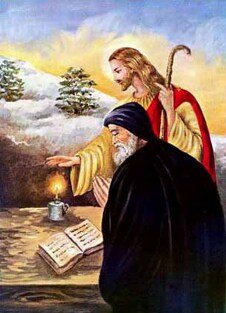
Saint Charbel did not build his spiritual life on emotional high points or spiritual enthusiasm. Living as a hermit in the rugged mountains of Annaya, Lebanon, his life was anchored in radical, silent, Eucharistic endurance.
1. The Power of Silent Adoration
When Saint Charbel felt the weight of spiritual battles or interior silence, he did not run to human distractions, complaints, or worldly noise. He simply knelt before the Tabernacle. He spent hours kneeling on the cold floor, letting the quiet light of the Eucharistic Sun warm his soul, even when his human emotions felt dead.
2. Fidelity to Daily Duty
Saint Charbel showed us that sanctity is found in unwavering fidelity to small, daily acts of obedience. Whether he felt emotional joy or profound numbness, he woke up at the same hour, offered Holy Mass with painstaking reverence, fasted, and obeyed his superiors. He proved that love is an act of the will, not an emotion.
3. Complete Surrender to Divine Providence
Saint Charbel lived in total poverty and detachment. He surrendered his entire life—including his emotional state—into the hands of God. He understood that if God wanted to give him spiritual sweetness, he would accept it with gratitude; if God wanted to give him spiritual dryness, he would accept it with equal gratitude as a means of soul-purification.
Practical Steps for Navigating Spiritual Numbness
If you feel far from God right now without knowing why, follow these five practical steps inspired by Catholic spiritual wisdom and the example of Saint Charbel:
1. Perform a Sincere Examination of Conscience
Begin by going to Sacramental Confession. Ask the Holy Spirit to reveal if there is any hidden sin, resentment, or compromise in your life that is blocking your spiritual peace. If there is, receive absolution and start fresh.
2. Anchor Yourself in the Sacraments, Not Emotions
When you attend Holy Mass or receive the Eucharist, do not measure the value of the Sacrament by how you feel afterward. The Eucharist is the body, blood, soul, and divinity of Jesus Christ regardless of whether you feel emotional joy or absolute numbness. Receive Him in faith.
3. Keep Prayer Short, Simple, and Consistent
When long mental prayer feels impossible during a dry spell, do not force yourself into complex spiritual exercises. Pray simple, vocal prayers: repeat the Holy Name of Jesus, pray the Rosary slowly, or simply say, “Jesus, I trust in You, even when I cannot feel You.”
4. Do Not Seek Worldly Distractions to Fill the Void
When God feels silent, the human temptation is to fill the emptiness with worldly noise—social media, shopping, binge-watching television, or constant entertainment. Resist this urge. Guard your interior silence so that when God speaks His whisper, your soul is ready to hear it.
5. Offer Your Dryness as a Pure Sacrifice
View your spiritual numbness not as a failure, but as a gift you can offer back to God. Praying when you feel like praying is easy; praying when you feel completely dry and exhausted is a pure act of sacrificial love.
Prayer to Saint Charbel During Times of Spiritual Dryness
In the Name of the Father, and of the Son, and of the Holy Spirit. Amen.
O Holy Hermit of Annaya, Saint Charbel, you who spent your life in the quiet presence of God, enduring the cold nights and silent deserts of the mountain hermitage!
Look upon my soul today. You see the deep dryness, numbness, and spiritual silence I am experiencing. God feels far away, my prayers feel empty, and my heart feels heavy and cold.
Intercede for me, dear Saint Charbel. Obtain for me the grace of unwavering perseverance. Help me to remember that God has not abandoned me, but is drawing me into a deeper, purer faith.
Teach me to love Jesus for His own sake, and not merely for the spiritual comforts He gives. Grant me the strength to remain faithful to Holy Mass, to the Sacraments, and to my daily duties, even when I walk through the darkest desert.
Saint Charbel, master of silent prayer and faithful intercessor, pray for me and lead my dry soul back to the living waters of Christ! Amen.
(Recite 1 Our Father, 1 Hail Mary, and 1 Glory Be)
Frequently Asked Questions
How long does spiritual dryness usually last?
Spiritual dryness varies for every soul. For some, it lasts a few weeks or months; for great saints like Saint Teresa of Calcutta or Saint John of the Cross, it lasted for years. God maintains the season for as long as necessary to achieve the spiritual growth of your soul.
Should I stop praying if I feel like a hypocrite because I feel nothing?
No, absolutely not. Praying when you feel nothing is the exact opposite of hypocrisy; it is pure faith. Hypocrisy is pretending to be holy to impress other people. Praying in secret despite feeling dry is a sincere act of love for God.
Can physical or mental exhaustion cause spiritual dryness?
Yes. Human beings are a unity of body, mind, and soul. Chronic lack of sleep, burnout, depression, or physical illness can directly affect your emotional capacity to experience spiritual joy. Take care of your physical health and rest while remaining faithful to basic prayer.
Final Reflection
If you feel far from God today without knowing why, do not despair, do not panic, and do not walk away from your faith.
Remember that the sun is still shining in the heavens even when heavy clouds hide it from your sight. God is just as close to you in the dry, silent desert as He was on your brightest spiritual day.
Take the silent hand of Saint Charbel, kneel before the Blessed Sacrament, and pray with simple, quiet trust. In His perfect time, God will transform your spiritual desert into a fountain of eternal grace.
Deepen Your Faith with the Story of Saint Charbel
If you were moved by this article, discover the complete journey of faith, silence, and supernatural healings in The Life and Miracles of Saint Charbel by Wander Venerio Cardoso de Freitas.
Discover how a humble Lebanese hermit became one of the Catholic Church’s greatest miracle workers.
Explore the documented miracles and official healings recognized by the Church.
Renew your daily prayer life with timeless spiritual lessons.
🛒 [Get Your Paperback / Kindle Copy on Amazon]
Keep Reading on the Blog
If this article inspired you, continue exploring the rich spirituality of Saint Charbel through these in-depth guides:
📖 10 Saint Charbel Quotes on Suffering That Offer Comfort in Hard Times
📖 Saint Charbel: The Miracle Saint Who Still Changes Lives Today
📖 30 Días con San Charbel Makhlouf: Un Camino de Silencio, Fe y Abandono Total en Dios
📖 Finding Quiet Strength in Suffering Through Saint Charbel
📖 The Mystery of Suffering: Insights from Saint Charbel Makhlouf
About the Author
Wander Venerio C. de Freitas is a Brazilian Catholic theologian, educator, and author dedicated to promoting authentic Catholic spirituality through Sacred Scripture, Sacred Tradition, the Catechism of the Catholic Church, and the witness of the saints. Through The Lord of Peace, he publishes in-depth articles designed to help readers deepen their relationship with Jesus Christ, grow in faith, and discover the timeless wisdom of the Catholic Church.