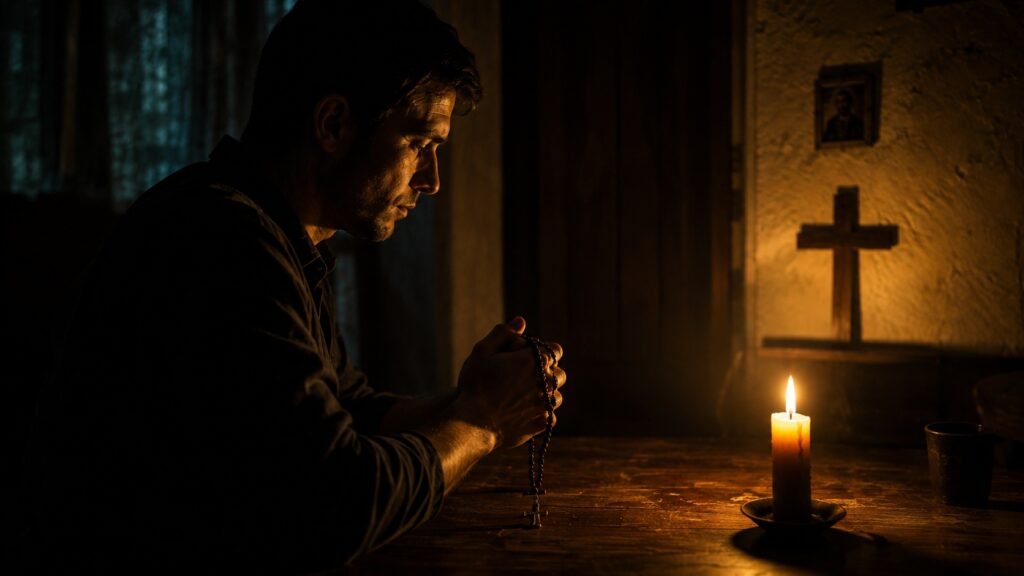
There was a period in my own life when setting aside time for daily prayer felt like pushing a heavy boulder uphill. I remember looking at my Rosary on the nightstand, feeling a profound sense of numbness, apathy, and spiritual paralysis. The joyful fervor I once felt had completely vanished, replaced by an unsettling indifference. I kept asking myself: Why does my heart feel so cold toward God? Has my faith died, or am I just going through the motions? If you are reading this today feeling devoid of spiritual motivation, burdened by guilt, or struggling with an utter lack of desire to talk to God, I want to reassure you: your spiritual journey is not over, and a cold heart is often the precise place where God’s grace begins a deeper work.
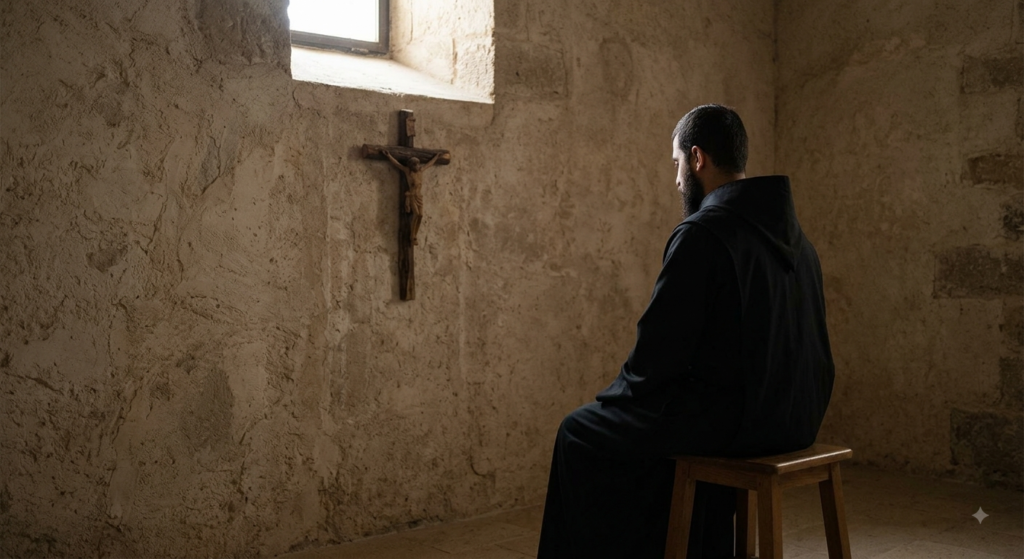
Losing the appetite for prayer—known in Catholic spiritual theology as acedia, lukewarmness, or spiritual sloth—is one of the most subtle temptations a believer can face. It is not merely physical tiredness; it is a weariness of the soul.
When you have lost the desire to pray, turning to Saint Padre Pio of Pietrelcina offers a powerful antidote. Padre Pio, who spent hours every day immersed in deep intercession, understood the agonizing battles of the human spirit. In this guide, anchored in Sacred Scripture, the Catechism of the Catholic Church (CCC), and Padre Pio’s practical spiritual direction, we will explore why we lose our desire for God and how to rekindle the fire of prayer in your life.
Table of Contents
- Understanding Acedia and Spiritual Sloth in Catholic Doctrine
- What Sacred Scripture Says About the Fainting Heart
- Padre Pio’s Wisdom on Fighting Spiritual Indifference
- 4 Steps to Pray When You Don’t Feel Like Praying
- A Prayer to Saint Padre Pio to Rekindle the Fire of Prayer
- Frequently Asked Questions
- Final Reflection
Understanding Acedia and Spiritual Sloth in Catholic Doctrine
When a Catholic experiences a total loss of interest in spiritual matters, it is crucial to recognize what is happening through the lens of Church teaching. The Church does not view this state as a permanent loss of faith, but rather as a spiritual trial that must be fought with vigilance.
The Catechism of the Catholic Church explicitly identifies this interior struggle:
- The Battle of Prayer Against Acedia: The Catechism describes acedia as a form of spiritual laziness or apathy resulting from slackened vigilance: “Another temptation, to which presumption opens the door, is acedia. The spiritual fathers understand by this a form of depression due to lax ascetic practice, decreasing vigilance, carelessness of heart” (CCC 2733).
- Prayer as a Gift, Not a Emotion: The Catechism reminds us that prayer is a covenant relationship with God that transcends fleeting feelings: “Prayer is the life of the new heart. It ought to animate us at every moment. But we forget him who is our life and our all” (CCC 2697).
- The Necessity of Spiritual Combat: Authentic Catholic prayer is always a struggle against ourselves and the wiles of the tempter (CCC 2725). The absence of emotional sweetness is often the moment when true spiritual maturity begins.
What Sacred Scripture Says About the Fainting Heart
The Bible never promises that the Christian life will be an uninterrupted series of emotional spiritual highs. In fact, Scripture is filled with prayers from saints who felt spiritually exhausted and dry:
- When the Soul Thirsts in the Desert: The Psalmist captures the agony of losing emotional connection with God: “O God, you are my God, I seek you, my soul thirsts for you; my flesh faints for you, as in a dry and weary land where no water is” (Psalm 63:1).
- The Danger of Becoming Lukewarm: In the Book of Revelation, Our Lord warns against allowing our love to grow cold, while promising restoration to those who persevere: “I know your works: you are neither cold nor hot… So, because you are lukewarm, I will spew you out of my mouth” (Revelation 3:15-16).
- Persevering in Prayer Despite Weariness: Saint Paul explicitly exhorts the early Christians not to give up when momentum fades: “And let us not grow weary in well-doing, for in due season we shall reap, if we do not yield” (Galatians 6:9).
Padre Pio’s Wisdom on Fighting Spiritual Indifference
Saint Padre Pio was a master director of souls who counseled thousands of Catholics struggling with spiritual dryness, apathy, and temptation. His advice to those who had lost the desire to pray remains revolutionary:
1. Prayer is an Act of the Will, Not the Feelings
Padre Pio’s instruction on prayer as an act of the will addresses one of the greatest illusions in spiritual life: the belief that praying well requires “feeling” something.
When people begin a regular prayer routine, they often experience what classical theology calls sensible consolations—a sudden wave of peace, emotional warmth, or refreshing mental clarity. However, Padre Pio and mystic saints like John of the Cross caution that these sensations are merely “spiritual milk” for beginners. True spiritual maturity begins precisely when the pleasant feelings fade away.
The True Nature of the Will in Prayer
- Spiritual Aridity is Not Failure: Feeling nothing (dryness or aridity) is frequently misread as a lack of faith or divine abandonment. In reality, it is a test of loyalty. Praying through dry spells means standing at the foot of the cross when everyone else has fled.
- Spiritual Love vs. Emotional Feeling: Emotion is passive—it ebbs and flows beyond our control. The will is active—it is the soul’s sovereign capacity to choose the good. Loving God in prayer means choosing to stay present, regardless of your mood.
- Purification of Intention: Praying amidst great consolation makes it easy to confuse loving the God of consolations with loving the consolations of God. Aridity strips away self-interest, ensuring that your sole motivation is the Creator rather than psychological comfort.
Practicing Prayer Without Feeling
- Accept Distractions Without Guilt: Recognize that a wandering mind does not invalidate your heart’s intention. Gently redirecting your focus back to God—even a hundred times in ten minutes—is a profound sacrifice of praise.
- Commit to a Fixed Duration: Avoid praying only “until you feel tired” or “as long as it feels good.” Set a dedicated block of time (e.g., 15 minutes) and stay until the timer finishes, even if it feels completely unproductive.
- Rely on Structured Prayers: When your mind is too exhausted or dry to generate spontaneous words, lean on traditional prayers, the Psalms, or the Rosary. They carry your intent when imagination fails.
Ultimately, prayer stripped of feeling is the purest form of trust. It communicates to God: “I am here not for what I receive, but simply because You are worthy.”
Do you frequently experience spiritual dryness in your prayer life, or would you like to explore the next point in Padre Pio’s teachings?
2. Do Not Wait for Inspiration to Arrive
A common trap is waiting until we “feel in the mood” to pray. Padre Pio warned against this deception of the devil. Spiritual health requires discipline. Just as a sick person must eat food to regain physical strength even when they have lost their appetite, a soul must pray to regain its spiritual taste.
3. The Devil Profits from Your Silence
Padre Pio frequently noted that Satan’s primary tactic is to convince us that our dry, distraction-filled prayers are useless, prompting us to abandon them entirely. Padre Pio exhorted: “Pray, hope, and don’t worry. Worry is useless. God is merciful and will hear your prayer.”
4 Steps to Pray When You Don’t Feel Like Praying
If you are currently trapped in spiritual apathy, do not try to overhaul your life overnight. Apply these practical, grace-filled steps:
1. Reduce the Duration and Increase the Fidelity
If a full hour or 15-decade Rosary feels impossible right now, do not abandon prayer completely. Commit to 5 minutes of absolute fidelity every morning. Recite one devout Our Father and Hail Mary with complete presence of mind.
2. Pray Out Loud or Use Written Prayers
When your mind feels foggy and empty, mental prayer can lead to frustration. Lean on the traditional prayers of the Church—the Psalms, the Rosary, or a Catholic prayer book. Let the written words of the saints carry your heart when your own words fail.
3. Make a Sincere Confession
Padre Pio was known to spend up to 19 hours a day in the confessional, fully aware that sin acts as a spiritual anesthetic—numbness to divine grace always follows unconfessed fault.
When sin goes unaddressed, it creates a subtle barrier between the soul and God. Mortal sin severs sanctifying grace completely, while accumulated venial sins act like a layer of dust on a window: light still passes through, but everything becomes dimmed, heavy, and distorted.
The Spiritual Mechanics of Confession
- Restoration of Spiritual Appetite: Sin creates a false fullness. When the soul feeds on worldly attachments or compromises, it loses its hunger for prayer, Scripture, and the Sacraments. Confession cleanses the palate, renewing an authentic hunger for God.
- Removal of the Barrier to Grace: Grace flows constantly from God, but unconfessed sin creates spiritual resistance. The Sacrament of Reconciliation breaks through this resistance, instantly restoring the soul to a state of friendship with Christ.
- Psychological and Spiritual Freedom: Carrying hidden guilt drains mental energy and fuels spiritual anxiety. A good confession clears the conscience, replacing low-level guilt with deep, unshakeable peace (“restore to me the joy of your salvation” — Psalm 51:12).
Steps to a Transformative Confession
- Thorough Examination of Conscience: Before entering the confessional, invite the Holy Spirit to reveal not just your obvious faults, but the root attitudes (pride, envy, impatience) beneath them.
- True Contrition Over Fear: Focus less on the fear of punishment and more on sorrow for having offended a loving God. True contrition is rooted in love, not just anxiety.
- Firm Purpose of Amendment: Confession requires a practical commitment to avoid the near occasions of sin. Name the concrete habits or environments you need to change.
- Absolute Candor: Hide nothing out of shame. As Padre Pio often reminded penitents, the priest in the confessional represents Christ’s mercy, not His judgment; holding back sins only prolongs the illness.
Frequent confession is not about scrupulosity; it is routine spiritual maintenance that keeps your heart clear, responsive, and ready to pray.
Would you like to move on to the next principle in this series, or explore practical tips for preparing a deep examination of conscience?
4. Offer Your Lack of Desire as Your Sacrifice
Turn your apathy directly into your prayer. Tell Jesus: “Lord, I bring You a cold and resistant heart today. I have no desire to pray, so I offer You this very resistance as my humble sacrifice.”
A Prayer to Saint Padre Pio to Rekindle the Fire of Prayer
Take a moment, light a candle if you can, and recite this prayer slowly:
Saint Padre Pio, faithful servant of God, bearer of the sacred wounds, and tireless intercessor for souls, look with compassion upon my weary, cold, and distracted heart today. You spent your entire life in constant, burning communion with the Lord, finding your ultimate strength in the quiet hours of adoration and your profound joy at the foot of the Cross and the Holy Altar.
Intercede for me before the Most Sacred Heart of Jesus. Obtain for me the grace to break through this heavy spiritual sloth, to banish the dark shadow of acedia, and to rediscover the sacred beauty and quiet necessity of daily prayer. Forgive the times I have treated prayer as a burden rather than a privilege, and awaken my spirit from its numbness.
When my feelings fail me and my soul feels like a dry and barren desert, grant me your steadfast strength of will to remain faithful. Remind me in every moment of dryness that true prayer is an intentional act of selfless love, not a fleeting emotion. Teach me to sit willingly in the silence with Christ, content to give Him my time even when I receive no sensible comfort in return.
Stand beside me in my moments of weakness, Padre Pio. Cover my silence with your powerful prayers, heal the wounds that keep me distant from the Sacraments, and fan into a roaring flame the quiet embers of faith, hope, and charity within my soul. Teach me to love Jesus as you loved Him, with a fierce, undivided loyalty that no trial can extinguish.
Saint Padre Pio, model of patient perseverance, pray for me and lead me home to the Heart of God.
Amen.
How to deepen this devotion:
- Offer your dryness: When you feel nothing, explicitly say: “Lord, I offer You this emptiness as my gift today.”
- Keep a physical reminder: Place a small relic, holy card, or image of Padre Pio in your primary prayer corner.
- Pray the Ejaculatory Prayer: Throughout the day, repeat Padre Pio’s famous short aspiration: “Jesus, Mary, I give you my heart and my soul.”
Frequently Asked Questions
Is it a sin to have no desire to pray?
Feeling a lack of desire or experiencing emotional dryness in prayer is a natural human struggle or spiritual trial, not a sin in itself. It becomes a sin only if we willingly yield to spiritual laziness (acedia) and choose to abandon our essential prayer duties entirely out of negligence.
How long does spiritual dryness or acedia typically last?
There is no fixed timeline. For some, it lasts a few days or weeks; for saints like Saint Teresa of Calcutta, seasons of darkness lasted for years. God permits these seasons for as long as necessary to purify our faith and teach us to love Him for His own sake.
Should I force myself to pray the Rosary even if I am completely distracted?
Yes. Padre Pio strongly encouraged praying the Rosary even when filled with unwanted distractions. The effort you make to keep holding the beads and repeating the holy names of Jesus and Mary despite distractions is highly pleasing to God.
Final Reflection
When you have lost the desire to pray, remember that God is not standing over you with a checklist, waiting to judge your emotional performance.
Saint Padre Pio reminds us that true love is proven in times of dryness, not in times of comfort. Step into the presence of God today with your cold heart, hand Him your weariness, and trust that He will give you the grace to take the next step back home.
About the Author
Wander Venerio Cardoso de Freitas is a theologian, educator, and author of books on Catholic spirituality, the lives of the saints, and Christian formation. He is the founder of the portal O Senhor Te Dê a Paz (Saints Library), dedicated to evangelization through articles, books, and digital content.