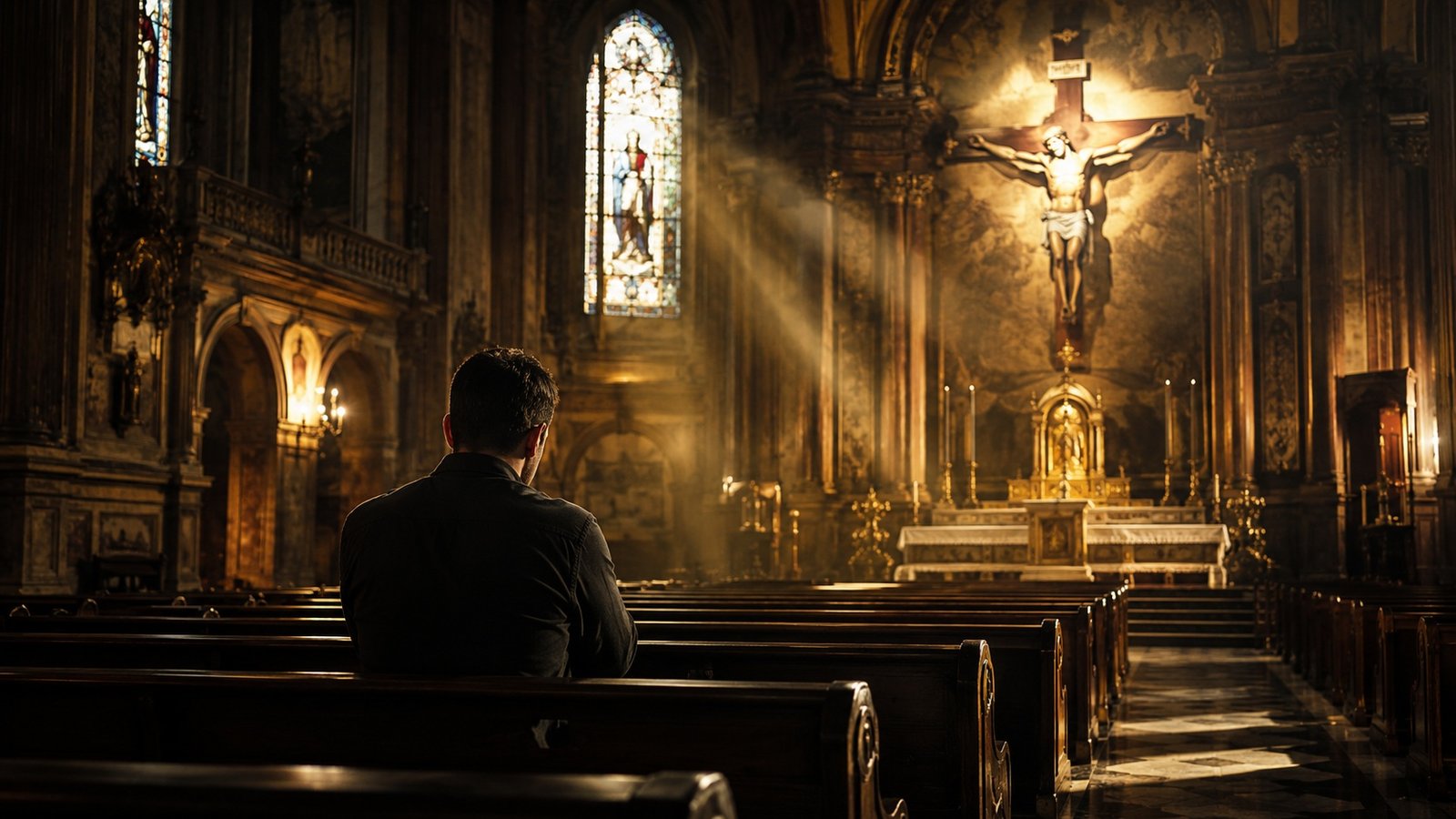
There was a time in my own spiritual journey when a painful interaction with fellow Catholics left me deeply shaken. I remember sitting in a quiet pew, staring at the crucifix, feeling an overwhelming tension between my love for Jesus and my deep disappointment in the very people who were supposed to represent Him. The wounds inflicted by hypocrisy, harsh judgment, or administrative betrayal cut to the very core of our faith. I kept asking myself: How do I stay faithful to the Bride of Christ when her members cause so much pain? If you are reading this today feeling wounded, disillusioned, or tempted to walk away, I want to offer you a haven of hope: your pain is valid, but your faith does not have to end here.
Ecclesial hurt is one of the heaviest crosses a Christian can carry. Yet, the Catholic Church has always recognized that the Mystical Body of Christ is made up of redeemed sinners who are still subject to human frailty.
When you feel hurt by church people, turning to Saint Padre Pio of Pietrelcina offers one of the most remarkable blueprints for heroic love in Catholic history. Despite facing severe, unjust persecution and silence imposed directly by Church authorities, Padre Pio never abandoned his Mother Church. In this guide, grounded in Sacred Scripture, the Catechism of the Catholic Church (CCC), and Padre Pio’s spiritual wisdom, we will explore how to navigate spiritual wounds without losing your soul.
Table of Contents
- The Biblical Reality of Weakness Within the Household of God
- What the Catechism Teaches About the Holy and Sinful Church
- Padre Pio’s Trial: Persecuted by the Very Church He Served
- 4 Steps to Heal When Hurt by Church People
- A Prayer to Saint Padre Pio for Healing Church Wounds
- Frequently Asked Questions
- Final Reflection
The Biblical Reality of Weakness Within the Household of God
Scandal and betrayal within God’s family are not new phenomena; they are woven into the fabric of salvation history. Jesus Himself chose twelve Apostles, knowing full well that one would betray Him for thirty pieces of silver (Matthew 26:14-16), another would deny Him three times out of fear (Luke 22:54-62), and the rest would abandon Him during His hour of passion.
Sacred Scripture explicitly warns us that human leaders and community members will fail us, urging us to anchor our hope in God alone:
- Distinguishing the Treasure from the Vessel: Saint Paul reminds us that divine grace is carried in frail human vessels: “But we have this treasure in earthen vessels, to show that the transcendent power belongs to God and not to us” (2 Corinthians 4:7).
- Where Not to Put Ultimate Trust: The Psalmist urges us: “Put not your trust in princes, in a son of man, in whom there is no salvation” (Psalm 146:3).
- The Wheat and the Tares: Our Lord revealed that until the end of time, the Church on earth will contain both saints and sinners living side by side: “Let both grow together until the harvest” (Matthew 13:30).
What the Catechism Teaches About the Holy and Sinful Church
To remain faithful when you are hurt by church people, Catholic theology requires us to distinguish between the divine nature of the Church and the human weaknesses of her members.
The Catechism of the Catholic Church addresses this dual reality directly:
- The Church is Holy, Yet Embraces Sinners: “The Church is therefore holy, though having sinners in her midst, because she herself has no other life but the life of grace… If she lives her life, she is sanctified; if she moves away from his life, she falls into sins” (CCC 827).
- The Wounds to Unity: The Catechism acknowledges that human sin causes deep division and pain within the Body of Christ: “In this one and only Church of God from its very beginnings there arose certain rifts… for which, often enough, men of both sides were to blame” (CCC 817).
- Faith in Christ, Not Human Perfection: The Church is holy not because her members are sinless, but because her Head, Jesus Christ, is holy, and the Holy Spirit continually sanctifies her Sacraments (CCC 823).
Padre Pio’s Trial: Persecuted by the Very Church He Served
If anyone had a human reason to walk away after being hurt by church people, it was Padre Pio.
Beginning in the 1920s, local clergy, jealous observers, and even high-ranking officials in Rome launched smear campaigns against the humble Capuchin friar. Suspicious of his stigmata and spiritual gifts, the Holy Office issued decrees that severely restricted his ministry:
- He was forbidden from celebrating Mass publicly.
- He was barred from hearing confessions—his life’s core mission.
- He was prohibited from answering letters or meeting with his spiritual children.
- He was effectively confined to his monastery cell under a vow of silence for over a decade.
How did Padre Pio respond to this intense spiritual and psychological isolation inflicted by Church leaders? He did not start a rebellion, write angry exposes, or leave the Catholic faith. Instead, he obeyed without a single murmur of complaint.
Padre Pio understood that the hierarchy possessed legitimate authority, and he declared: “The Church is a Mother, even when she strikes.” He offered his immense suffering back to God for the purification of the Church, trusting that Christ would ultimately vindicate the truth. Decades later, Pope John Paul II canonized Padre Pio, holding him up as a shining model of fidelity.
4 Steps to Heal When Hurt by Church People
If you are carrying deep spiritual scars from mistreatment within a parish or religious community, consider these steps toward restoration:
1. Separate Christ from His Flawed Representatives
When a priest, lay leader, or parishioner hurts you, remember that their sin reflects their own brokenness, not the heart of Jesus Christ. Judas’ betrayal did not make the Gospel false; it simply proved that Judas was a sinner. Do not let human frailty rob you of Christ’s Real Presence in the Eucharist.
2. Practice Holy Boundaries Without Abandoning the Sacraments
Forgiveness does not require you to remain in an abusive or toxic parish environment. It is completely acceptable to seek a different parish community, chapel, or priest for spiritual direction where you feel safe, while continuing to receive the Sacraments regularly.
3. Offer Your Pain as a Reparation
Take a cue from Padre Pio: transform your pain into intercession. When you witness hypocrisy or experience injustice, pray for the conversion of those who caused the harm. As Saint Teresa of Ávila noted: “Christ has no body now on earth but yours.” Become the loving face of Christ that others failed to show you.
4. Seek Wise, Orthodox Spiritual Counsel
Do not isolate yourself with your wounds. Find a faithful priest, a licensed Catholic counselor, or a mature mentor who can help you process your grief without validating cynicism or bitterness.
A Prayer to Saint Padre Pio for Healing Church Wounds
Take a deep breath, look upon a crucifix, and pray these words:
Saint Padre Pio, patient servant of God and loyal child of Holy Mother Church, look upon my wounded heart today. You know the deep pain of being misunderstood, falsely accused, and hurt by those within the Lord’s own vineyard.
Intercede for me before the Throne of Grace. Obtain for me the strength to forgive those who have caused me pain, the wisdom to separate human sin from divine truth, and the grace to remain anchored to Jesus Christ in the Sacraments.
Protect me from bitterness, cynicism, and despair. Fill my heart with your heroic love for the Church, so that I may find healing in Christ’s wounds and peace in His presence.
Saint Padre Pio, pray for me. Amen.
Frequently Asked Questions
Is it a sin to feel angry at priests or church leaders who cause harm?
No. Righteous anger against injustice, abuse, or hypocrisy is a natural human emotion shared even by Christ when He cleansed the Temple (John 2:13-17). Anger becomes sinful only when it turns into unbridled malice, bitterness, or a desire for revenge.
What should I do if I cannot bring myself to go back to my local parish?
If returning to your specific parish triggers severe distress, you can attend another Catholic parish in your diocese. The Catholic Church is universal; your duty is to honor the Lord’s Day and receive the Sacraments, which can be done at any valid Catholic church.
How did Padre Pio maintain his joy while being restricted by the Church?
Padre Pio fixed his gaze entirely on the Cross and the Blessed Sacrament. He realized that his union with God did not depend on public approval or external freedom, but on inner surrender to the Will of the Father.
Final Reflection
When you feel hurt by church people, remember that the Church is not a museum for perfect saints, but a hospital for recovering sinners.
Saint Padre Pio’s life teaches us that remaining inside the Church during her darkest hours is where true holiness is forged. Hand your wounds over to Jesus in the Eucharist today, allow His grace to heal your heart, and trust that He will never abandon His Bride—or you.
About the Author
Wander Venerio Cardoso de Freitas is a theologian, educator, and author of books on Catholic spirituality, the lives of the saints, and Christian formation. He is the founder of the portal O Senhor Te Dê a Paz (Saints Library), dedicated to evangelization through articles, books, and digital content.
Sumário
Toggle